Walk down the laundry aisle and you will see a $22 bottle of liquid detergent sitting next to a $4 box labeled washing soda, and most shoppers have no idea the cheaper product often cleans better. Laundry soda is a broad term that covers washing soda (sodium carbonate), soda crystals, and concentrated detergent powders, and it has quietly powered clean laundry for over a century. Once you understand the chemistry, you can cut your laundry costs by 60 to 80 percent without sacrificing results. Here is how to choose the right product and use it correctly.
What Laundry Soda Actually Is
At its simplest, laundry soda refers to sodium carbonate, a mildly caustic white powder with a pH around 11. It pulls grease out of fabric, softens hard water, and boosts the cleaning power of any detergent you pair it with. Arm and Hammer sells a 55-oz box for roughly $4.50, which works out to about 7 cents per load when used as a booster.
You may also see the phrase applied to powdered detergents like Charlie’s Soap or Molly’s Suds, both of which run $18 to $25 for 100-load packages. These are full-strength cleaners with added surfactants, not plain sodium carbonate. Read the ingredient panel carefully so you know which version you are buying.
Washing Soda vs. Baking Soda
People confuse these two constantly, and it matters. Baking soda is sodium bicarbonate with a pH near 8. Washing soda is sodium carbonate with a pH near 11, which is roughly 1,000 times more alkaline. That higher pH is what cuts through grease on gym shorts, kitchen towels, and work uniforms.
You can convert baking soda into washing soda at home by spreading it on a sheet pan and baking at 400 degrees F for an hour. The texture shifts from powdery to gritty, and the chemical change is permanent. It is a useful trick if you run out mid-load, though buying a box is cheaper per pound.
When To Reach for a Booster
Some loads benefit from it more than others. Consider adding half a cup to your wash when you face these situations:
- Hard water above 7 grains per gallon that leaves clothes stiff
- Heavily soiled work clothes with grease, oil, or food stains
- Whites that have turned gray or yellow over multiple washes
- Cloth diapers, gym towels, or pet bedding carrying stubborn odors
- Front-load machines with musty smells in the drum gasket
For light loads of already-clean shirts and sheets, it is overkill. Save it for the cycles that actually need the muscle.
How To Use It Correctly
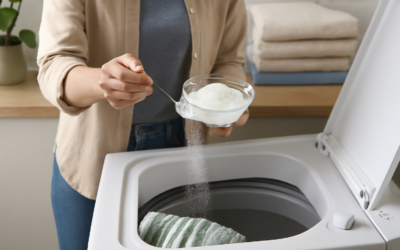
Dosing is the step most people get wrong. Use half a cup (roughly 4 oz by weight) per large load in a top-loader, or a quarter cup in a high-efficiency front-loader. Add it directly to the drum before the clothes go in, then pour your regular detergent into its usual dispenser. The soda dissolves best in warm or hot water, so cold-wash loads need a brief pre-dissolve in a mug of hot tap water.
Do not dump it straight onto wet fabric. The high alkalinity can leave white streaks or dull dark colors if the powder sits undissolved against the cloth. Always let the machine fill an inch or two before the clothes enter the picture.
Fabrics and Colors To Avoid
The same alkalinity that cleans so well can damage certain fibers. Skip the booster on wool, silk, leather trim, and anything marked dry-clean only. Protein fibers react poorly to pH above 10 and can develop a crunchy or yellowed feel after one wash.
Dark denim and hand-dyed garments can fade faster when washed repeatedly with soda boosters. If you treasure a specific pair of jeans or a vintage band tee, run those separately with a gentle color-safe detergent and leave the soda for everyday cottons and synthetics.
DIY Wash Booster Recipes
Homemade blends can drop your per-load cost to about 4 cents. A popular recipe mixes 1 cup of washing soda, 1 cup of borax, and 1 bar of grated Fels-Naptha or Zote soap. The total bill runs around $8 for roughly 60 loads. Store the mixture in an airtight glass jar to prevent clumping, and use 2 tablespoons per load.
For a liquid version, dissolve 1 cup of the powder blend into 4 gallons of hot water, then let it cool overnight. The result is a thick, gel-like detergent that pours easily and works in both standard and HE machines. A 4-gallon batch covers 60 to 80 loads for about the same price.
Cleaning More Than Clothes
Once you have a box on hand, it earns its shelf space across the house. A half-cup mixed into a gallon of hot water makes a strong degreaser for range hoods, stovetops, and greasy garage floors. It also strips soap scum from shower doors in about 10 minutes with a sponge.
Add a cup to your dishwasher as a pre-soak for burnt casserole pans, or run a cup through an empty washing machine on the hottest cycle to deodorize the drum. Wear rubber gloves during any heavy cleaning because prolonged skin contact can cause irritation.
Safety and Storage Tips
Washing soda is not technically toxic, but it is not food-safe either. Keep the box out of reach of children and pets, and never mix it with bleach in a sealed container because the combination can release irritating fumes. Store the powder in a dry cabinet away from vinegar, citrus cleaners, and ammonia to avoid accidental reactions.
Rinse thoroughly if any gets on your skin, and wear gloves when handling full cups of it for hours. Treated with basic caution, a single $5 box will last most households four to six months of weekly use.
Frequently Asked Questions
Can I use the powder in a high-efficiency machine? Yes, but cut the dose in half. HE machines use less water, so a quarter cup per load is plenty.
Does it replace detergent? Not on its own. Plain sodium carbonate is a booster, not a surfactant. Pair it with a small amount of liquid or powder detergent for best results.
Is it safe for septic systems? Yes. Washing soda breaks down into sodium and carbonate ions that do not harm the beneficial bacteria in a properly sized septic tank.
Will it remove set-in grease stains? Often, yes. Make a paste of 2 tablespoons of soda and 1 tablespoon of water, rub it into the stain, wait 15 minutes, and wash on warm. Older stains may need a second treatment.