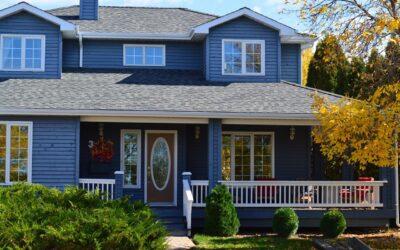
Some siding colors photograph one way and live on a wall another, and this one is famous for it. Light Mist Hardie board is James Hardie’s pale blue-gray ColorPlus shade — a color that reads almost white in bright midday sun, shifts to a soft misty blue on overcast days, and pulls slightly gray-green at dusk. That chameleon quality is exactly why designers reach for it on coastal and cottage-style homes, and why homeowners who ordered it expecting “light blue” are sometimes surprised. Here’s how the color actually behaves, what to pair it with, and what a Light Mist installation costs.
- What Light Mist Actually Looks Like
- Where Light Mist Is Available
- Trim, Roof, and Door Pairings That Work
- Cost of Light Mist Hardie Board Installed
- Installation and Touch-Up Details Specific to ColorPlus
- Long-Term Care and Color Performance
- Light Mist vs. Similar Hardie Colors
- Sampling Without Regret
- Questions Buyers Ask About This Color
What Light Mist Actually Looks Like
Light Mist sits at the very light end of Hardie’s cool palette. Think of it as a whisper of blue over a gray base — comparable in feel to popular paint colors like Sherwin-Williams Upward or Benjamin Moore Silver Gray, though not identical to either. Its light reflectance is high, so it bounces a lot of sun and keeps its color story subtle. On a north-facing elevation or under cloud cover, the blue undertone steps forward. In full southern sun, it washes toward off-white with just a cool cast.
That behavior makes samples essential. Order an actual ColorPlus sample or swatch board from a Hardie dealer and tape it to the house — check it at morning, noon, and evening, on both the sunny and shaded sides. Judging Light Mist from a phone screen is how mismatched trim orders happen. Colors on ColorPlus siding are baked-on finishes applied in a factory-controlled process with consistent film thickness, so what you see on a physical sample is genuinely what arrives on the truck.
Where Light Mist Is Available
Light Mist comes as part of the ColorPlus Technology lineup, which means the finish is factory-applied and warranted for 15 years against peeling, cracking, and chipping. Availability by product typically includes HardiePlank lap siding (smooth and Cedarmill textures), HardiePanel vertical siding, HardieShingle straight and staggered-edge panels, and matching HardieTrim boards. Hardie regionalizes its color offering — the ColorPlus palette differs between the Northeast, Southeast, Midwest, and West — so confirm with your local dealer that Light Mist is stocked in your region or ask about their Dream Collection program, which opens up the wider color library as a special order with longer lead times, usually 3-6 weeks.
If Light Mist isn’t offered near you, the fallback is ordering primed Hardie and painting it a matched color. You lose the baked-on finish and pick up a repaint cycle every 10-15 years, but you gain unlimited color control.
Trim, Roof, and Door Pairings That Work
Because Light Mist is so pale, contrast comes from trim and accents rather than the field color:
- Classic coastal: Arctic White ColorPlus trim, a white or light gray metal roof or weathered-gray architectural shingles, and a natural wood or teak-stained front door. This is the combination on ninety percent of Light Mist inspiration photos.
- Higher contrast: Iron Gray or Aged Pewter accents — a gable in HardieShingle, shutters, or board-and-batten sections — ground the pale field and keep it from floating.
- Warm counterpoint: Cedar-toned porch ceilings, brackets, and columns stop a blue-gray house from feeling cold, especially in northern light.
- Front doors: Navy (Benjamin Moore Hale Navy), coral, black, and mid-tone wood stains all pop cleanly against Light Mist. Avoid pale pastels, which vanish.
- Roofing: Black and dark charcoal roofs create a crisp modern-cottage look; avoid brown-heavy shingle blends, which fight the cool undertone.
For house styles, Light Mist flatters Cape Cods, farmhouses, craftsman bungalows, and anything coastal. On large unbroken contemporary facades it can look washed out — break it up with vertical panel sections or a contrasting material.
Cost of Light Mist Hardie Board Installed
Color doesn’t change Hardie pricing much; ColorPlus adds roughly $0.75-1.50 per square foot over primed product. Installed, expect these 2026 ranges:
- HardiePlank lap in ColorPlus: $10-16 per square foot installed, so $25,000-40,000 for a typical 2,500-square-foot-wall two-story home.
- HardieShingle accents: $12-18 per square foot for gables and feature areas.
- Primed-and-painted alternative: $9-14 per square foot installed plus painting at $2-4 per square foot.
Regional labor swings these numbers 20-30 percent either way. Dream Collection special-order colors can carry a small upcharge and, more importantly, restocking risk — measure carefully, because returning special-order siding is somewhere between painful and impossible.
Installation and Touch-Up Details Specific to ColorPlus
ColorPlus boards ship with a protective plastic laminate that stays on during cutting and nailing and peels off after installation — crews who strip it early end up with scuffed finish. Cut edges and nail heads get touched up with Hardie’s color-matched touch-up kits (edge coaters for cut ends, touch-up pens for nail dimples); the warranty language expects Hardie-supplied touch-up products, not hardware-store paint. Two more rules that protect both the look and the warranty: keep boards off the ground and dry before hanging, since wet-installed fiber cement telegraphs joints later, and maintain proper clearances — 6 inches to grade, 1-2 inches above roofing, 1/4 inch above horizontal flashing.
Fastening is standard Hardie practice: blind-nail with corrosion-resistant siding nails into studs, joints on stud centers with joint flashing behind, and factory edges paired at butt joints. On a pale color like Light Mist, sloppy joint work and caulk smears show more than they would on Iron Gray, so hire a crew that installs fiber cement weekly, not occasionally.
Long-Term Care and Color Performance
Light colors are the easy-care end of fiber cement. Light Mist hides dust and chalking far better than dark shades, doesn’t show fade meaningfully (there’s little pigment depth to lose), and stays cooler in sun, which is kinder to caulk joints. Maintenance is a garden-hose rinse with a soft brush and mild detergent once or twice a year, plus algae attention on shaded north walls in humid climates — a dilute oxygen-bleach wash handles the green film. Recaulk joints as needed with a paintable polyurethane or SMP sealant color-matched to the siding. The ColorPlus finish carries its 15-year coating warranty, and the substrate itself is warranted for 30 years, so a Light Mist Hardie board exterior installed well is realistically a 30-plus-year facade with one possible refinish decision around year 15-20 — at which point you can repaint it any color you like.
Light Mist vs. Similar Hardie Colors
Homeowners shopping this shade usually cross-shop three neighbors in the palette. Gray Slate is a step darker and more decisively gray — choose it if Light Mist reads too white on your sample board. Boothbay Blue is noticeably bluer and mid-toned, the pick when you want the house to be unambiguously “a blue house” rather than a pale gray one that hints blue. Arctic White drops the undertone entirely and works better where you want maximum crispness for a farmhouse scheme. A useful trick: hold your roofing shingle sample against each siding swatch, because roof color shifts the perceived undertone more than anything else on the elevation. Against a black roof, Light Mist looks bluer; against brown, it can read slightly dingy.
Sampling Without Regret
Because pale blue-grays shift so much with light, borrow the designer’s sampling routine before ordering thirty squares of anything. Get a real ColorPlus chip or board, plus painted sample boards of one darker and one lighter neighbor, and view all three against your actual trim white — trim whites range from icy to cream, and a warm white next to Light Mist can make the siding read gray-green. Photograph the samples at 9 a.m., noon, and 6 p.m. on both sunny and overcast days, then look at the photos side by side; the camera flattens wishful thinking. If two colors still tie after that, choose the lighter one — siding installed across a whole elevation consistently reads a half-step darker and more saturated than any hand-held sample.
Questions Buyers Ask About This Color
Does Light Mist show dirt and pollen? Less than you’d fear. Pale cool colors hide dust and chalk well; the visible offenders are red clay splash-back at grade in southern states and green algae film on shaded walls — both rinse off.
Can I get Light Mist in a different manufacturer’s product? Not exactly, but close matches exist in paint. If you’re pairing a shed, door, or porch ceiling, most paint stores can spectro-match a ColorPlus sample chip in an exterior acrylic like Sherwin-Williams Duration for touch-in areas.
Does a pale color hurt resale? The opposite, generally. Soft blue-gray exteriors with white trim have been a top-performing curb appeal formula for a decade, and appraiser and listing-photo feedback consistently favors light, coherent color schemes over dated beiges. It’s among the safer choices you can bolt onto a 30-year siding decision.