Picking siding for a whole house is a 30-year decision that most homeowners make once. The hardie board vs vinyl siding comparison comes up in nearly every replacement project because they sit at very different price points, perform differently in extreme weather, and have wildly different aesthetics up close. Both are mainstream choices, both have legitimate strengths, and both have failure modes worth knowing about before signing a contract. The breakdown below covers what each is, real installed prices, lifespan, maintenance, and the situations where one clearly wins.
What Each Material Actually Is
Hardie board, manufactured by James Hardie Building Products, is a fiber cement siding made from cement, sand, and cellulose fibers. It comes in lap planks, panels, and shingles, with a baked-on color (ColorPlus) or a primed surface ready to paint. The product weighs roughly 2.5 pounds per square foot, is non-combustible, and resists insects, rot, and UV damage.
Vinyl siding is extruded polyvinyl chloride (PVC) with color throughout. Standard panels run roughly 0.5 pounds per square foot. Modern vinyl includes UV stabilizers and impact modifiers and comes in dozens of profiles and colors.
Installed Cost
For a 2,000-square-foot home, expect these ballpark numbers including labor:
- Vinyl siding: $7,500 to $14,000 ($3.75 to $7 per square foot).
- Insulated vinyl: $11,000 to $18,000 ($5.50 to $9 per square foot).
- Hardie board lap with ColorPlus: $16,000 to $26,000 ($8 to $13 per square foot).
- Hardie board with field paint: $14,000 to $22,000 ($7 to $11 per square foot).
Hardie board typically runs roughly twice the installed cost of vinyl. The difference comes from material price, weight (which slows installers), and skilled labor required for proper joints and fasteners.
Lifespan and Warranties
Vinyl siding warranties run 20 to 50 years from major manufacturers, and real-world life is typically 25 to 40 years. The color fades in direct sun, especially on south- and west-facing walls. Cracking and brittleness become problems past year 25 in cold climates.
Hardie board carries a 30-year non-prorated warranty on the substrate and a 15-year warranty on the ColorPlus finish. Real-world life of the substrate is 50+ years, with the finish needing repaint at 15 to 20 years if not ColorPlus.
Climate Performance
Climate is one of the biggest factors. Vinyl performs poorly in extreme heat, where panels can warp from grills, dark roofs, or low-E window reflections. Cold snaps below zero make vinyl brittle and prone to cracking from impact. High wind can lift improperly nailed panels.
Hardie board handles temperature swings without expansion-related damage. It is rated for hurricane-zone wind speeds, will not burn or melt, and resists hail damage that would dent vinyl. In coastal salt-spray environments, both perform similarly when properly painted or sealed.
Appearance Differences
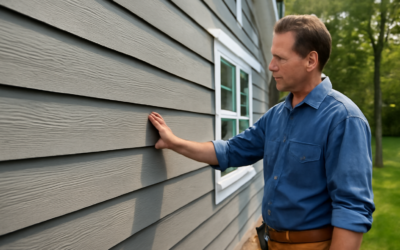
Up close, the materials look very different. Hardie board has the depth and texture of real wood lap siding, with a face thickness of 5/16 inch and crisp shadow lines. Vinyl is thinner and the seams between panels are more visible.
From the curb at 30 feet, modern vinyl can look quite good. The newer thicker grades (0.046 inch and up) have realistic woodgrain and tighter seams. Cheap builder-grade vinyl (0.040 inch) shows ripples, soft seams, and an unmistakable plastic look.
Maintenance Requirements
Vinyl needs an annual rinse with a garden hose and a soft brush to remove mildew and dirt. Painting is not recommended (paint sheds within a few years) so faded vinyl gets replaced rather than refreshed.
Hardie board needs the same annual rinse plus a fresh coat of paint every 15 to 20 years (less frequent than wood siding’s 5 to 7 years). ColorPlus factory-finished panels can extend the repaint to 25 years. Caulk at trim and corners needs replacement every 8 to 12 years on either material.
Insurance and Fire Risk
Hardie board is non-combustible and earns a Class A fire rating. In wildfire-prone areas, this makes a measurable difference for both safety and insurance. Several insurers offer 5 to 15 percent discounts for non-combustible siding in California, Colorado, and other high-risk zones.
Vinyl melts at roughly 165 degrees Fahrenheit and ignites around 730 degrees. A grill placed too close, a neighbor’s house fire, or a brush fire can melt or ignite vinyl. Insurance treats it as combustible.
Resale Value
Real estate data consistently shows hardie board with a higher cost recovery on resale than vinyl. Remodeling Magazine’s Cost vs. Value report puts fiber cement replacement at roughly 88 to 95 percent recouped, versus 75 to 82 percent for vinyl. Buyers in the $400,000-and-up price range often expect or prefer fiber cement.
For starter homes and rentals, vinyl is a smarter spend. The buyer at that price point cares more about move-in condition than premium material.
Installation Considerations
Hardie board demands trained installers. Improper fastening, gapping, and trim work cause callbacks. James Hardie offers a Preferred Contractor program; choosing a Preferred contractor protects the warranty.
Vinyl is simpler to install, which is both an advantage and a hazard. More crews are willing to work on it, but more crews also do it wrong. Look for tightly-locked panels, even reveals, and crisp J-channel work at corners and openings.
Energy Efficiency
Insulated vinyl with foam backing offers an R-value of roughly 2 to 3, which slightly improves wall performance. Hardie board itself has minimal R-value but pairs well with continuous exterior insulation underneath, which is the better long-term wall assembly anyway.
Dust and Job Site Conditions
Cutting hardie board generates silica dust, a respiratory hazard. Quality installers use shears, fiber-cement saws with dust collection, and N95 or P100 respirators. If your contractor cuts hardie board with a circular saw and no dust collection, find another contractor.
When Vinyl Wins
Vinyl is the smarter choice when:
- Budget is tight and the home is in a starter or mid-range neighborhood.
- The climate is mild and not subject to extreme heat or hurricane winds.
- You plan to sell within 5 to 7 years.
- The home has a simple roof line with minimal trim work.
When Hardie Board Wins
Hardie board is the smarter choice when:
- You plan to stay in the home 15 years or more.
- The home is in a wildfire zone, hurricane zone, or extreme temperature climate.
- The neighborhood expects fiber cement on similar homes.
- Architectural detail (shake panels, board-and-batten, deep shadow lines) matters to the design.
Final Word
Hardie board vs vinyl siding is not a question of which is better in absolute terms, but which is right for the home, climate, and budget. Vinyl is the value pick for moderate climates and shorter ownership horizons. Hardie board earns its premium in extreme climates, premium neighborhoods, and long-term ownership. Get bids from installers experienced with the specific product before deciding.
Prefer to explore on your own?
See how new flooring looks in your actual room in seconds — free, no signup.
Try the free Floor Studio →