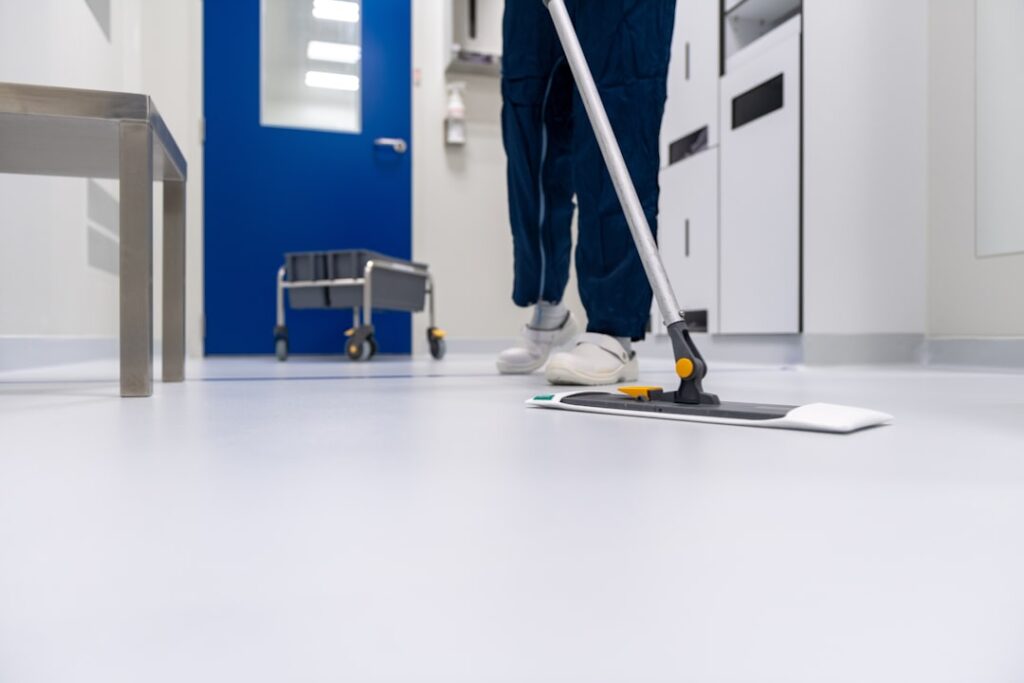
Finding the right linoleum floor cleaner makes the difference between a floor that looks tired after a few years and one that stays vibrant for decades. Linoleum is one of the most durable and eco-friendly flooring options available, but its natural composition requires a specific cleaning approach. Use the wrong products, and you strip away the protective finish, dull the color, or cause permanent staining.
We have been installing and maintaining linoleum floors for over 30 years. In that time, we have tested dozens of commercial cleaners, mixed countless DIY solutions, and helped hundreds of homeowners restore linoleum that looked beyond saving. This guide shares everything we know about keeping linoleum floors clean, protected, and looking their best.
Understanding Linoleum (It Is Not Vinyl)
Before choosing a linoleum floor cleaner, it helps to understand what linoleum actually is — because most people confuse it with vinyl, and the two require very different care. Linoleum is made from natural materials: linseed oil, pine rosin, wood flour, cork dust, and limestone, pressed onto a jute backing. Vinyl is a synthetic product made from PVC.
This natural composition gives linoleum some unique properties. It is naturally antibacterial, biodegradable, and incredibly durable when maintained properly. But it is also porous, which means it absorbs moisture and chemicals more readily than vinyl. Harsh alkaline cleaners, ammonia, and excessive water can all damage linoleum in ways that would barely affect vinyl flooring.
If you are unsure whether your floor is linoleum or vinyl, check the edges or a seam. Linoleum has color that runs all the way through the material. Vinyl has a printed pattern layer on top of a white or beige core. The cleaning advice in this guide is specifically for true linoleum. If you have vinyl, many of these tips still apply, but vinyl is more forgiving overall.
Best Commercial Linoleum Floor Cleaners
Not every floor cleaner on the shelf is safe for linoleum. Here are the products we trust and recommend to our clients:
Dr. Bronner’s Sal Suds — $10 to $15 per bottle
- Biodegradable, plant-based formula
- Extremely concentrated — one tablespoon per gallon of water
- Cuts grease effectively without leaving residue
- Safe for all natural flooring materials
Aunt Fannie’s Floor Cleaner Vinegar Wash — $8 to $12 per bottle
- Pre-diluted, ready to use
- Vinegar-based formula gentle enough for linoleum
- Pleasant essential oil scents
- No rinsing required
Armstrong Flooring Once ‘n Done Floor Cleaner — $8 to $14 per bottle
- Specifically formulated for resilient flooring including linoleum
- No-rinse formula saves time
- Available in concentrate and ready-to-use versions
- Trusted brand in the flooring industry
Bona Hard-Surface Floor Cleaner — $8 to $10 per refill
- pH-neutral formula safe for linoleum
- Dries fast with no residue
- Works with Bona spray mop system
- Widely available at most retailers
Avoid any cleaner labeled for “wood floors only” or containing wax additives unless you specifically plan to wax your linoleum as part of the process.
DIY Cleaning Solutions
Homemade cleaners work well on linoleum and cost next to nothing. Here are our three go-to recipes:
All-Purpose Linoleum Cleaner:
- 1 gallon warm water
- 1/4 cup white vinegar
- 2 to 3 drops dish soap (Dawn or similar)
This handles routine dirt and light grime. The vinegar cuts grease while the dish soap provides surfactant action. Keep the vinegar concentration low to protect the linoleum finish.
Deep Cleaning Solution:
- 1 gallon warm water
- 1/3 cup borax (dissolved completely)
- 1 tablespoon dish soap
Borax provides stronger cleaning power for ground-in dirt and stains. Use this monthly or as needed rather than for daily cleaning.
Shine-Boosting Cleaner:
- 1 gallon warm water
- 1/2 cup white vinegar
- 3 to 5 drops baby oil
The baby oil adds a subtle shine without building up the way wax does. Use this after deep cleaning to bring back a fresh appearance. Do not overuse — once a month is plenty.
Routine Cleaning Process
A consistent routine is the single most effective thing you can do for your linoleum floors. Here is what we recommend:
Daily (2 to 3 minutes):
- Sweep or dry dust mop high-traffic areas
- Pick up any crumbs or debris that could scratch the surface when walked on
- Wipe up spills immediately — linoleum absorbs moisture if left sitting
Weekly (15 to 20 minutes):
- Sweep or vacuum the entire floor (use the hard floor setting on your vacuum)
- Fill a bucket with warm water and your chosen linoleum floor cleaner
- Damp mop the floor using a microfiber mop, wringing thoroughly
- Work in sections, starting from the farthest corner and moving toward the exit
- Allow the floor to air dry — do not walk on it until dry
For weekly cleaning, the mop should be damp, not dripping. Linoleum can handle slightly more moisture than laminate, but standing water still causes problems over time, especially at seams and edges.
Deep Cleaning Linoleum Floors
Even with regular maintenance, linoleum floors benefit from periodic deep cleaning to remove buildup and restore the surface. Plan for a deep clean every one to three months depending on traffic.
Deep cleaning steps:
- Remove all furniture and rugs from the area
- Sweep or vacuum thoroughly, including along baseboards and in corners
- Mix your deep cleaning solution (borax recipe above or a commercial concentrate at full strength)
- Apply the solution to a manageable section using a mop or spray bottle
- Let the solution sit for 5 to 10 minutes — do not let it dry on the surface
- Scrub with a soft-bristle brush or non-abrasive pad for stubborn areas
- Mop up the dirty solution with clean water
- Rinse the floor with a lightly damp mop to remove any residue
- Allow to dry completely before replacing furniture
For extremely dirty linoleum, you may need two passes. The first loosens the grime, and the second removes it. Patience matters more than elbow grease here — letting the cleaner dwell does most of the work.
What Damages Linoleum
Linoleum is tough, but certain products and habits shorten its life dramatically:
- Ammonia-based cleaners — strip the finish and discolor the surface
- Bleach — fades the natural pigments and weakens the material
- Highly alkaline cleaners (pH above 10) — break down the linseed oil binder
- Abrasive scrubbing pads — scratch and dull the wear layer
- Excessive water — causes swelling, curling at edges, and mold growth beneath the floor
- Rubber-backed mats — cause yellowing (a chemical reaction called “rubber burn”)
- Direct sunlight — causes a temporary yellowing called “ambering” in new linoleum (this is normal and fades with UV exposure over time)
One of the most common mistakes we see is homeowners using a multi-surface cleaner with ammonia on their linoleum. Products like original Windex or Pine-Sol with ammonia should never touch linoleum flooring.
Waxing and Polishing Linoleum
Waxing linoleum is optional but highly beneficial. A proper wax layer adds shine, protects against scuffs, and makes routine cleaning easier by preventing dirt from penetrating the surface.
How to wax linoleum floors:
- Deep clean the floor and let it dry completely (at least 2 hours)
- If there is old wax buildup, strip it first using a linoleum-safe wax stripper
- Apply a thin, even coat of liquid floor wax using a clean mop or applicator
- Allow the first coat to dry for 30 to 45 minutes
- Apply a second coat perpendicular to the first for even coverage
- Let the floor cure for at least 4 hours before walking on it
- Buff with a soft cloth or electric buffer for extra shine
Use a water-based acrylic floor finish rather than paste wax. Acrylic finishes are easier to apply, dry faster, and do not yellow over time. Lundmark and Rejuvenate both make excellent products for linoleum. Expect to re-wax every three to six months in high-traffic areas and once or twice a year in low-traffic rooms.
Restoring Shine to Dull Linoleum
If your linoleum has lost its luster, there is a good chance you can bring it back without replacing the floor. The restoration process depends on what caused the dullness.
Dull from cleaner residue: Mop the floor with a solution of one cup white vinegar per gallon of warm water. This dissolves soap film and product buildup. Follow with a clean water rinse.
Dull from worn finish: Strip any remaining old wax or finish using a dedicated stripper. Clean the bare floor thoroughly. Apply two to three thin coats of new acrylic floor finish. This essentially gives the floor a fresh protective layer.
Dull from surface damage: If the linoleum itself is scratched or worn, no amount of cleaning restores it fully. For minor scratches, applying a fresh coat of finish helps. For deeply worn areas, spot replacement of linoleum tiles or sections may be necessary.
Dull from age and oxidation: Very old linoleum (20+ years) naturally loses some vibrancy. A professional cleaning and refinishing service can often bring back surprising results. Expect to pay $1 to $3 per square foot for professional restoration.
The key to maintaining shine long term is consistent cleaning with the right products and periodic waxing. Floors that receive regular care rarely need major restoration work.
Frequently Asked Questions
Can I use a steam mop on linoleum floors?
Steam mopping is generally not recommended for linoleum. The heat and moisture can damage the natural linseed oil binder and cause the flooring to curl at the edges. If you choose to use one, keep it on the lowest setting and move quickly. A damp microfiber mop is a safer and equally effective alternative.
How do I remove yellow stains from linoleum?
Yellow stains on linoleum are typically caused by rubber-backed mats, wax buildup, or a natural process called ambering. For rubber stains, scrub gently with baking soda paste and rinse. For wax buildup, strip the old wax and reapply fresh finish. Ambering on new linoleum usually resolves on its own with regular exposure to natural light.
Is vinegar safe for linoleum floors?
Diluted white vinegar is safe for linoleum when used in moderation. Mix one-quarter to one-half cup per gallon of water. Avoid using vinegar at full strength, which is too acidic for regular use on linoleum. For daily cleaning, a pH-neutral commercial cleaner is gentler on the finish over time.
How often should I wax my linoleum floor?
Wax high-traffic areas every three to six months and low-traffic areas once or twice a year. Signs that your floor needs re-waxing include visible dullness, water no longer beading on the surface, and scuff marks that do not buff out. Always strip old wax before applying new coats to prevent buildup.
What is the difference between cleaning linoleum and vinyl?
Vinyl is more chemical-resistant than linoleum, so it tolerates a wider range of cleaners. Linoleum requires pH-neutral or mildly acidic cleaners and benefits from periodic waxing. Vinyl rarely needs waxing. Both floors should avoid excess water, but linoleum is more vulnerable to moisture damage due to its natural, porous composition.
Prefer to explore on your own?
See how new flooring looks in your actual room in seconds — free, no signup.
Try the free Floor Studio →