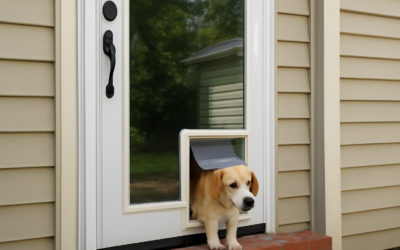
A pet door is, by design, a hole in an exterior door or wall, and burglars know it. Small children and slim adults have crawled through large flaps, and many more break-ins happen when someone reaches through the opening to turn a deadbolt. A locking dog door closes that gap with a rigid cover, a keyed or electronic lock, or both, so the opening is only open when you want it to be.
Part of our Windows & Doors guide — explore the full guide →
The most secure setup combines four things: the smallest door your pet can comfortably use, a solid locking cover that goes on whenever you are away or asleep, a location well away from the door’s lock hardware, and some form of alarm or camera coverage. You do not need every upgrade, but each one you add makes the opening a less attractive target.
- How a Locking Dog Door Works
- Types of Locks and Security Covers
- Security Features Worth Paying For
- Sizing: Go as Small as Your Pet Allows
- Placement: Keep It Away From Locks
- Step-by-Step: Hardening an Existing Pet Door
- Troubleshooting Common Issues
- Typical Costs
- When to Call a Pro
- Frequently Asked Questions
You will find the lock types, the security features worth paying for, sizing and placement, and a few simple fixes for doors you already have, all laid out here.
How a Locking Dog Door Works
Every locking dog door has two parts: the flap your pet pushes through and a way to block that flap. Basic models use a thin plastic slide-in panel that drops into a channel on the inside. Better models use a thick, rigid cover that latches or locks with a key, and the most secure versions use a steel or aluminum plate or an electronic latch that only opens for a specific pet.
The weak point on many cheap doors is the closing panel itself. A flimsy plastic insert can often be pushed out from the outside with a firm kick or pried free with a screwdriver. When comparing doors, look at how the cover attaches, what it is made of and whether it locks on the inside face where an intruder cannot reach it.
Types of Locks and Security Covers
Slide-in closing panels
The simplest option. A panel slides into a track and blocks the flap. Fine for keeping wildlife and drafts out, but only as strong as the plastic and the track. Choose a thick panel with a locking pin or clip rather than one that simply rests in place.
Keyed locking covers
A rigid cover that locks with a key or a keyed latch. This is the minimum for a door that faces a street, alley or unfenced side of the house. A good pet door security cover clamps across the full frame, not just the flap.
Steel security plates
Heavy-gauge steel or aluminum plates bolt or lock over the opening from the inside. They resist kicking and prying far better than plastic and are worth considering for larger dog doors, which are the ones a person could fit through.
Electronic and microchip doors
These doors stay locked until they sense your pet’s microchip or a tag on its collar, then unlock briefly. They block stray animals and raccoons well, and many can be set to lock completely on a schedule. Security against people still depends on how strong the flap and frame are, so pair an electronic door with a rigid cover for nights and trips.
Lockable cat flaps
A lockable cat flap or locking cat door usually has a four-way lock: in only, out only, open both ways or fully locked. A cat door latch of this type is fine for small openings that a person cannot fit through, but the same rule applies: a sturdy latch on the inside matters more than the flap material.
Security Features Worth Paying For
- Rigid frame: metal or reinforced frames hold up to prying better than thin plastic tunnels.
- Full-coverage locking cover: covers the entire opening and locks on the interior side.
- Through-bolted installation: bolts that pass through the door and clamp both frame halves together resist pulling out.
- Tamper-resistant fasteners: screws on the exterior face should be hidden or use security heads.
- Schedule locking: electronic doors that lock automatically at night or when you leave.
- Weatherstripping: magnetic closures and brush seals keep the flap shut against wind, which also keeps it from swinging open and inviting a curious hand.
Sizing: Go as Small as Your Pet Allows
Size is the single biggest security factor. A small dog door with a 6 by 10 inch flap is far harder to exploit than a 15 by 20 inch opening sized for a large breed. To size correctly:
- Measure your pet’s width at the widest point, usually the chest or shoulders, and add about 1 to 2 inches.
- Measure height from the top of the shoulders to the bottom of the chest, then add about 2 inches.
- Set the bottom of the opening (the step-over height) at roughly the height of your pet’s chest from the floor, so it steps through rather than crawling.
Avoid sizing up for a puppy that will grow, or for a second, larger dog you might get later. A door that is too big becomes the weakest point on the house. If you have a large dog, a steel plate and an alarm sensor become more important.
Placement: Keep It Away From Locks
Where the opening goes is nearly as important as which door you buy. Follow these placement rules:
- Keep it out of reach of the deadbolt and knob. If someone can reach through the flap and turn a thumb latch, the lock on the door is useless. Mount the pet door on the hinge side or low and centered so the lock hardware is far beyond arm’s reach, or switch to a keyed double-cylinder deadbolt where local fire code allows.
- Choose a door facing a fenced yard. A pet door that opens into a fenced backyard is less exposed than one facing a street or alley.
- Consider a wall installation. Installing in a wall between studs can put the opening away from any lock entirely. Avoid walls with wiring, plumbing or gas lines inside, and check for studs before cutting.
- Keep sightlines open. Trim shrubs that would hide someone working at the opening, and add a motion light to that side of the house.
- Glass doors: sliding-door pet panels are easy to lift out unless you add a security bar or pin lock to the slider and the panel.
A security door with a dog door built in, such as a steel storm door with an integrated pet opening, can be a good choice for homes that want the pet access on a secondary exterior door rather than the main entry.
Step-by-Step: Hardening an Existing Pet Door
- Check the cover. If your current closing panel is thin plastic with no lock, replace it with a locking cover or add a steel plate sized to the frame.
- Tighten and upgrade fasteners. Replace any exterior-facing screws with tamper-resistant ones and make sure the frame halves are clamped tightly to the door.
- Add an alarm sensor. A simple contact sensor on the locking cover or a small motion sensor aimed at the opening can alert you if the cover is removed or something comes through while the system is armed.
- Add a camera. An interior camera pointed at the pet door lets you check on pets and sends alerts for unexpected motion.
- Review the deadbolt. Confirm the thumb latch is out of reach from the opening. If not, plan to move the pet door or change the lock.
- Make locking a habit. Put the cover on every night and every time you leave with the pets inside. A locking dog door only protects the house when it is actually locked.
Troubleshooting Common Issues
- Flap blows open in wind: add or replace the magnetic strip and brush seal, or switch to a double flap.
- Electronic door will not unlock: check the battery, clean the sensor and re-register the pet’s chip or tag.
- Raccoons or neighborhood cats getting in: move to a microchip door, or lock the cover at dusk when wildlife is most active.
- Cover hard to latch: the frame may have racked during installation. Loosen the screws, square the frame and retighten evenly.
- Pet refuses the new door: tape the flap open for a few days and use treats, then lower it gradually.
Typical Costs
Basic flap doors with slide-in panels are inexpensive, often well under a hundred dollars. Doors with rigid keyed covers and metal frames cost more, and microchip or electronic models typically land in a moderate price range. Steel security plates, alarm sensors and cameras each add to the total. Professional installation in a door is usually a modest labor charge, while wall installs cost more because of framing and finishing. Replacing a whole exterior door with a pre-cut security door can be the most expensive route but gives the cleanest result.
When to Call a Pro
Most door-mounted pet doors are a reasonable DIY job with a jigsaw and drill. Call a carpenter or door installer for metal or fiberglass doors, fire-rated doors between a garage and the house (which generally should not get a pet door at all), or wall installations, where wiring or plumbing could be in the cavity. A locksmith can help reposition or rekey locks so they sit safely out of reach, and a security installer can tie sensors into an existing alarm system.
Frequently Asked Questions
Can a burglar get through a dog door?
Yes, if the opening is large enough or the door lock is within arm’s reach. Small doors, locking covers, careful placement and an alarm sensor all reduce that risk significantly.
What is the most secure type of pet door?
A small door with a metal frame, a rigid locking cover or steel plate, and an electronic lock that only opens for your pet is the most secure combination for most homes.
Are microchip pet doors secure against people?
They keep stray animals out well, but their resistance to people depends on how strong the flap and frame are. Add a locking cover when you are away or asleep.
Where should a dog door go for security?
Place it on a door or wall facing a fenced yard, well away from deadbolts and knobs, with good lighting and no shrubs hiding the opening.
Does a locking cat flap keep other cats out?
A manual lock keeps everything out when engaged, while a microchip cat flap lets only registered cats in and blocks neighborhood cats automatically.