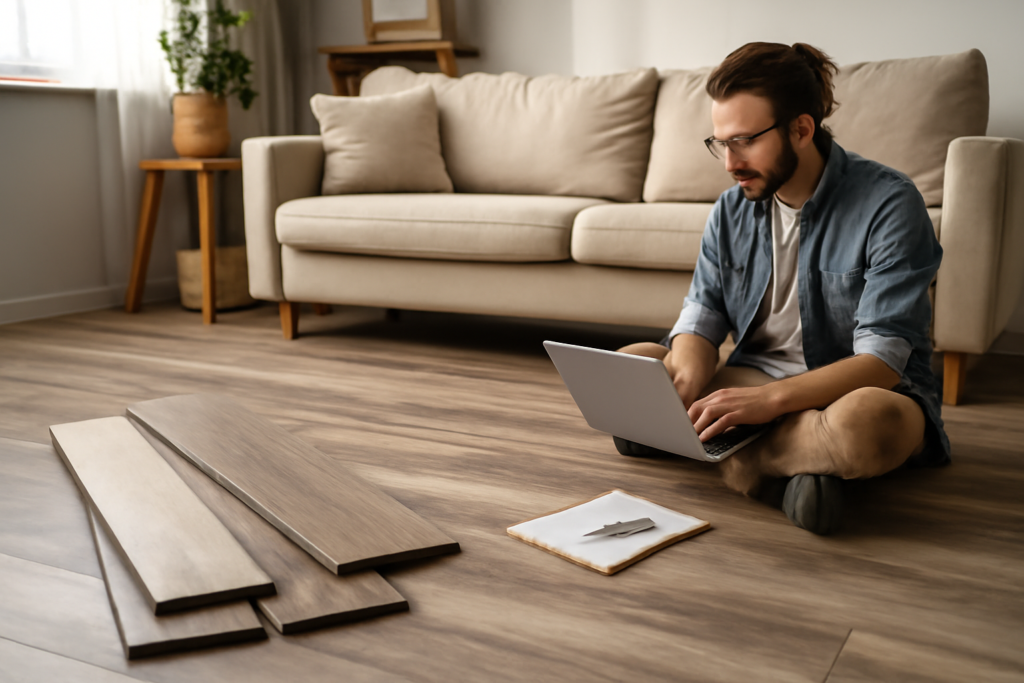
Walk into a modern showroom and you’ll see tile slabs the size of a door, joined by grout lines so thin they nearly disappear. That’s the look LPT flooring delivers, with LPT standing for large porcelain tile, a category that has reshaped contemporary floors and walls over the past decade. These oversized porcelain panels run far bigger than the old 12×12 squares, creating clean, seamless surfaces that mimic stone, concrete, and wood. This guide explains what large porcelain tile is, where it shines, what it costs, and the installation realities you should weigh before committing.
What “Large Porcelain Tile” Actually Means
There’s no single industry definition, but in practice LPT refers to porcelain tiles with at least one side measuring 24 inches or more. Common sizes include 24×48, 32×32, and 24×24, while true large-format porcelain slabs (sometimes called gauged porcelain panels) reach 5 feet by 10 feet or larger. Thickness ranges from a slim 6mm panel for walls and overlays up to 12mm and beyond for floors that take heavy traffic.
The material is fired at very high temperatures, which makes porcelain dense, hard, and nearly impervious to water. That’s why the same product works on floors, shower walls, countertops, and even outdoor patios.
The Advantages of LPT Flooring
Big tiles solve problems that small tiles create. Here’s why designers keep specifying them:
- Fewer grout lines: A large slab means a cleaner, more continuous surface and far less grout to scrub. That’s a real maintenance win.
- A seamless, modern look: Wide planks and big squares read as luxe and expansive, making small rooms feel larger.
- Durability: Porcelain rates among the hardest flooring materials, resisting scratches, stains, and a hardness near 7 on the Mohs scale.
- Waterproof: With water absorption under 0.5%, porcelain handles bathrooms, kitchens, and basements without worry.
- Versatility: Convincing wood-look, marble-look, and concrete-look finishes let you get the aesthetic without the upkeep of the real material.
The Drawbacks to Consider
Large format isn’t automatically the right call. Installation is genuinely harder than with small tile. Big slabs are heavy, awkward, and prone to “lippage,” where one edge sits higher than its neighbor, so the substrate has to be exceptionally flat. Most pros require a subfloor within 1/8 inch over 10 feet, sometimes flatter, and they use leveling clip systems to keep edges aligned.
Cutting is also tougher. Large panels often demand a rail-guided wet saw or a track-mounted scoring tool, plus a second set of hands to maneuver each piece. And like all tile, porcelain is hard and cold underfoot, which is why many owners pair it with radiant floor heat.
What LPT Flooring Costs
Pricing spans a wide range depending on size, finish, and brand. As a planning guide:
- Standard large-format porcelain (24×48): $3 to $9 per square foot for material
- Premium marble-look and gauged porcelain panels: $10 to $20+ per square foot
- Professional installation: $7 to $15 per square foot, higher than small tile because of the labor and flatness work involved
For a 200-square-foot bathroom or entry, an installed large porcelain floor commonly lands between $2,500 and $5,000. The bigger the slab, the more you pay in skilled labor, so factor that in when comparing quotes.
Where Large Porcelain Tile Works Best
This material rewards open, flat spaces. Great-room floors, modern kitchens, and spa-style bathrooms all benefit from the seamless look. Wood-look LPT planks bring the warmth of hardwood to wet areas where real wood can’t go. Outdoors, thicker 20mm porcelain pavers can be set on pedestals over a patio or dry-laid on gravel for a sleek deck alternative that resists frost and fading.
Where it struggles is uneven, older subfloors and tight, choppy layouts with lots of cuts. In those rooms, a smaller tile or a rigid-core vinyl plank may be the smarter, cheaper choice.
Installation Tips and What to Ask Your Pro
Successful large-tile work comes down to substrate prep and the right adhesive. Crews use a large-and-heavy-tile (LHT) mortar formulated to support the weight without slumping, back-butter each piece for full coverage, and beat the tile in with a rubber mallet to collapse ridges. Before hiring, ask any installer these questions:
- How will you confirm the subfloor is flat enough for large format?
- Do you use leveling clips to control lippage?
- What grout joint width do you recommend, and why?
- Have you installed panels this size before, and can I see examples?
Grout and Finish Choices
One of the appeals of large porcelain is how little grout you see, but the grout you do use still matters. With tight 1/16-inch joints, many installers choose a color that closely matches the tile to make the surface read as one continuous plane. Epoxy or high-performance cementitious grout resists staining far better than standard grout, which is worth the upgrade in a kitchen or entry that catches dirt and spills.
Surface finish changes both the look and the practicality. Polished porcelain delivers a glossy, marble-like shine but can be slippery when wet, so reserve it for low-moisture rooms. Matte and honed finishes offer better slip resistance for bathrooms and entries, while textured, structured surfaces are designed specifically for outdoor and wet-area use. Always check the slip rating, expressed as a DCOF value, for any tile going into a bathroom or near a pool.
Maintenance and Longevity
Porcelain is about as low-maintenance as flooring gets. Sweep or vacuum to remove grit, then damp-mop with a pH-neutral cleaner; no sealing is required for the tile itself, though unsealed cement grout benefits from a periodic sealer application. Because porcelain is fired so dense, it resists staining, fading, and moisture for the life of the floor, often 50 years or more. The grout lines are the only part that needs occasional attention, and with the minimal grout in a large-format layout, even that upkeep is light.
Final Verdict
For homeowners chasing a clean, contemporary, low-maintenance surface, LPT flooring is hard to beat. The fewer grout lines, the waterproof durability, and the stone- or wood-look finishes deliver a high-end result that holds up for decades. Just respect the install: budget for a flat substrate and an experienced crew, because large porcelain tile punishes shortcuts. Done right, it’s one of the most striking and trouble-free floors you can put in a home.
Prefer to explore on your own?
See how new flooring looks in your actual room in seconds — free, no signup.
Try the free Floor Studio →