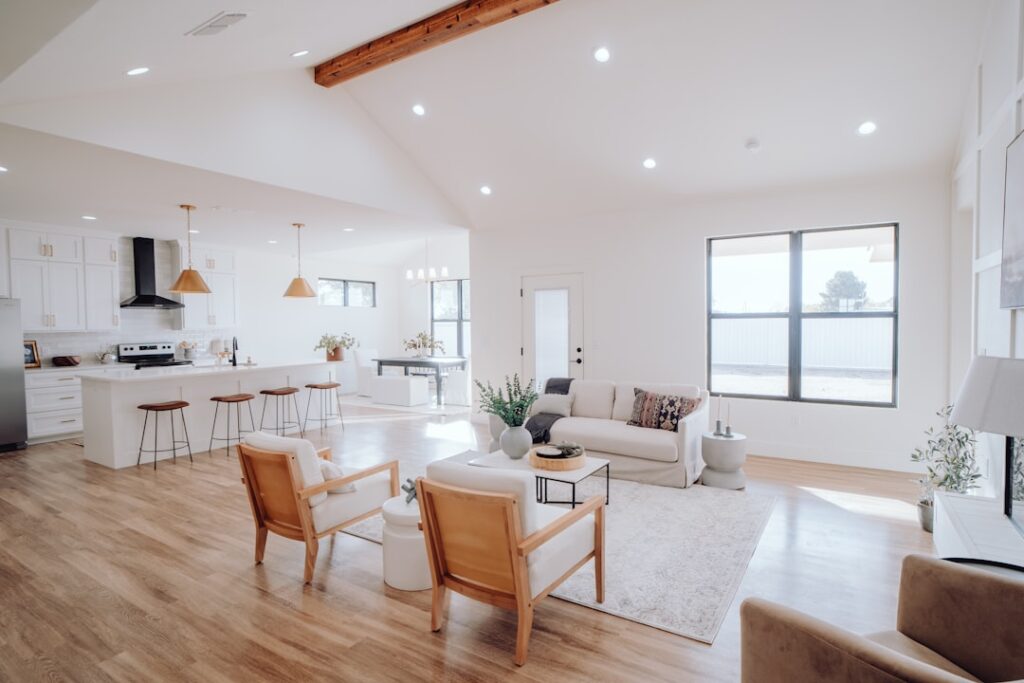
If you’ve been shopping for flooring, you’ve almost certainly run into the term LVT, and an ltv floor is simply luxury vinyl tile, sometimes written LVP when it’s shaped like wood planks. It’s the same family of premium vinyl flooring that has taken over kitchens, basements, and busy family rooms across the country. After installing it in dozens of projects, I’ve found LVT hits a sweet spot of waterproof toughness, realistic looks, and reasonable cost. Here’s what to know before you buy.
What LVT Actually Is
Luxury vinyl tile is a multi-layer flooring built around a PVC core. A high-resolution printed film captures the look of wood, stone, or ceramic, protected by a clear wear layer on top. Unlike older vinyl, today’s LVT uses deep embossing so the texture you see in the grain is something you can actually feel. It’s fully waterproof, which is its single biggest advantage over laminate and engineered wood.
Rigid Core Options: SPC vs WPC
The core determines how the floor feels and how it handles tough conditions.
- SPC (stone plastic composite): A dense limestone-and-PVC core that’s extremely rigid and dent-resistant. It stays stable in sunrooms and over uneven subfloors, and it shrugs off dropped pans. Runs $2.50 to $5 per square foot.
- WPC (wood plastic composite): A foamed core that’s softer and warmer underfoot with a touch more cushion. More comfortable in living spaces at $3 to $6 per square foot.
For high-traffic homes with pets and kids, SPC is usually the smarter pick. WPC wins when comfort underfoot is the priority.
Wear Layer: The Number That Matters Most
The wear layer is the clear protective top, measured in mils (thousandths of an inch). It’s the best predictor of how long the floor will look good.
- 6 mil: Light-use bedrooms and closets only.
- 12 mil: A solid choice for typical family homes.
- 20 to 28 mil: Heavy traffic, rentals, and light commercial use.
Don’t confuse the wear layer with total thickness. A thinner plank with a thick wear layer outlasts a chunky plank with a thin one.
Waterproof Performance
Because the core is PVC-based, LVT doesn’t absorb water. Spills, pet accidents, and even minor flooding won’t swell or warp the planks the way they would with laminate. That makes LVT one of the few wood-look floors you can confidently install in bathrooms, basements, and laundry rooms. Just remember that “waterproof floor” doesn’t mean a waterproof subfloor, so standing water that seeps to the seams should still be cleaned up promptly.
What an LVT Floor Costs
Material typically runs $2 to $6 per square foot. Add underlayment if it isn’t pre-attached, around $0.30 to $0.50, plus transition strips at $15 to $40 each. Professional installation adds $1.50 to $4 per square foot. A 300 square foot room installed often lands between $1,500 and $2,800, while a DIY click-lock job can cut that roughly in half.
Install Methods
LVT comes in three install styles.
- Click-lock (floating): Planks snap together over the subfloor with no glue. The easiest DIY option and forgiving of minor flaws.
- Glue-down: Each piece adheres directly to the subfloor. More stable for large or commercial spaces but needs a flatter substrate.
- Loose-lay: Heavier planks held by friction and a tacky backing, easy to lift and replace.
Whatever you choose, acclimate the boxes 48 hours, leave a 1/4 inch expansion gap, and flatten the subfloor to within 3/16 inch over 10 feet.
Pros and Cons
- Pros: Waterproof, durable, realistic looks, quiet, warm underfoot, and DIY-friendly.
- Cons: Can fade in strong direct sun, may dent under heavy furniture without protectors, and adds less resale value than real hardwood. Radiant heat must be capped, usually near 85°F.
How to Choose the Right LVT
Match the spec to the room. For a busy entry or rental, choose SPC with a 20 mil or thicker wear layer. For a quiet bedroom, WPC with a 12 mil layer offers comfort and value. Always order 7 to 10 percent extra for cuts and future repairs, buy from one batch to avoid shade variation, and test a sample under your room’s actual lighting before committing.
Maintenance and Longevity
LVT is among the lowest-maintenance floors available. Sweep or vacuum regularly to remove grit, and damp-mop with a pH-neutral cleaner. Skip steam mops and harsh abrasives, which can wear the protective layer prematurely. Use felt protectors under furniture and rugs at entries to trap dirt. With this simple care, a quality LVT floor with a thick wear layer holds its appearance for 15 to 25 years, and individual planks in click-lock systems can be swapped if one gets badly damaged.
LVT vs LVP: What’s the Difference?
People often use LVT and LVP interchangeably, and the products are nearly identical in construction. The distinction is purely shape and look. LVT typically refers to square or rectangular pieces that mimic stone or ceramic tile, often with realistic grout lines. LVP refers to longer, narrower planks that imitate wood. Both share the same waterproof cores, wear layers, and install methods, so your choice comes down to whether you want a tile look or a wood look in the room.
Common Mistakes to Avoid
Most LVT failures trace to a few preventable errors. Skipping subfloor flattening leaves planks rocking and clicking underfoot. Failing to acclimate the boxes causes gaps or buckling as the material adjusts to room temperature after install. Forgetting the expansion gap at the walls lets a floating floor peak and lift when it warms up. And buying mixed production batches produces visible shade variation across the room. Flatten the subfloor, acclimate the material 48 hours, leave the gap, and order from one lot, and you’ll dodge nearly every common problem.
The Bottom Line
An LVT floor gives you waterproof, wood- or stone-look durability at a price most homeowners can afford. Focus on the core type and the wear layer thickness, prep the subfloor properly, and pick the install method that fits your skills. Done right, LVT delivers a sharp, low-maintenance floor that holds up for 15 to 25 years.
Prefer to explore on your own?
See how new flooring looks in your actual room in seconds — free, no signup.
Try the free Floor Studio →