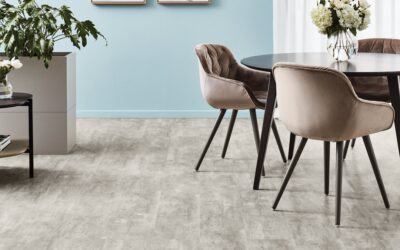
Few phrases in the flooring aisle cause as much confusion as luxury vinyl laminate flooring, because technically it blends two products that are not the same thing. Laminate and luxury vinyl are different materials with different cores, yet shoppers, and even some sales staff, use the terms interchangeably. When someone asks for luxury vinyl laminate, they usually mean a modern rigid-core vinyl plank that clicks together like laminate and mimics wood beautifully. Let me untangle what you are actually looking at and how to buy the right one.
- Why the Term Exists at All
- True Laminate vs Luxury Vinyl: The Core Is Everything
- How It Differs From Old-School Flexible Vinyl
- Pros and Cons at a Glance
- Reading the Specs That Matter
- What You Will Pay
- SPC vs WPC: Choosing Your Rigid Core
- Installation and Subfloor Notes
- Care and Longevity
- Which One Should You Actually Buy?
Why the Term Exists at All
The mashup comes from how similar these floors look on the showroom floor. Both come as planks. Both use a click-lock installation. Both print a photographic wood or stone image under a clear wear layer. To a homeowner standing over two open boxes, they can look nearly identical. So the shorthand “vinyl laminate” grew up to describe any plank floor that installs like laminate but is made of vinyl. It is not an official product category, just a phrase the market invented.
True Laminate vs Luxury Vinyl: The Core Is Everything
The single biggest difference sits where you cannot see it, in the core of the plank.
- Laminate: Built on a high-density fiberboard (HDF) core, which is compressed wood. It feels firm and warm but swells if water reaches it through seams.
- Luxury vinyl (LVP): Built on a plastic (PVC) core. It shrugs off water entirely, which is why it dominates kitchens, baths, and basements.
- Rigid-core vinyl (SPC/WPC): The “vinyl laminate” most buyers actually want. SPC uses a stone-plastic composite core for a hard, stable, waterproof plank; WPC uses a wood-plastic composite for a slightly softer, warmer step.
So when you shop luxury vinyl laminate flooring, you are almost always shopping rigid-core LVP. It gives you the click-together ease people associate with laminate and the total water resistance that laminate cannot match.
How It Differs From Old-School Flexible Vinyl
Do not confuse rigid-core planks with the thin, glue-down or peel-and-stick vinyl of decades past. Rigid cores are dimensionally stable, so they float over minor subfloor imperfections without telegraphing every bump. They also feel solid underfoot rather than spongy, and the thicker wear layers, measured in mils, resist scratches and dents from furniture and pets far better than old sheet vinyl ever did.
Pros and Cons at a Glance
Every floor is a set of trade-offs. Here is the honest scorecard for rigid-core luxury vinyl laminate flooring.
- Pro: Genuinely waterproof, so it goes anywhere in the house.
- Pro: Easy floating click installation, DIY-friendly for handy owners.
- Pro: Comfortable, quiet step, especially WPC cores with attached pad.
- Con: Real laminate often shows crisper embossing and a more natural wood grain up close.
- Con: Cheap vinyl can dent under heavy point loads; check the wear-layer thickness.
- Con: Not refinishable, so a badly worn plank has to be swapped, not sanded.
Reading the Specs That Matter
Ignore the marketing name on the box and read three numbers. First, the wear layer: 12 mil is fine for bedrooms, 20 mil handles a busy family home, and 28 mil suits heavy traffic or light commercial use. Second, the total plank thickness, where 5mm to 8mm rigid cores feel the most substantial. Third, the attached underlayment, since an integrated IXPE or cork pad quiets the floor and cushions the step without a separate layer.
What You Will Pay
Material for quality rigid-core luxury vinyl runs about $2.50 to $5.00 per square foot, with designer collections reaching $6 or more. Installation adds roughly $1.50 to $4.00 per square foot if you hire out, though the click system makes this one of the more approachable DIY floors. Budget for transition strips, a tapping block, and a good utility knife if you tackle it yourself.
SPC vs WPC: Choosing Your Rigid Core
Once you have settled on rigid-core vinyl, the next fork in the road is SPC versus WPC, and the difference is real. SPC (stone-plastic composite) uses a limestone-and-PVC core that is dense, thin, and extremely stable. It resists dents from heavy furniture, tolerates wide temperature swings in sunrooms and cabins, and telegraphs almost nothing from an imperfect subfloor. The trade-off is a harder, colder step. WPC (wood-plastic composite) uses a foamed core that is thicker and softer, so it feels warmer and quieter underfoot, but it dents a little more easily under concentrated loads.
For a busy kitchen, a rental, or a room with big south-facing windows, SPC is the better choice for its stability and dent resistance. For a bedroom or a living room where comfort underfoot matters most, WPC’s cushioned feel wins. Neither is wrong, they just prioritize different things, and knowing which core you are buying matters far more than the marketing name printed on the carton.
Installation and Subfloor Notes
Part of the appeal of luxury vinyl laminate flooring is how forgiving the install is. Rigid planks float over most existing hard surfaces, including tile and vinyl, as long as the subfloor is clean, dry, and reasonably flat. You still want to fix major dips and humps, because even a stable plank will flex over a bad low spot. Leave the required expansion gap around the perimeter, usually about 1/4 inch, and use transition strips in very large runs. Over concrete, confirm the slab is dry, and add a moisture barrier if the manufacturer calls for one. Most homeowners with basic tools can lay a room in a weekend.
Care and Longevity
One of the quiet advantages of rigid-core luxury vinyl is how little it asks of you. Because the surface is a printed film under a tough wear layer, there is no refinishing and no sealing. Sweep or vacuum regularly to keep grit off the surface, then damp-mop with a pH-neutral vinyl-safe cleaner. Avoid abrasive pads and harsh solvents that can dull the finish, and put felt pads under furniture legs to prevent dents from heavy point loads. With a 20-mil-or-thicker wear layer and basic care, a quality floor easily lasts 15 to 25 years, and most carry residential warranties in that range plus a waterproof guarantee. If a plank ever does get damaged, a floating floor lets you pop the row apart and swap the single board rather than redoing the room.
Which One Should You Actually Buy?
If your priority is water immunity for a kitchen, bathroom, laundry, or basement, buy rigid-core luxury vinyl and enjoy the laminate-style install. If you want the most realistic, warmest-feeling wood look in a dry bedroom or living room and you are careful about spills, true HDF laminate still holds an edge on texture. Either way, now you know that luxury vinyl laminate flooring is a marketing hybrid, not a distinct material, and you can shop by core and wear layer instead of by the label.
Prefer to explore on your own?
See how new flooring looks in your actual room in seconds — free, no signup.
Try the free Floor Studio →