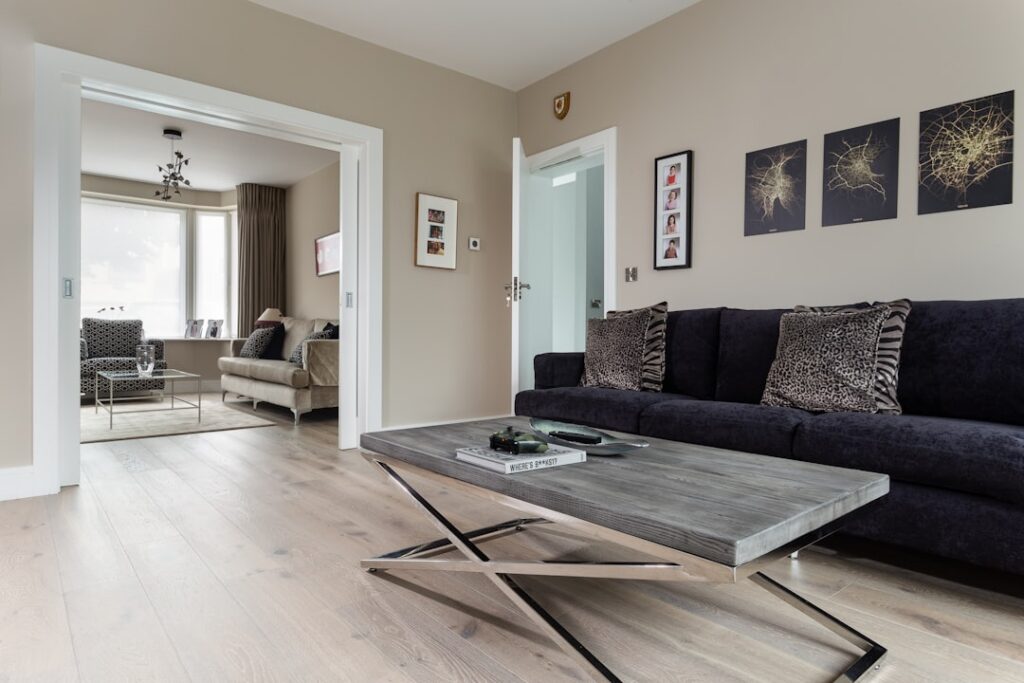
Walk into a remodel where the subfloor has a hump, a dip, or a gentle curve, and a rigid plank will rock, gap, or crack. That is exactly the problem flexible laminate flooring is built to solve. Instead of a stiff, locked-together board, these products use a more pliable core or a glue-down format that conforms to surfaces a click-lock plank refuses to sit flat on. As a contractor, I reach for flexible products in older homes and tricky transitions, but they are not the right answer for every floor. Here is what you actually need to know before you buy.
What “Flexible” Laminate Actually Means
The word “flexible” gets used loosely in flooring marketing, so it is worth pinning down. In practice it covers a few different things. Some products are thin, glue-down laminate or laminate-look planks that bend because they are not built around a thick rigid core. Others are flexible LVP and laminate hybrids with a softer core layer that tolerates minor subfloor imperfections better than a stiff SPC plank.
The common thread is that the plank can curve or conform rather than staying dead flat. That makes the product behave more like a resilient floor and less like a piece of laminate furniture you snap together. If a salesperson tells you a floor is “flexible,” ask specifically whether it is glue-down, what the core is made of, and how much subfloor deviation it tolerates per the spec sheet.
Where Flexible Laminate Shines
This category earns its keep in situations that defeat ordinary planks.
- Uneven or older subfloors. Homes built decades ago rarely have a dead-flat slab or plywood deck. A pliable, glue-down product follows minor undulations instead of bridging them and creating hollow spots.
- Curved or irregular layouts. Around bay windows, rounded room edges, or odd transitions, a board that bends saves a lot of fussy cutting.
- Low-clearance situations. Thinner flexible products add less height, which helps under doors and at thresholds where a thick rigid plank would not fit.
- Quiet, solid feel. Glue-down flexible floors bond directly to the subfloor, so they feel firm underfoot and tend to be quieter than a floating click-lock floor.
Pros and Cons at a Glance
Pros
- Conforms to imperfect subfloors that defeat rigid planks
- Often thinner, easing height and threshold issues
- Glue-down versions feel solid and quiet underfoot
- Wide range of wood-look and stone-look designs
- Generally affordable, often $2 to $5 per square foot for material
Cons
- Glue-down installation is messier and slower than click-lock
- Harder to remove or replace boards later
- Telegraphs serious subfloor defects rather than hiding them
- Less impact resistance than thick rigid-core products
- Moisture tolerance varies widely; check the spec, do not assume
Flexible vs. Rigid Core Laminate
The honest comparison comes down to your subfloor and your priorities. Rigid-core products, including SPC and WPC luxury vinyl and thick laminate, are stiff on purpose. That stiffness lets them float over a subfloor and span small gaps, but it also means they will rock over a bump or telegraph a high spot as a noticeable creak.
Flexible products trade that stiffness for conformability. They follow the subfloor, which is great when the subfloor is decent but imperfect, and bad when the subfloor is genuinely wavy, because a pliable floor will mirror every dip you did not fix. The takeaway: flexible laminate is not a license to skip subfloor prep. Fill low spots, grind down high spots, and you will get a far better result with either type.
What Flexible Laminate Flooring Costs
Material pricing for flexible laminate and laminate-look products typically runs $2 to $5 per square foot, with budget rolls and tiles at the low end and thicker, premium-look planks higher. Glue-down installation usually adds $2 to $4 per square foot in labor because spreading adhesive and setting boards is slower than snapping a floating floor together. Budget for adhesive, a notched trowel, and a floor roller as well.
Do not forget subfloor prep in your budget. A bag of self-leveling compound and a few hours of grinding can be the difference between a floor that lasts and one that fails in a year. On an imperfect subfloor, prep is not optional.
Installation Tips From the Field
- Acclimate the material. Let boxes sit in the room for 48 hours so the product reaches room temperature and humidity before you install.
- Prep the subfloor. Clean, dry, and flat. Use a straightedge to find dips deeper than about 3/16 inch over 10 feet and level them.
- Use the right adhesive. For glue-down products, follow the manufacturer’s adhesive and trowel-notch spec exactly. The wrong trowel changes the bond.
- Roll the floor. A 100-pound floor roller seats the boards into the adhesive and eliminates air pockets that cause hollow spots.
- Mind the moisture. Test concrete slabs for moisture before gluing anything down. Excess moisture wrecks adhesion.
Care and Maintenance
Routine care is easy. Sweep or vacuum to remove grit, and damp-mop with a cleaner suited to laminate or resilient flooring. Avoid soaking the floor, and wipe spills promptly, especially at seams. Felt pads under furniture legs prevent dents and scratches, and entry mats keep tracked-in grit off the surface, which is the main thing that wears the wear layer.
One advantage of a glue-down floor is that it does not shift or develop gaps the way a poorly installed floating floor can. As long as the bond stays sound, the seams stay tight. If a board does come loose over time, you can usually re-glue that section without disturbing the rest of the floor, provided you have a few spare planks from the original lot. Always keep a box of leftovers; dye lots change, and a future repair that matches perfectly is worth the storage space in the garage.
Common Mistakes to Avoid
Most failures I get called out to inspect trace back to a handful of avoidable errors. The biggest is skipping subfloor prep and assuming a flexible product will magically hide a wavy slab; it will not, and the dips will show through within months. The second is using the wrong adhesive or the wrong trowel notch, which leaves either too little glue to bond or so much that it squeezes up through the seams.
Other repeat offenders include installing over a damp slab without a moisture test, failing to roll the floor so air pockets remain trapped underneath, and rushing foot traffic before the adhesive has cured. Read the manufacturer’s cure time and stay off the floor until it has set, even when the surface feels solid.
Is Flexible Laminate Flooring Worth It?
If you are flooring an older home with a less-than-perfect subfloor, working around curves, or trying to keep floor height low, flexible laminate flooring is a smart, budget-friendly choice. If you have a flat subfloor and want the fastest possible DIY install, a floating rigid-core click-lock floor will go down quicker. Match the product to the subfloor you actually have, prep it properly, and either way you will end up with a floor that performs the way you hoped.
Prefer to explore on your own?
See how new flooring looks in your actual room in seconds — free, no signup.
Try the free Floor Studio →