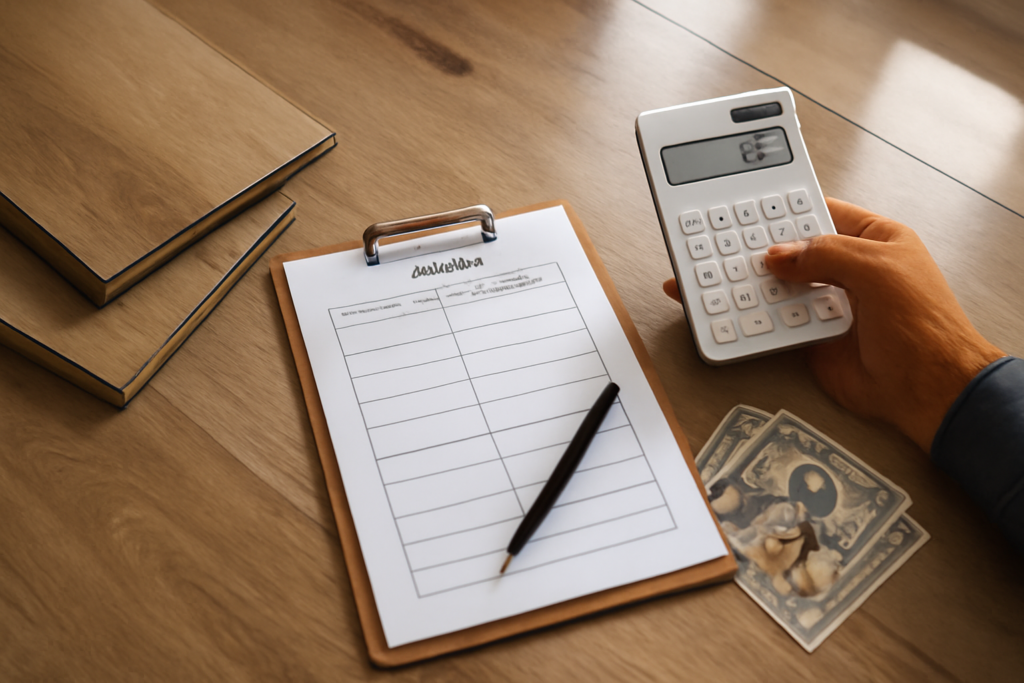
For most US homeowners, the lvp flooring cost per square foot lands somewhere between roughly $2 and $5 for the planks themselves, with professional installation adding another $1 to $4. That means a typical 200-square-foot room often falls in the $600 to $1,800 range once materials, labor, and a few small extras are tallied up. Luxury vinyl plank has become one of the most popular flooring choices in the country precisely because it offers that wide price spread, so a careful shopper can land near the bottom while someone chasing thick, waterproof, rigid-core boards can spend closer to the top.
At D and G Flooring, we field cost questions every single week, and the honest answer is always the same: the number on the shelf is only part of the story. This guide breaks the price down into real components so you can build a budget that survives contact with reality.
What Drives the Price Per Square Foot
LVP is not a single product. It is a category that ranges from thin, glue-down tiles to thick floating planks with attached underlayment. A handful of factors push the per-square-foot figure up or down.
- Wear layer thickness. Measured in mils, the clear top layer protects against scratches and scuffs. A 6-mil to 8-mil wear layer suits light residential traffic, while 12-mil to 20-mil layers handle busy households, pets, and rolling chairs. Thicker wear layers cost more.
- Core construction. Flexible glue-down vinyl tends to be cheapest. Rigid cores, marketed as SPC (stone plastic composite) or WPC (wood plastic composite), cost more but resist dents and hide subfloor imperfections.
- Plank thickness. Overall thickness usually runs from about 4mm to 8mm. Thicker boards feel more solid underfoot and often include better locking edges.
- Surface detail. Embossed-in-register textures, beveled edges, and longer wide planks read as more authentic wood and carry a premium.
- Brand and warranty. Longer residential warranties, often 15 to 25 years, generally accompany higher-priced lines.
Typical LVP Price Tiers
Thinking in tiers makes shopping far less overwhelming. Here is how the general US market tends to break down for materials alone, before installation.
- Budget ($2 to $3 per square foot): Thinner planks, lighter wear layers around 6 to 12 mils, basic textures. Fine for bedrooms, closets, and low-traffic rooms or rental units where you want clean looks without a big outlay.
- Mid-range ($3 to $4 per square foot): Rigid SPC cores, wear layers in the 12 to 20-mil range, attached underlayment, and convincing wood visuals. This is the sweet spot for most living areas and kitchens.
- Premium ($4 to $5 and up per square foot): Thick boards, the toughest wear layers, enhanced sound underlayment, wider and longer planks, and stronger warranties. Worth it for whole-home projects and high-traffic homes.
Installation Labor Costs
Professional installation commonly adds $1 to $4 per square foot depending on your region, the complexity of the layout, and the installation method. Floating click-lock floors install faster and cheaper than glue-down vinyl, which requires more prep and adhesive labor. Expect to pay toward the higher end if your project includes many doorways, closets, angled cuts, stairs, or rooms that need careful pattern matching.
Some homeowners save money by installing floating LVP themselves. Modern click-lock systems are genuinely DIY-friendly, and a confident weekend warrior with a tapping block, a utility knife, spacers, and a few hours of patience can finish a small room. Just remember that a flawless result still depends heavily on subfloor prep, which is where many DIY jobs run into trouble.
Hidden Costs People Forget
The sticker price rarely tells the whole tale. Budget for these line items so you are not caught off guard.
- Underlayment: Around $0.30 to $0.80 per square foot if your planks do not have it attached. It cushions the floor and helps with sound.
- Subfloor prep: Self-leveling compound, plywood patching, or moisture barriers can add meaningfully to the total if your existing subfloor is uneven or damp.
- Old flooring removal and disposal: Tearing out carpet, tile, or glued vinyl and hauling it away often runs $1 to $2 per square foot.
- Transition strips and trim: T-moldings, reducers, stair nosing, and new baseboards or quarter-round add up across a whole house.
- Waste factor: Order about 7 to 10 percent extra to cover cuts, mistakes, and future repairs. Diagonal layouts call for more.
Sample Budgets by Room Size
Numbers feel more concrete when tied to actual spaces. These rough estimates assume mid-range material plus professional installation, before tax.
- 120-square-foot bedroom: Roughly $480 to $960 all in.
- 200-square-foot living room: Roughly $800 to $1,600.
- 320-square-foot open kitchen and dining area: Roughly $1,280 to $2,560.
- 1,000-square-foot main level: Roughly $4,000 to $8,000, where ordering in bulk sometimes earns a small per-square-foot discount.
If you handle a straightforward floating install yourself, you can often cut the total by 30 to 50 percent, since labor is a large slice of the pie.
How to Get the Best Value
Spending more does not always mean buying better, and the cheapest box on the rack can cost you later in replacements. A few habits keep your dollars working hard.
- Match the wear layer to real-world traffic instead of overpaying for a commercial-grade floor in a guest room.
- Buy the whole job from the same dye lot so colors blend seamlessly across rooms.
- Compare the total installed price, not just the per-square-foot plank price, when collecting quotes.
- Ask whether underlayment, removal, and trim are included in any installation bid, because vague quotes hide surprises.
- Look for waterproof rigid-core lines in kitchens, baths, and basements where moisture is a genuine concern.
Is LVP Worth the Cost
For the money, luxury vinyl plank delivers a rare combination of durability, water resistance, comfortable feel, and convincing looks. Compared with solid hardwood, which can run several times the price installed, LVP gives families a floor that shrugs off spills, kids, and pets without constant babysitting. Compared with laminate, the better waterproof LVP options handle wet rooms more confidently. The category earns its popularity by hitting a practical middle ground.
When you plan around the full picture, materials, labor, prep, and trim, the lvp flooring cost per square foot becomes far easier to predict. Decide your traffic level, pick the right tier, pad your order by about 10 percent, and you will walk into the showroom with a realistic budget instead of a hopeful guess. That preparation is what separates a smooth project from a stressful one.
Frequently Asked Cost Questions
Does thicker LVP always cost more? Generally yes, but thickness and wear layer are separate specs. A thick plank with a thin wear layer may not outlast a thinner plank with a tough top coat, so read both numbers.
Can I install over existing tile? Often yes, if the tile is sound and reasonably flat. Rigid-core floating LVP tolerates minor imperfections, which can save you costly tear-out.
How long should LVP last? With reasonable care, quality residential LVP commonly lasts 15 to 25 years, which spreads the upfront cost across a long stretch of daily use and makes the per-year price quite modest.
Prefer to explore on your own?
See how new flooring looks in your actual room in seconds — free, no signup.
Try the free Floor Studio →