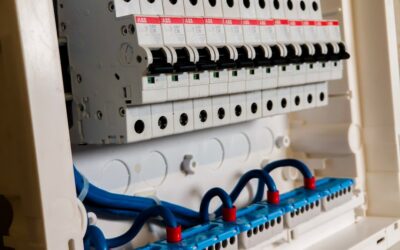
The one switch in your electrical panel that controls every other switch. Knowing how your main breaker switch works and when to flip it is one of those homeowner skills that stays invisible until the moment you desperately need it. A grounded understanding of this device prevents fires, saves lives during storm-related electrical emergencies, and lets you tackle any wiring project with confidence.
What the Main Breaker Actually Does
The main breaker is the master disconnect for your entire home’s electrical system. It sits at the top of your breaker panel in most configurations — occasionally at the bottom in older panels. When you flip it to OFF, every circuit in the house loses power simultaneously. Everything from the furnace to the bedroom outlets goes dark until you flip it back on.
Modern homes typically have a 200-amp main breaker, though you will still find 100A or 150A panels in houses built before 1980. The amperage rating is printed on the switch handle in bold numbers. This rating is the maximum current your home’s service can draw safely from the utility before the breaker trips.
How to Identify Yours in the Panel
Walk to your breaker panel — usually in a basement, garage, utility closet, or on an exterior wall. The main breaker is almost always physically the largest switch in the panel, often twice the size of individual circuit breakers. It is typically set apart at the top of the breaker bank with its own separate mounting position.
Look for the labeled amperage (100, 150, or 200) on the handle itself. If your panel has no single large breaker at the top, you may have a split-bus panel — common in homes built 1965-1980 — where multiple large breakers in the upper section each function as main disconnects for different sections of the house.
When You Should Flip It Off
- Before doing any significant electrical work beyond changing a single outlet or switch
- When evacuating during a flood to prevent energized wiring contact with water
- After a direct lightning strike on the house to let an electrician inspect before restoring power
- If you smell burning plastic, see smoke from an outlet, or hear sizzling from walls
- Before the utility shuts off power for planned work, then keeping it off until service is restored
- When the house will be vacant for weeks in winter with the water drained and heat off
Flipping the main breaker is also the fastest response to an unexplained electrical problem you cannot pinpoint. Killing all power lets you reset everything and reconnect circuits one at a time to isolate the issue.
Safety Rules Before You Touch It
Always stand to the side of the panel, not directly in front, when throwing the main breaker. Arc flash incidents, while rare in residential panels, can throw sparks outward during a malfunction. Wear safety glasses. Keep one hand in your pocket or behind your back so you do not accidentally create a circuit through your body if anything goes wrong.
Make sure the floor in front of the panel is dry. Never work on the panel while standing in standing water or with wet hands. If the panel is in a damp basement, lay down a piece of plywood or stand on a rubber mat before reaching for the switch.
What Still Stays Live
Flipping the main breaker kills power to everything downstream of the panel, but it does not cut the utility’s feed to your service. The thick wires entering the top of the panel — called the service entrance conductors — are still hot. The meter base outside is still hot. The lugs where those wires land inside the panel are still hot.
If you need to work on the panel itself, the service-side conductors, or the meter, the utility must physically pull your meter or open the disconnect at the pole. Never assume any part of the panel is safe without a non-contact voltage tester confirming it.
Resetting After a Trip
A tripped main breaker is rare but alarming. The handle will be in a middle position — neither fully ON nor fully OFF. To reset, push the handle firmly to the full OFF position first. You will feel it click past a detent. Then flip it back to ON with a firm, decisive motion. Hesitant half-flips can damage the internal contacts.
If the breaker trips again immediately, do not keep resetting it. Repeated trips within a short time indicate either a severe fault somewhere in the system or a failing breaker itself. Both situations require a licensed electrician — typical diagnosis runs $150-$300, and a full panel replacement is $1,800-$4,500.
Causes of Main Breaker Trips
Total house current exceeding the panel rating is the most common cause. This happens when multiple high-draw appliances run simultaneously — central AC, electric dryer, electric oven, and a hot tub all on at once in an older 100A panel, for example.
Short circuits on large-gauge wiring also trigger the main. Lightning-induced surges can damage the breaker’s trip mechanism and cause it to open unexpectedly. A defective main breaker can also fail closed, meaning it does not trip when it should — a serious fire risk that thermal imaging inspections sometimes reveal during home sales.
Generator and Transfer Switch Considerations
Anyone backfeeding a generator into the home’s wiring must have a main breaker interlock or transfer switch. The interlock is a metal slide ($50-$150 parts) that physically prevents the main breaker and the generator breaker from being ON at the same time. Without this device, you risk energizing the utility lines during an outage and killing a lineman.
Transfer switches, priced from $300 for manual units to $2,000+ for automatic, accomplish the same safety goal with more convenience. Either solution requires permitted installation by an electrician in most jurisdictions.
Signs Your Main Breaker Needs Replacement
Warmth on the handle during normal operation suggests loose connections or internal arcing. Discolored or browned plastic around the breaker points to overheating. Trips that happen without corresponding heavy electrical load indicate the trip mechanism is degrading.
The breaker also has a service life of 25-40 years depending on use and environment. Homes in coastal salt-air areas see faster corrosion of internal parts. Panels in unconditioned garages with temperature swings age faster than panels in conditioned utility rooms. If your panel is over 30 years old, is a Federal Pacific Stab-Lok, Zinsco, or Challenger brand, or shows any physical damage, have it evaluated. Safe electrical infrastructure is not a place to save money.