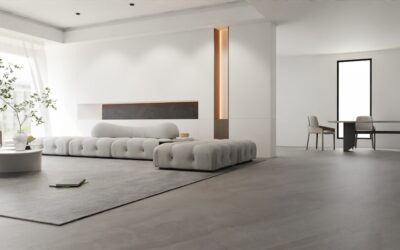
Real maple hardwood looks gorgeous and dents at the lightest knock; mid-grade maple solid floors show pet claw marks within six months in any active household. Maple vinyl flooring solves both problems by printing the bright clean grain on top of a tough waterproof core. The visual quality of premium maple-look LVP in 2026 is genuinely hard to tell from real wood at standing height. Here is what to look for, what to skip, and where the product actually wins over real maple.
Why Maple-Look Vinyl Has Surged
Maple’s pale color, fine grain, and subtle character make it the lightest mainstream wood look. That clean appearance pairs perfectly with modern Scandinavian, coastal, and farmhouse interiors. Real maple, however, ranks middling on hardness at 1,450 Janka, and the smooth grain shows every dent.
LVP eliminates the durability problem. A maple-look SPC plank with a 22 mil wear layer survives furniture moves, dog claws, and dropped pots that would mar real maple in seconds. The aesthetic match has also improved dramatically since 2020 thanks to embossed-in-register texture and longer plank lengths.
Construction and Wear Layer Specs
- Wear layer: 12 mil for budget products, 20 to 22 mil for premium residential, 28+ mil for commercial.
- Core: SPC (stone polymer composite) is the dominant choice for maple looks because it resists impact and humidity better than WPC.
- Total thickness: 5 to 8 mm including any attached IXPE underlayment pad.
- Plank size: 7 by 48 inches for traditional looks, 9 by 60 inches for wide-plank modern installs.
- Joinery: Valinge 5G drop-and-lock is the easiest for DIY installers.
Top Maple Vinyl Brands
Five product lines dominate the maple-look LVP market in 2026:
- COREtec Originals Premium Northern Maple: 28 mil wear layer, 7 inch wide. $5 to $6 per sq ft.
- Mohawk SolidTech Plus Maple Natural: 22 mil, attached pad, 7.5 inch wide. $3.75 to $4.75.
- Shaw Floorte Pro Anvil Plus Sugar Maple: 20 mil, 7 inch wide. $3.50 to $4.25.
- Karndean Korlok Country Maple: Glue-down LVT, 30 mil. $5.50 to $7.50.
- NuCore Mountain Maple (Floor & Decor): 22 mil, budget pick. $2.99 to $3.49.
Pros of Maple Vinyl Flooring
Waterproof performance is the killer feature. Maple-look LVP handles kitchens, bathrooms, and basements that real maple cannot survive. The SPC core resists 24-hour standing water without delaminating, which makes the product safe for whole-home installations including wet zones.
Durability also crushes real maple. A 22 mil wear layer handles 5,500+ Taber abrasion cycles, the equivalent of 15 years of heavy residential use. Dent resistance from the rigid SPC core is roughly 10 times that of solid maple hardwood.
Price wins too. Maple vinyl runs $3 to $6 per sq ft for premium products versus $7 to $11 for real maple hardwood, before installation labor.
Cons and Honest Limitations
The biggest downside is resale perception. Some buyers in the $750,000+ home segment still distinguish between real wood and LVP, and the appraisal premium for real hardwood floors persists in luxury markets. Below $750,000, the LVP-versus-hardwood premium has narrowed to under 2% according to 2025 NAR data.
Maple vinyl is also harder underfoot than carpet or even hardwood. The rigid SPC core feels less forgiving on bare feet during long cooking sessions, which is why some homeowners pair it with anti-fatigue mats at the sink and stove.
Print pattern repetition can be visible up close on budget products. Plank shuffling during install and choosing a brand with 20+ unique prints minimizes the issue.
Installation Walkthrough
- Acclimate planks 48 hours in the install space at 60 to 85°F.
- Check subfloor flatness to 3/16 inch over 10 feet. Self-level if needed.
- Lay a vapor barrier on concrete subfloors below grade.
- Stagger end joints by at least 8 inches and shuffle planks across 3 to 4 boxes for natural variation.
- Leave 1/4 inch expansion gaps at every wall, doorway, and fixed object.
- Install quarter-round or shoe molding to cover expansion gaps after the floor is laid.
Subfloor Preparation Tips
Subfloor flatness matters more than for hardwood because SPC planks transmit any high spot or low spot directly to the seams. Use a 10 foot straightedge to check both directions, and grind or self-level any deviation greater than 3/16 inch.
On concrete slabs, run a calcium chloride or RH probe moisture test. SPC handles up to 90% RH and 6 lb per 1,000 sq ft per 24 hours, but most warranty terms require documentation of the readings.
Cost Snapshot for a 500 sq ft Kitchen
- Budget maple vinyl (NuCore or similar), DIY install: $1,800 to $2,400 total.
- Mid-tier maple vinyl (Mohawk SolidTech), professional install: $2,800 to $3,600.
- Premium maple vinyl (COREtec Originals), professional install: $3,500 to $4,500.
- Glue-down LVT (Karndean Korlok), professional install: $4,200 to $5,200.
Maple Vinyl vs Real Maple Hardwood
Side-by-side, the differences narrow to three categories. Real maple develops a patina and yellows slightly with age; vinyl stays color-true. Real maple can be refinished 4 to 5 times over a 75-year life; vinyl gets replaced when worn. Real maple feels slightly warmer and softer underfoot; vinyl feels harder but closer to room temperature.
For families with kids, pets, and busy schedules, maple vinyl wins on every practical measure except long-term refinishability. For homeowners who plan to stay 30+ years in a custom home, real maple may still justify its price premium.
Bottom Line on Maple Vinyl
Maple vinyl flooring is one of the strongest value picks in the 2026 LVP market for shoppers who want a clean, light wood look without the maintenance and damage risk of real maple. Specify a 20 mil or thicker wear layer, install over a flat subfloor with proper expansion gaps, and you will get 15 to 20 years of trouble-free use.
Prefer to explore on your own?
See how new flooring looks in your actual room in seconds — free, no signup.
Try the free Floor Studio →