
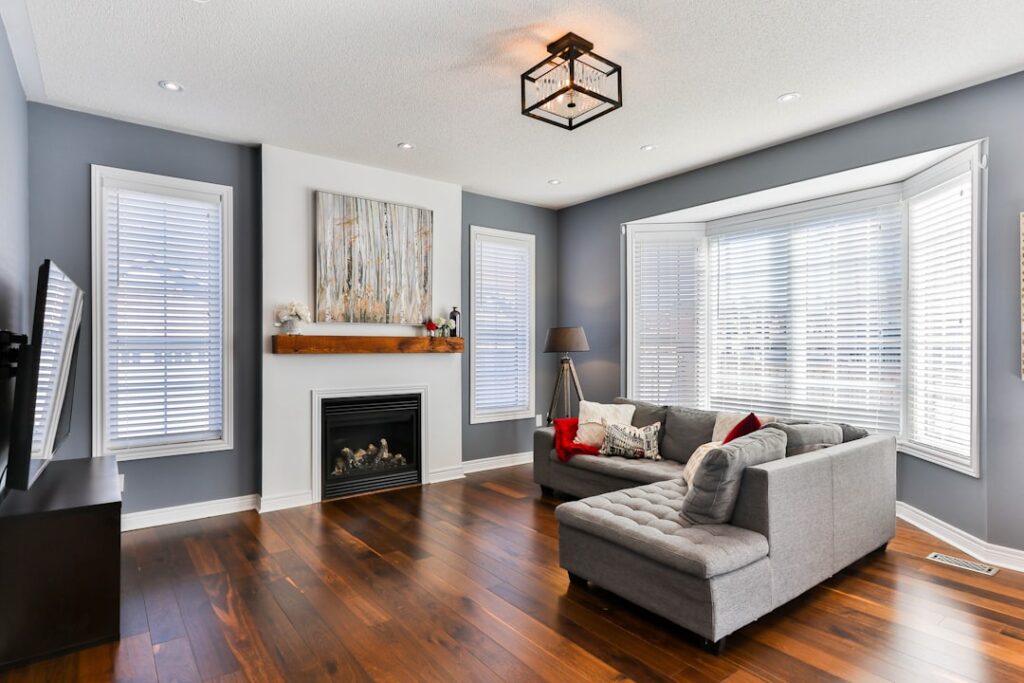
Maple has been one of the most consistent residential hardwoods in North America for over a century, and the engineered version has eclipsed solid plank as the default install in most modern homes. Maple engineered hardwood brings a Janka hardness around 1450, a closed-cell grain that resists denting, and a multi-ply construction that handles humidity swings far better than solid maple. The combination has made it the go-to floor for slab-on-grade builds, basement remodels, and condos with radiant heat where solid wood simply cannot be used.
What Engineered Maple Actually Is
Engineered maple is built like a piece of premium plywood. The bottom layers (3 to 9 plies of birch, eucalyptus, or HDF) form a dimensionally stable core. The top layer is a sawn or sliced veneer of hard maple (Acer saccharum), ranging from 0.6 mm in budget products up to 6 mm in premium European or American brands. The wear layer determines how many times the floor can be sanded and refinished. A 3 mm wear layer typically allows two refinishes over the life of the floor.
Compared to solid maple, the engineered version moves about 60 percent less seasonally, which is why it works over radiant heat and in finished basements where solid planks would cup or gap.
Hardness and Wear Specs You Should Know
Maple’s published Janka hardness sits at 1450 lbf, harder than red oak (1290) but softer than hickory (1820). For a busy household with kids, pets, and chair-rolling, that hardness is plenty. Other specs worth checking before buying:
- Wear layer thickness: 2 mm minimum for residential, 3 mm preferred for refinishable, 4 mm+ for premium
- Total thickness: 3/8 inch (9 mm) entry-level, 1/2 inch (12 mm) mid-range, 5/8 inch (15 mm) premium
- Plank width: 3 to 5 inches budget, 5 to 7.5 inches mid-range, 7.5 inches and up premium wide-plank
- Finish: aluminum-oxide UV-cured urethane on most factory finishes, with 7 to 10 coats common
- FloorScore certification confirms low VOC emissions under California Section 01350
Best Brands and Real Prices
Maple engineered hardwood comes in a wide quality range. These are the brands that ship reliably in the US:
- Bruce Hydropel Maple: $5.50 to $6.80 per sq ft. Mass-market with water-resistant core. Sold at Lowe’s and Home Depot.
- Mohawk RevWood and TecWood Maple: $4.50 to $7 per sq ft. Wide retail availability, 2 mm wear layer.
- Shaw Floorte Pro: $5 to $8 per sq ft. Includes wirebrushed and matte options, 3 mm wear layer on premium SKUs.
- Mannington Maine Lodge Maple: $7 to $10 per sq ft. USA-made, FloorScore certified.
- Mirage Maple Hard Hill Series: $9 to $13 per sq ft. Canadian, 4 mm wear layer, available in wide-plank widths up to 7 1/4 inches.
- Carlisle Wide Plank Maple: $14 to $22 per sq ft. Custom milled, 6 mm wear layer, white-oak-quality build.
For most homes, the sweet spot for value and longevity is the Mannington and Mirage tier. Premium custom brands make sense only for whole-house installs you plan to keep 30 to 50 years.
Where Maple Works Best
Maple’s closed grain photographs cleanly and feels smooth underfoot. It is at its best in:
- Open-concept living areas where consistent color matters
- Bedrooms and home offices where the smooth grain feels less busy
- Modern and Scandinavian-style interiors
- Light-stained or natural finish applications
It is less forgiving than oak for two reasons. First, the tight grain shows scratches more visibly. Second, maple does not absorb stain evenly, so dark-stained maple often looks blotchy. If you want a dark floor, pick a factory-stained wirebrushed product like the Shaw Empire Oak Brushed lookalike rather than site-stained maple.
Installation Methods and Costs
Engineered maple installs three ways, and the choice depends on the subfloor and the plank’s locking system.
- Click-lock floating: Fastest install, no fasteners, works over plywood or concrete with a 6 mil vapor barrier. Labor runs $2.50 to $4.50 per sq ft.
- Glue-down: Required over concrete in most warranties and the most stable on slab. Uses urethane adhesives like Bostik Best or Mapei Ultrabond ECO 985 at about $1.20 per sq ft in adhesive cost. Labor $3.50 to $5.50.
- Staple or nail-down: Over wood subfloor only, with cleats every 6 to 8 inches. Labor $3 to $5 per sq ft.
Total installed cost for a typical mid-range engineered maple floor lands $9 to $14 per sq ft including underlayment, trim, and disposal of existing floor. Premium brands push to $18 to $25 per sq ft installed.
Subfloor Prep and Moisture Specs
Most installation failures trace to skipped moisture testing. Before any install:
- Concrete slabs: test with calcium chloride per ASTM F1869 (must be under 3 lbs/1000 sq ft/24 hrs) or RH probe per ASTM F2170 (must be under 75 percent RH).
- Wood subfloors: moisture content within 4 percentage points of the flooring, and never above 12 percent.
- Flatness: 3/16 inch in 10 ft per NWFA installation guidelines. Self-level any low spots before laying.
Acclimate the planks 48 to 72 hours in the install space with HVAC running at typical living temperatures, between 60 and 80 degrees F and 30 to 50 percent relative humidity.
Maintenance for Long-Term Looks
Engineered maple is low maintenance if you respect the finish. Use a microfiber dust mop daily in high-traffic areas, vacuum on hardwood setting weekly, and damp-mop with a pH-neutral cleaner like Bona Hardwood Floor Cleaner ($10 for 32 oz) every two weeks. Avoid Murphy’s Oil Soap, vinegar, and steam mops. All three damage the polyurethane finish. Felt pads on furniture legs prevent the dents that maple’s closed grain shows clearly.
Maple vs Oak vs Hickory
If you cannot decide, here is the contractor short version. Oak hides scratches best and stains beautifully. Hickory is the hardest and most rustic. Maple has the cleanest, most modern look but shows scratches earliest. For a kitchen with two dogs and active kids, hickory wins. For a polished living room or master suite, maple is the better pick. The maple engineered floor in either case lasts 25 to 50 years with reasonable care.
Prefer to explore on your own?
See how new flooring looks in your actual room in seconds — free, no signup.
Try the free Floor Studio →

