A good marble countertop sealer is the single most important thing standing between your beautiful marble and a permanent coffee ring, and yet most homeowners either apply the wrong type or skip it entirely. Understanding what a sealer does — and just as important, what it can’t do — will save you from expensive disappointment.
Part of our Countertops guide — explore the full guide →
Marble is a natural, porous, calcareous stone, which is a fancy way of saying it soaks up liquids and reacts to acids. A penetrating sealer soaks into those pores and dramatically slows how fast spills absorb, giving you time to wipe them up before they stain. Let’s cover the crucial distinction between staining and etching, then get into testing, product choices, and application.
Sealer Prevents Stains, Not Etching
This is the point I wish every marble owner understood before they buy. A sealer prevents staining. It does not prevent etching. These are two completely different kinds of damage.
A stain is when a colored liquid — wine, coffee, oil, tomato sauce — absorbs into the stone and discolors it. A sealer fights this by filling the pores so the liquid sits on top long enough for you to wipe it away. Etching, on the other hand, is a chemical burn. When an acid like lemon juice, vinegar, or wine touches marble, it eats into the calcium carbonate and leaves a dull, rough spot regardless of any sealer.
No sealer on earth stops etching, because etching happens on the surface, not in the pores. The only defenses against etching are prompt cleanup, using cutting boards and coasters, and accepting a certain amount of patina as part of living with marble. Set that expectation now and you’ll be far happier with the stone.


Penetrating vs. Topical Sealers
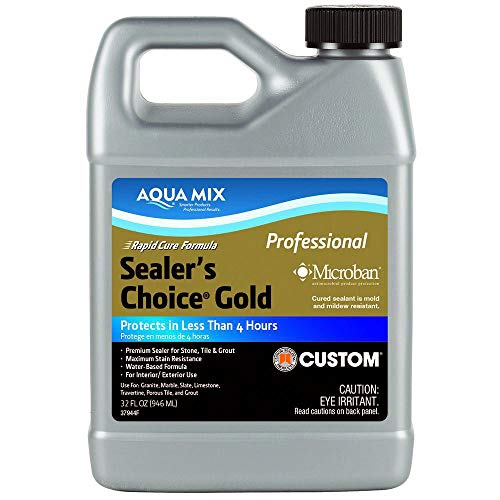
For marble countertops, you want an impregnating (penetrating) sealer — not a topical coating. Here’s the difference.
An impregnating sealer soaks below the surface and bonds inside the pores, leaving the natural look and feel of the stone completely unchanged. It’s breathable and won’t peel. Brands like Miracle Sealants 511 Impregnator, Tenax, and DryTreat StainProof are widely used and well regarded in the trade.
Topical sealers, by contrast, form a film on top of the stone. They can look plasticky, they scratch, and they eventually peel and require stripping. Skip them for kitchen marble. The pros almost universally use penetrating sealers, and so should you.
The Water Test: Does Your Marble Even Need Sealing?
Not all marble needs sealing at the same interval, and some very dense marble barely needs it at all. There’s a simple test to find out.
- Drop a small puddle of water — about the size of a quarter — onto a clean, dry section of the countertop.
- Wait 10 to 15 minutes, then wipe it away.
- Look at the spot. If the marble darkened where the water sat, the stone is absorbing liquid and needs sealing. If it stayed the same color, your existing seal is still doing its job.
Run this test on a few different areas, especially high-use zones near the sink and stove. Repeat it every few months to know when it’s time to reseal rather than guessing.
How to Apply Marble Countertop Sealer
Application is genuinely easy — it’s a 30-minute DIY job that doesn’t require a pro. Follow these steps.
- Clean and dry. Wipe the counter with a pH-neutral stone cleaner, never an acidic or generic all-purpose spray, and let it dry fully for several hours. Sealer won’t penetrate a damp or dirty surface.
- Apply an even coat. Pour or spray the sealer on and spread it with a clean lint-free cloth or a foam applicator, working in sections so the whole surface stays wet.
- Let it dwell. Allow the sealer to soak in for the time on the label, usually 5 to 15 minutes. Keep the surface wet during this window; add more sealer to any spot that dries out and looks thirsty.
- Buff off the excess. Before it dries, wipe away all remaining sealer with a dry cloth. Never let sealer dry on top of the marble — it leaves a hazy residue that’s a pain to remove.
- Second coat if needed. For very porous marble, apply a second coat after the first has had time to set, following the same steps.
Let the countertop cure before heavy use — typically 24 to 48 hours, and avoid water and food for the first several hours. Always check your specific product’s directions, since dwell and cure times vary by brand.
How Often to Reseal
For a typical kitchen, plan to reseal every 6 to 12 months. High-traffic marble around a busy sink or cooktop may want the shorter end of that range, while a low-use bathroom vanity might go a year or more. The water test is your real guide — reseal when the marble starts absorbing water again, not on a rigid calendar.
Premium sealers like some DryTreat formulas advertise multi-year or even 15-year protection under ideal conditions, but kitchen wear and frequent cleaning shorten that in practice. When in doubt, test and reapply. Over-sealing does no harm as long as you buff off the excess.
What It Costs
Sealer is inexpensive relative to the countertop it protects. A quality bottle of penetrating sealer runs $20 to $50, and a single bottle typically covers a full kitchen’s worth of counters with plenty left over for future coats. A pint of Miracle Sealants 511 or a comparable Tenax or DryTreat product will handle several rounds of resealing.
Add a $10 to $15 bottle of pH-neutral stone cleaner for ongoing maintenance and you have a complete care kit for well under $70. Compared to the thousands you spent on the marble, sealing is cheap insurance you should never skip.
Choosing the Right Sealer for Your Marble
Not every penetrating sealer is identical, so match the product to your situation. For everyday kitchen marble, a solvent- or water-based impregnator like Miracle Sealants 511 Impregnator is a reliable, widely available workhorse that pros trust. If you want the longest-lasting protection and don’t mind paying more, DryTreat StainProof is engineered to penetrate deeper and carries a long performance warranty under proper conditions.
Consider whether you want an enhancing sealer or a natural-look one. A standard impregnator leaves the marble’s color unchanged, while a color-enhancing sealer deepens and richens the tone — beautiful on darker or more heavily veined marble, but a permanent change you should test on an inconspicuous spot first. For food-prep surfaces, confirm the product is rated food-safe once cured; most reputable brands are, but always verify on the label.
Common Mistakes to Avoid
A few errors show up again and again. Homeowners apply sealer to a damp or freshly cleaned counter, so it never penetrates. They let excess sealer dry on the surface, leaving a stubborn haze. They use an acidic cleaner between sealings, which slowly strips protection. And many assume one application lasts forever and never retest the stone.
The biggest mistake, though, is expecting the sealer to make marble bulletproof. It won’t. Marble is a living surface that develops character, and a sealer simply tilts the odds in your favor against staining. Treat it as one part of a care routine rather than a permanent shield, and you’ll avoid the frustration that leads people to regret choosing marble at all.
Living With Sealed Marble
Even perfectly sealed marble asks for a little care. Use coasters under glasses, cutting boards for prep, and trivets under hot pans. Wipe acidic spills immediately, clean only with pH-neutral products, and never use vinegar, bleach, or abrasive scrubs. Do all that on top of a good sealer, and your marble stays gorgeous for decades — with just enough character to prove it’s the real thing.