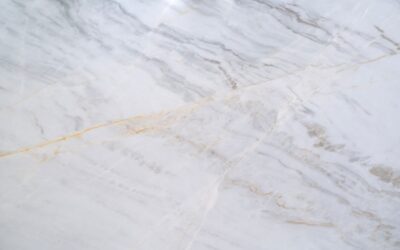
Nothing else looks quite like real stone, and a marble vanity top brings a level of natural beauty and resale appeal that engineered materials only imitate. Those soft veins and that cool, luminous surface are the reason marble has been a luxury standard for centuries. But marble is also a natural stone with real maintenance demands, and going in without understanding them is how people end up with an etched, stained top they regret. Here is the honest, contractor’s-eye guide.
Part of our Countertops guide — explore the full guide →
- What Makes Marble Marble
- What a Marble Vanity Top Costs
- The Honest Pros and Cons
- Etching vs. Staining: Know the Difference
- Sealing Your Marble
- Daily Care and Cleaning
- Marble vs. Quartz for a Vanity
- Polished vs. Honed Finish
- Edge Profiles and Fabrication
- Slab vs. Prefab vs. Cultured Marble
- Is a Marble Vanity Top Right for You?
What Makes Marble Marble
Marble is a natural metamorphic stone, quarried and cut into slabs, so no two pieces are identical — the veining is unique to your top. The common varieties for vanities:
- Carrara: the classic — white to gray with soft, feathery gray veining. The most affordable and widely available.
- Calacatta: whiter background with bolder, more dramatic veining. More expensive and more luxurious.
- Statuario: bright white with striking gray veins, premium and often the priciest.
Because it is natural, marble is softer and more porous than engineered quartz, which is the root of both its beauty and its maintenance.
What a Marble Vanity Top Costs
Real 2025 pricing, material plus fabrication:
- Carrara marble: $40-$100 per sq ft installed
- Calacatta marble: $100-$250 per sq ft installed
- Statuario and premium varieties: $100-$300+ per sq ft installed
- Prefab marble vanity top (standard sizes): $150-$600 for common 25-49 in. widths
A typical single-sink vanity top runs about 5-8 sq ft, so a custom Carrara top often lands around $300-$800, while a prefab in a standard size can be considerably less. Calacatta and Statuario climb quickly. Bathroom vanities use far less stone than kitchens, which is part of why marble is more attainable here than on a big kitchen island.
The Honest Pros and Cons
Marble earns its reputation on both sides. The upsides:
- Unmatched natural beauty and unique veining in every slab.
- Timeless luxury appeal that adds resale value.
- Naturally cool surface, pleasant in a bathroom.
- Heat resistant — a hot styling tool will not melt or scorch it.
The trade-offs you must accept:
- Porous and stain-prone — it absorbs liquids if unsealed.
- Etches easily — acids like toothpaste, perfume, citrus, and many cleaners eat dull spots into the polish.
- Softer stone — it can scratch and chip more readily than granite or quartz.
- Requires regular sealing and careful cleaning.
Etching vs. Staining: Know the Difference
People confuse these two, and they are different problems. A stain is a discoloration where a liquid soaks into the porous stone — sealing prevents most staining. Etching is a chemical burn where acid reacts with the calcium carbonate in the marble and dulls the polished surface; sealing does NOT prevent etching. Toothpaste, perfume, citrus, and acidic cleaners are the usual culprits on a vanity. This is the single most important thing to understand: you can seal against stains, but you must avoid acids to prevent etching.
Sealing Your Marble
Sealing is non-negotiable maintenance:
- Seal on installation and reseal every 6-12 months, or when water stops beading on the surface.
- Test it by dripping water on the top — if it soaks in and darkens, it is time to reseal.
- Use a quality impregnating stone sealer, apply per the label, wipe off the excess, and let it cure.
Sealing slows liquid absorption so you have time to wipe spills before they stain. It buys you a protective window — it does not make marble bulletproof.
Daily Care and Cleaning
Marble lives or dies by how you treat it day to day:
- Wipe spills immediately, especially anything acidic.
- Clean only with pH-neutral stone cleaner or mild soap and water. Never use vinegar, lemon, bleach, or bathroom cleaners with acid.
- Blot, do not scrub — abrasive pads dull the polish.
- Use a tray for perfumes, toiletries, and anything that might drip and etch.
- Dry the surface after use to prevent water spots and mineral buildup.
Minor etch marks can sometimes be buffed out with a marble polishing powder; deep ones need professional refinishing.
Marble vs. Quartz for a Vanity
The question everyone asks. The straight comparison:
- Look: marble is real natural stone with unique veining; quartz imitates it convincingly but is manufactured.
- Maintenance: quartz is nonporous, needs no sealing, and resists stains and etching — far lower upkeep.
- Durability: quartz resists scratches and acids that damage marble.
- Cost: comparable in many cases; premium marble runs higher.
- Feel: marble collectors value that it is the genuine article; quartz buyers value peace of mind.
If you want the real thing and will maintain it, marble. If you want the look with none of the worry, marble-look quartz is the sensible choice, especially in a busy family bathroom.
Polished vs. Honed Finish
One decision that changes both the look and the maintenance of a marble vanity top is the surface finish. Marble comes two main ways:
- Polished: a glossy, reflective surface that shows off the veining and feels luxurious. The downside is that etching — those dull acid spots — shows clearly against the shine.
- Honed: a matte, satiny finish with no gloss. Etch marks are far less visible because there is no shine for them to dull, making honed the more forgiving choice for a working bathroom.
If you love the bright, glossy marble look, go polished but commit to careful acid-free habits. If you want the marble look with less worry about visible etching, honed is the smarter pick — it hides the wear that a busy vanity inevitably collects.
Edge Profiles and Fabrication
The edge profile is where a marble top shows its quality and its style. Common choices include a simple eased or straight edge for a clean modern look, a beveled edge, or a more traditional ogee or bullnose. Softer, rounded profiles are practical on a marble vanity because sharp corners on a soft stone chip more easily. During fabrication, the shop will also cut the sink hole (for undermount or drop-in), drill the faucet holes, and polish the exposed edges — all of which is included in the installed price. Because marble is softer, an experienced stone fabricator matters; a careless cut can chip an edge or crack a slab, so hire someone who works with natural stone regularly rather than the lowest bidder.
Slab vs. Prefab vs. Cultured Marble
Marble vanity tops come three ways, and the choice affects both price and look:
- Custom slab: cut to your exact vanity from a full slab, with your choice of edge and sink. The best look and the highest cost, ideal when you want a specific slab’s veining.
- Prefab tops: pre-cut to standard vanity widths (25, 31, 37, 49 inches) with the backsplash and sink cutout done. Much cheaper and perfect for a standard-size vanity.
- Cultured marble: a manufactured blend of crushed marble and resin, molded as a one-piece top-and-sink unit. Far cheaper, nonporous, and lower-maintenance — but it lacks the depth and value of real stone.
For a standard vanity on a budget, a prefab real-marble top gives you genuine stone at a fraction of custom cost. Cultured marble is the value pick if you want the look with minimal upkeep and do not need the real thing. Go custom slab only when the specific stone and edge matter to you.
Is a Marble Vanity Top Right for You?
A marble vanity top is a beautiful, luxurious choice that rewards owners who accept its nature. It is more forgiving in a bathroom than a kitchen because vanities see less acidic traffic, and its lower square footage keeps the cost reasonable. Commit to sealing it, cleaning it with pH-neutral products, and wiping acids fast, and you get a surface with a depth and character no engineered material can match. Want zero maintenance instead? Choose marble-look quartz and enjoy the look without the rules.