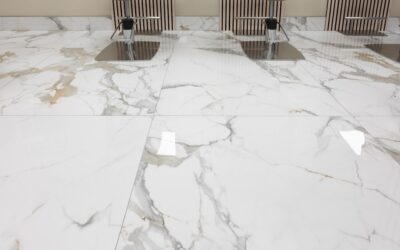
Most people pick a beige stone for its calm color and then get surprised by how it behaves once a glass of orange juice tips over. Botticino marble tile is a warm, cream-to-beige marble quarried in northern Italy, known for a soft background, faint fossil flecks and thin, wandering veins that range from light gold to tan. It is a true calcite marble, which means it is softer than granite or porcelain and reacts to acids. That combination makes it beautiful in the right room and frustrating in the wrong one.
Part of our Countertops guide — explore the full guide →
If you want the short answer: Botticino works very well on bathroom floors and walls, fireplace surrounds, entryways with moderate traffic and backsplashes where you are willing to wipe spills quickly. It is a weaker choice for busy kitchen floors, mudrooms that see grit and salt, or any surface where you expect citrus, wine or vinegar on a daily basis. Choose a honed finish if you value slip resistance and hiding wear, and choose polished if you want maximum depth and do not mind a little more care.
- What Botticino Marble Tile Looks Like
- Durability: Hardness, Etching and Staining
- Honed vs Polished Botticino
- Sealing and Everyday Care
- Installation Tips and Dust Safety
- Colors and Materials That Pair With Botticino
- Cost of Botticino Marble Tile
- Troubleshooting Common Problems
- When to Call a Pro
- Frequently Asked Questions
What Botticino Marble Tile Looks Like
Botticino has one of the most even backgrounds of any popular marble. Instead of the bold gray rivers you see in white Italian marbles, it shows a creamy field, sometimes with a slight pink or honey undertone, broken up by fine veins and small cloud-like patches. Look closely and you may spot tiny fossil fragments, little dots and curls left by ancient marine life. Those details are part of its charm.
Suppliers usually sell several grades. Classic or “classico” material has the familiar warm beige with moderate veining. Lighter “fiorito” or “semi-classico” lots show more visible veins and flowery patterns. Darker or more yellow lots also turn up, so color can shift noticeably from one shipment to the next. Always ask for samples from the actual lot you will receive, and lay several pieces side by side under your own lighting before committing.
Common formats include 12 by 12 inch and 18 by 18 inch floor tiles, 12 by 24 inch rectangles, 3 by 6 inch subway pieces, hexagon and basketweave mosaics on mesh, and thin borders or chair rail moldings. Thickness for floor tile is typically 3/8 inch, while mosaics are often a bit thinner.
Durability: Hardness, Etching and Staining
Marble sits around 3 on the Mohs hardness scale. For comparison, quartz minerals in granite land near 7, and glazed porcelain surfaces are well above marble too. In practical terms, sand and grit tracked in on shoes will gradually dull a polished marble floor, and dragging a chair with bare metal feet can leave scratches.
Etching is the bigger issue. Because Botticino is calcium carbonate, acids dissolve the surface on contact. Lemon juice, tomato sauce, wine, soda, some shampoos, many bathroom cleaners and even some “natural” vinegar sprays will leave a dull, slightly rough spot. Sealer does not stop etching; it only slows absorption of liquids. On a honed surface an etch mark blends in fairly well. On a polished surface it shows as a cloudy ghost that catches the light.
Staining is a separate problem. Oils, coffee, tea and rust can soak into unsealed pores and leave darker or orange marks. The light beige color of Botticino hides some staining better than bright white marble, but it still shows oil rings and rust from metal cans. A quality penetrating sealer reduces staining a great deal.
Where it performs well
- Primary and guest bathroom floors and shower walls
- Fireplace surrounds and hearth faces
- Foyers and hallways with rugs at exterior doors
- Accent walls, vanity backsplashes and niches
Where to think twice
- High-use kitchen floors and countertops
- Mudrooms and garage entries with road salt or gravel
- Outdoor patios in freeze-thaw climates
- Commercial spaces without a maintenance plan
Honed vs Polished Botticino
Finish choice changes both the look and the upkeep. A polished finish is ground and buffed to a mirror-like shine that deepens the cream color and makes the veins pop. It reads formal and bright, reflecting light around a small bathroom. The tradeoff is slipperiness when wet and very visible etch marks and scratches.
Honed tile is ground smooth but left matte or satin. The color looks slightly softer and chalkier, and the surface has more grip underfoot. Etches and fine scratches blend in, which is why many designers specify honed marble for bathroom floors and polished marble for walls. Tumbled Botticino, with rounded edges and a weathered surface, goes even further toward a rustic, forgiving look and works nicely on backsplashes in older-style homes.
A practical approach: polished for vertical surfaces that rarely see acids or foot traffic, honed for floors and anything near a sink or stove. If you already own polished floor tile and find it too slick, a stone restoration pro can hone it in place, then reseal.
Sealing and Everyday Care
Seal Botticino before grouting and again after installation. Sealing before grout helps keep grout pigment from staining the porous edges. Use a penetrating, impregnating sealer made for natural stone, apply it with a lint-free cloth or foam pad, let it dwell per the label (often 5 to 15 minutes) and wipe off every bit of excess before it dries to a sticky film. Most homes need resealing every 1 to 3 years depending on traffic. A simple water drop test tells you when: if a few drops darken the stone within about five minutes, it is time.
Daily and weekly care is straightforward:
- Dust mop or vacuum with a hard floor setting to remove grit before it scratches.
- Damp mop with a pH-neutral stone cleaner, never vinegar, ammonia or bleach-based bathroom sprays.
- Blot spills right away instead of wiping, which spreads them.
- Put felt pads under furniture legs and use rugs or mats at exterior doors.
- Use coasters and trays on vanities for perfume, mouthwash and cosmetics.
Light etch marks on honed tile can often be buffed out with a marble polishing powder made for the purpose. Deep etching, heavy wear paths and lippage are jobs for a stone restoration company with diamond pads.
Installation Tips and Dust Safety
Marble is heavier and more fragile than ceramic, and Botticino in particular can have natural fissures that are filled with resin at the factory. Handle boxes carefully, inspect each piece and set aside any with open cracks. Pay attention to subfloor stiffness: natural stone needs a stiffer floor than ceramic, generally a deflection rating of L/720 versus L/360 for ceramic and porcelain. On wood framing that often means two layers of plywood or a quality uncoupling membrane over a well-supported subfloor.
Use a white polymer-modified thinset rated for natural stone. Gray thinset can shadow through light marble and leave blotchy patches. Back-butter each tile for full coverage, aim for at least 95 percent contact in wet areas, and use a leveling clip system on larger formats to control lippage. Tight grout joints of 1/16 to 1/8 inch suit rectified marble. Choose unsanded grout for those narrow joints, or a grout labeled safe for polished stone, since sanded grout can scratch a polished face during cleanup.
Cutting safely
Cutting and grinding stone, thinset and grout releases fine crystalline silica dust, which can damage lungs over time. Always cut marble with a wet tile saw so water controls the dust. If you must dry cut or grind edges, do it outdoors and wear a fitted N95 or, better, a P100 respirator plus eye protection. Mix thinset and grout in a ventilated area, and clean up with a HEPA-filtered vacuum or wet methods rather than dry sweeping, which just puts the dust back in the air.
Basic install sequence
- Confirm the subfloor is flat, clean and stiff enough for stone, and install any membrane.
- Dry lay a few rows and blend tiles from several boxes for even color.
- Seal the tiles once and let them dry before setting.
- Set tiles in white thinset with full coverage and spacers or clips.
- Let the thinset cure per the bag, usually 24 hours, then grout.
- Clean haze carefully with damp sponges, then apply a final coat of sealer.
Colors and Materials That Pair With Botticino
Warm beige stone looks best when the rest of the room leans warm or balanced. Some pairings that consistently work:
- Wood tones: walnut, white oak and cherry vanities or cabinets complement the cream background.
- Wall colors: warm whites, greige, soft sage, muted terracotta and taupe. Stark blue-white paint can make the stone look yellow.
- Metals: unlacquered or brushed brass, champagne bronze and oil-rubbed bronze. Brushed nickel is fine; chrome reads colder.
- Accent stones: darker brown marble for borders, or a cream travertine mosaic for a subtle tonal change.
- Grout: a light beige or almond grout that matches the background, not bright white.
For a modern look, use large-format honed Botticino with minimal grout lines, flat-panel cabinets and matte black fixtures. For a classic look, pick polished tile with a basketweave mosaic insert and traditional millwork.
Cost of Botticino Marble Tile
Prices vary with grade, size and finish. As a general range, standard 12 by 12 inch or 12 by 24 inch Botticino floor tile commonly runs a few dollars to the low teens per square foot. Mosaics, hexagons and specialty patterns cost more, often in the mid-teens to the twenties per square foot. Premium select lots with very consistent color sit at the top of the range.
Professional installation for natural stone typically costs more than ceramic because of the extra prep, careful handling and sealing. Expect labor somewhere in the range of roughly $8 to $20 per square foot depending on your region, pattern complexity and subfloor work. Add materials such as white thinset, membrane, grout, sealer and trim. Budget about 10 to 15 percent extra tile for cuts, breakage and future repairs, and store a few spare pieces from the same lot.
Troubleshooting Common Problems
- Dull spots near the sink or toilet: usually etching from cleaners. Switch to a pH-neutral stone cleaner and buff honed tile with marble polishing powder.
- Yellow or orange marks: often rust from metal cans or iron in the water. A poultice made for rust on stone can draw it out.
- Dark rings that fade: water absorption; the sealer is wearing thin. Reseal once the stone is fully dry.
- Blotchy shadows after install: gray thinset or poor coverage showing through. Prevention matters here, since fixing it means removing tile.
- Hairline cracks: may be natural fissures or a flexing subfloor. If cracks spread or follow joists, have the floor structure checked.
When to Call a Pro
A confident DIYer can tile a small bathroom wall or backsplash with Botticino. Hire an experienced stone setter for large floors, large-format tiles, heated floor systems, curbless showers and any job where the subfloor needs reinforcement. A stone restoration company is the right call for honing, repolishing, deep etch repair and lippage grinding, since that work produces heavy slurry and dust and needs professional equipment.
Frequently Asked Questions
Is Botticino marble good for bathroom floors?
Yes, especially in a honed finish. It handles bathroom humidity well when sealed, and the matte surface offers better grip than polished stone. Use pH-neutral cleaners and keep acidic toiletries off the floor.
Does Botticino marble stain easily?
Unsealed Botticino absorbs oils, coffee and rust fairly easily. A penetrating sealer reapplied every 1 to 3 years greatly reduces staining, though it will not prevent acid etching.
Can you use Botticino marble tile in a kitchen?
It can work on a backsplash if you wipe splashes promptly. On kitchen floors and countertops it tends to etch and scratch, so porcelain or quartz is usually the lower-maintenance choice there.
What grout color goes with Botticino marble?
Choose a light beige, almond or bone grout that matches the stone background. Bright white grout can make the marble look yellow, and dark grout highlights every joint.
How is Botticino different from other beige marbles?
It has a very even cream background with fine veins and tiny fossil specks, while many other beige marbles show heavier veining, more brown tones or larger patches of color variation.
Prefer to explore on your own?
See how new flooring looks in your actual room in seconds — free, no signup.
Try the free Floor Studio →