
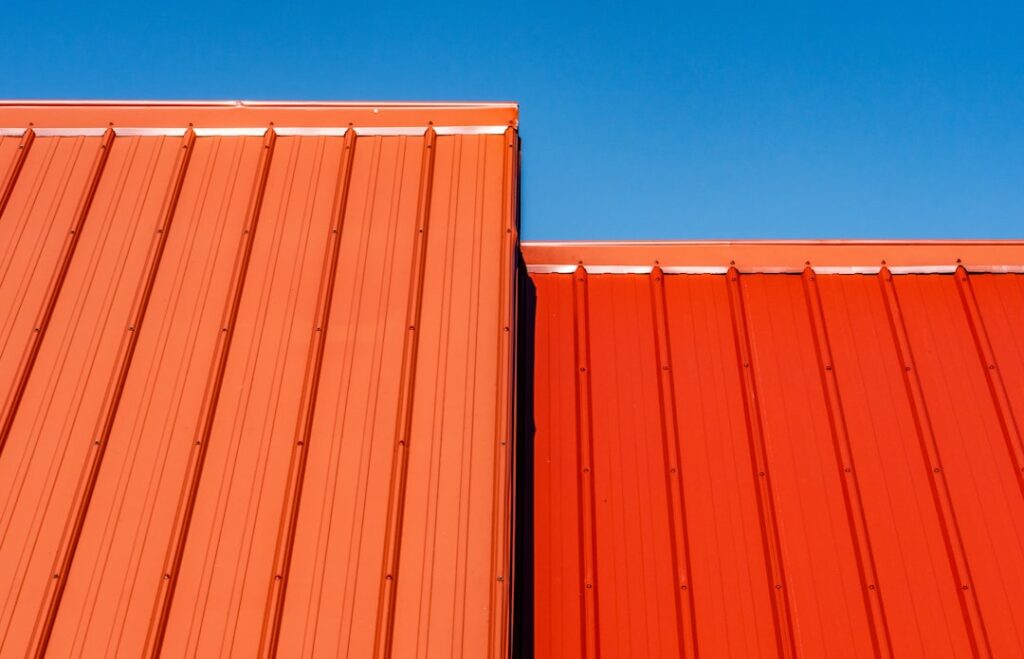
Metal roofs earn their 40-to-70-year reputations, but they don’t get there without service — and the failures follow a pattern so predictable that pros can usually name the problem from the driveway. The overwhelming majority of metal roof repair calls trace to three culprits: fasteners that backed out or lost their gaskets, sealant that dried up at seams and flashings, and corrosion where the protective coating got scratched, cut, or overwhelmed. The panels themselves almost never fail; their accessories do. That’s good news, because accessory-level problems have accessory-level price tags — if you catch them before water reaches the decking. Here’s the full repair playbook.
Part of our Roofing guide — explore the full guide →
- Why Metal Roofs Leak: Thermal Movement
- Repair 1: The Fastener Sweep
- Repair 2: Sealant and Flashing Renewal
- Repair 3: Rust and Corrosion
- Repair 4: Punctures, Holes, and Panel Replacement
- The Big Gun: Restoration Coatings
- Maintenance That Prevents the Next Repair
- Costs, DIY Lines, and the Repair-or-Replace Call
Why Metal Roofs Leak: Thermal Movement
Understanding one physical fact explains most metal roof problems: panels move. A 30-foot steel panel expands and contracts about ⅜ inch across a 100°F temperature swing, and it does that every single day, thousands of cycles per decade. On exposed-fastener roofs, that movement works screws in a slow orbit — enlarging their holes, backing them out a quarter turn a season, and grinding their neoprene gaskets. At seams and flashings, movement fatigues rigid sealants until they crack. Every repair on this page is really a response to thermal cycling, and every durable fix accounts for it: oversized replacement screws, flexible butyl and polyurethane products, and patches that bond fully rather than bridging a moving joint at one edge.
Repair 1: The Fastener Sweep
On screw-down roofs — corrugated, ribbed, ag-panel — a full fastener inspection every five to seven years is the single highest-value maintenance task, and it’s the repair to start with whenever a leak appears. Walk the roof (soft shoes, dry surface, panels walked at the purlin lines) and check every screw: backed-out heads get snugged; wallowed-out holes and cracked gaskets get the real fix, which is removal and replacement with the next diameter up — a #12 or #14 oversized gasketed screw that bites fresh steel and reseals the enlarged hole. Replacement screws cost about $15 to $25 per 250-count bag; a whole-roof re-screw on a typical house runs $500 to $1,500 professionally and resets the fastener clock for another 15 to 20 years. Two rules of thumb from the field: never just caulk over a failed screw head (the leak returns through the moving hole within a year or two), and set your drill clutch so gaskets compress visibly without mushrooming — an overdriven screw fails as fast as a loose one.
Repair 2: Sealant and Flashing Renewal
Seams, penetrations, and trim lines carry the roof’s chemical seals, and those age faster than the metal. The chronic offenders: pipe boot flashings whose EPDM or silicone collars crack after 10 to 20 years of UV ($30 to $80 for a quality high-temp replacement boot plus an hour of labor), butyl tape at panel end-laps that dries out, ridge and sidewall trim where old caulk has split, and chimney flashings installed with the wrong sealant entirely. Renewal means removing the failed material — rake out old caulk, don’t entomb it — cleaning to bare sound surface, and re-sealing with products made for moving metal joints: butyl tape between overlapping metal, and a high-grade polyurethane or hybrid sealant (Geocel 2300, Sikaflex, NovaFlex Metal Roof) at exposed joints. Skip the hardware-store silicone; most grades bond poorly to painted panels and can’t be painted over. On lap seams that have opened wider, mechanically re-stitching with new screws through fresh butyl beats any amount of surface goop.
Repair 3: Rust and Corrosion
Surface rust on a coated steel roof is a warning, not a death sentence, and it concentrates where the factory coating was compromised: cut panel edges, scratches from foot traffic or branches, around fastener heads, and anywhere debris held moisture against the surface. The repair sequence is old-fashioned and effective: wire-brush or sand the spot to bright metal, wash and dry, prime with a rust-inhibiting metal primer, and topcoat with manufacturer-matched touch-up paint. Small scratch kits run $20 to $40. Watch for two special cases. Galvanic corrosion — fizzing white or accelerated rust where incompatible metals touch, like a copper wire or lead flashing lying on Galvalume — requires removing the offending contact, not just painting. And rust-through holes mean the panel section is done; see patching below. A roof showing widespread, even rust across whole panels has exhausted its coating and is a candidate for full recoating rather than spot work.
Repair 4: Punctures, Holes, and Panel Replacement
Small punctures — dropped tools, hail-driven branch hits, stray nail holes from removed equipment — patch permanently with matching metal: cut a patch 2 inches larger than the hole all around, round the corners, clean both surfaces, bed the patch in butyl or urethane sealant, and stitch the perimeter with gasketed screws or rivets at 1-inch spacing so the patch moves with the panel. For pinholes, a quality butyl repair tape (EternaBond-style) pressed hard onto cleaned, primed metal is a legitimate 10-year fix. Larger damage — crushed ribs, torn panels, rust-through — calls for panel replacement, which is where system type matters: an exposed-fastener panel unscrews and swaps in an afternoon ($300 to $800 per panel installed), while a damaged standing seam panel in mid-field means unlocking or cutting seams and rebuilding them with the proper hand tools, a $500 to $1,500 specialist job. Always match profile, gauge, and coating; a mismatched patch panel telegraphs from the street and can set up galvanic trouble besides.
The Big Gun: Restoration Coatings
When an aging screw-down roof leaks in many places at once but the panels remain structurally sound, a full restoration system beats serial patching: every fastener replaced or encapsulated, seams bridged with polyester fabric and mastic, then the entire roof coated with acrylic, silicone, or urethane elastomeric at $2 to $5 per square foot professionally applied. Done right, it delivers a seamless waterproof skin, a 10-to-18-year warranty, and a cooler roof — for roughly a third the cost of replacement. The honest limits: coatings need sound substrate (no widespread rust-through, no soaked underlayment), meticulous prep, and they’re the last restoration; the next failure means new panels.
Maintenance That Prevents the Next Repair
Metal asks for less upkeep than any other roof, but “less” isn’t “none,” and the short list pays outsized dividends. Keep the surface clear: leaf mats and pine needles in valleys and behind chimneys hold moisture against the finish and start the corrosion clock early, so blow or brush debris off each fall — never drag a metal rake or shovel across the paint. Police dissimilar metals annually: a copper ground wire, a zinc-coated antenna bracket, or treated-lumber contact against Galvalume panels each set up quiet galvanic cells, and pressure-treated wood in direct contact voids most panel warranties outright. Rinse coastal roofs; salt spray zones benefit from a fresh-water hose-down of eaves and protected areas a couple of times a year, a requirement written into many warranties within 1,500 feet of shore.
Walk gently and rarely. Foot traffic scuffs finish and dents high ribs, so inspect from a ladder at the eaves with binoculars where you can, and when you must walk, step in the panel flats over purlins or decking in soft shoes. Ten minutes of this discipline twice a year, plus the five-to-seven-year fastener sweep, is the entire ownership manual — and it’s the difference between a screw-down roof that needs its first real repair at year 8 and one that cruises to 25.
Costs, DIY Lines, and the Repair-or-Replace Call
Typical professional metal roof repairs run $400 to $1,800, with minimum service calls of $300 to $500 and specialist standing seam work priced above generalist rates — hire crews who do metal weekly, because shingle habits (face nails, roof cement) actively damage metal systems. Confident DIYers on single-story, low-pitch screw-down roofs can handle fastener sweeps, boot swaps, rust touch-up, and tape patches. Replace rather than repair when rust-through appears across multiple panels, when the underlayment is failing beneath sound metal (leaks at 30+ years with no visible cause), or when repair quotes crest 30 percent of a new roof on a system past 40. Short of that, metal rewards intervention like no other roof: almost every failure mode on this page, caught early, is a $50 part and an hour of care against a five-decade asset.


