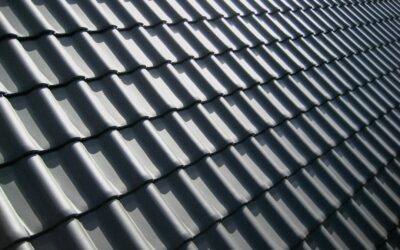
Snow doesn’t slide off a metal roof — it avalanches. A slick panel at 6:12 pitch can release a whole winter’s accumulation in one two-second slab: hundreds of pounds of consolidated snow and ice taking out gutters, deck rails, shrubs, propane regulators, and anyone standing at the door. Metal roof snow guards exist to break that release into a slow, harmless melt-in-place — and they only work when there are enough of them, in the right pattern, attached the right way for your panel type. This guide covers the three guard families, the layout math by pitch and snow load, and the standing-seam vs. exposed-fastener install rules.
Part of our Roofing guide — explore the full guide →
Why Metal Roofs Avalanche
Asphalt shingles grip snow with granular friction. Painted steel doesn’t — especially smooth PVDF finishes — and the failure mode is sneaky: snowpack bonds to cold panels, then a sunny afternoon or heat escaping the attic melts a lubricating water film at the panel surface. The entire slab releases at once, hardened by freeze-thaw into something closer to ice than powder. A 20 x 20 ft roof plane holding 18 inches of settled snow is carrying roughly 3,000–5,000 pounds. That’s what arrives at your gutter line at speed.
Snow guards don’t hold that mass statically forever — they pin the slab in place so it melts and evaporates gradually, shedding as water and harmless small chunks.
The Three Guard Types
1. Pad-style (individual cleats)
Small polycarbonate or metal wedges, 2–4 inches wide, installed in staggered rows across the roof field. Clear polycarbonate versions nearly disappear against the panel; color-matched metal versions are stocked by most panel suppliers.
- Cost: $2–$8 each (poly), $6–$15 (metal); a typical house uses 60–200 of them.
- Attachment: adhesive-mounted, screw-mounted (exposed-fastener roofs), or clamp-on seam versions.
- Best for: exposed-fastener panels, moderate snow country, budget jobs, retrofit.
- Weakness: each pad holds a small tributary area — under-counting them is the classic failure. Adhesive-only pads in serious snow country shear off in year one if the glue was applied cold or under-cured (most require 2–4 weeks of warm cure before loading).
2. Fence / rail systems (pipe-style)
One to three horizontal rails (round pipe or square bar) carried on brackets in continuous rows near the eave, sometimes with vertical “snow clips” between rails to stop under-slip.
- Cost: $15–$40 per linear foot installed, per row.
- Attachment: seam clamps on standing seam; structural screws into framing on exposed-fastener panels.
- Best for: standing seam in real snow country — the default engineered solution.
- Look: visible but architectural; color-matched or clear-anodized.
3. Bar-style (continuous angle/blade)
A continuous extruded aluminum bar clamped across the panel — functionally a one-piece fence with a lower profile. Common on residential standing seam; often paired with an ice flag/clip per panel rib. Cost and behavior sit between pads and pipe fences: roughly $12–$30 per linear foot installed.
Attachment: The Rule That Overrides Everything
- Standing seam roofs: never penetrate the panel. Use round-point set-screw clamps that grip the seam (the same hardware philosophy as solar attachment — a core virtue of the panel system covered in the metal roofing guide). Set screws must be non-penetrating and torqued to spec; the clamp manufacturer publishes tested holding strength per seam profile — real numbers, ask for them.
- Exposed-fastener panels: screw into structure, not just steel. Guards must land on purlins or rafters with gasketed structural screws; sheet-metal-only attachment tears out under load. Seal per manufacturer detail — every penetration is a future maintenance point, the same logic that applies to any hole in the roof (see roof repair priorities).
- Adhesive pads: legitimate on lighter duty roofs when the specified adhesive (usually a polyurethane like SB-190) is applied above 50°F and allowed full cure. Not a heavy-snow primary system.
- Dissimilar metals: aluminum guards on Galvalume steel are fine; avoid copper components over steel panels — the runoff-corrosion problem detailed in the galvalume metal roof guide applies to guard hardware too.
Layout Math: How Many, and Where
The load a guard system must restrain scales with three inputs: ground snow load (from your county — 20 psf in the mid-Atlantic, 50–70 in the Rockies and upper New England, 100+ in the Sierra), roof pitch (steeper = more of the load pulling downslope), and rafter length (longer plane = more tributary snow per foot of eave).
Fence/bar systems
| Situation (typ. 4:12–8:12) | Rows of fence/bar |
|---|---|
| Rafter length ≤ 20 ft, snow load ≤ 30 psf | 1 row, 12–24 in. above the eave (over the wall, not the overhang) |
| 20–35 ft rafter or 30–60 psf | 2 rows: one near eave, one mid-slope |
| > 35 ft rafter or > 60 psf or > 8:12 pitch | 3+ rows at equal spacing up the slope |
The first row always sits just above the bearing wall line so the restrained snow mass loads structure, not cantilevered overhang. Rows run continuous across the plane — stopping short at the edges lets side lobes slide.
Pad-style systems
Manufacturers publish per-pad holding values (typically 200–400 lb tested with big safety factors applied). The generic residential pattern: bottom group of 2–3 staggered rows starting 12 inches up from the eave, pads spaced 24–32 inches horizontally, rows 18–24 inches apart — then repeat a group at mid-slope on long rafters. A 40-foot-wide plane with a 24-foot rafter in 40 psf country lands around 90–140 pads. When in doubt, run the manufacturer’s free layout calculator (Rocky Mountain Snow Guards, S-5!, SnoBlox and others all offer one) with your actual snow load — guessing under is the expensive direction.
Where guards are mandatory thinking, not optional
- Above doors, walkways, decks, and driveways.
- Above gutters (metal-roof avalanches are the #1 gutter killer in snow country).
- Above lower roofs, AC condensers, gas meters, and propane regulators — a slab strike on a regulator is a genuine emergency.
- Above plantings you care about, and property-line sidewalks (liability).
Roof planes dumping onto open lawn can legitimately be left to shed — many owners guard only the critical elevations.
Costs, Snapshot
- DIY pad job, average house, critical eaves only: $300–$900 in parts.
- Professional pipe-fence system, full perimeter of critical planes: $1,500–$4,500.
- Heavy-snow engineered multi-row systems on large homes: $5,000–$10,000.
- Reference points for damage avoided: gutter replacement $1,500–$3,000; deck rail rebuild $1,000+; one ER visit — more.
Mistakes to Avoid
- One skimpy row of pads over the front door “to be safe” — a partial system concentrates load and rips out; guard a plane properly or not at all.
- Adhesive pads installed in October cold that see load in December, un-cured.
- Penetrating a standing-seam panel and voiding its weathertightness warranty.
- Mounting the first row out on the overhang.
- Ignoring snow country ice dams — guards manage sliding, not melting; attic insulation and ventilation handle the dam problem.
- Forgetting gutters: with guards holding snow, gutters survive, but they need to be clear to drain the slow melt.
FAQ
Do snow guards work on low-pitch roofs?
Below about 3:12, snow rarely avalanches and guards are usually unnecessary except over critical doors on slick PVDF panels.
Can I add snow guards to an existing metal roof?
Yes — clamp-on hardware retrofits standing seam invisibly, and screw-down or adhesive systems retrofit exposed-fastener panels. Retrofit is the most common way guards get bought: the winter after the gutter comes down.
Will guards cause ice dams or leaks?
Properly attached, no. They hold snow higher on the roof, which slightly reduces eave ice loading; leaks come only from bad penetrations, which is why clamps and gasketed structural screws are the standard.
Clear polycarbonate or metal guards?
Poly disappears visually and is fine to about 40 psf duty with correct counts; metal (aluminum) handles heavier loads, higher UV exposure, and hot climates better. On a premium standing-seam roof, color-matched aluminum is the coherent choice.
Size the system to your county’s snow load, put row one over the wall line, clamp — don’t drill — the seams, and metal roof snow guards turn the winter avalanche into a quiet drip. It’s the cheapest structural insurance a snow-country metal roof can buy.