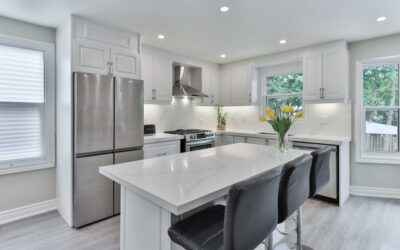
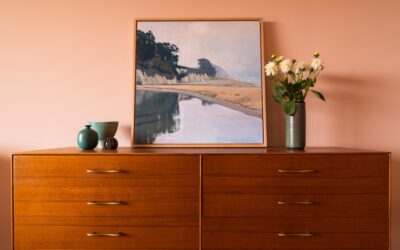
Walk into a kitchen from 1958 and one thing jumps out: the cabinets are quiet. No raised panels, no ornate crown molding, just warm wood grain and horizontal lines that let the material do the talking. Mid century modern kitchen cabinets revive that restraint, and they have surged back because they age gracefully and pair with almost any countertop. If you are planning a remodel and drawn to walnut tones and flat-front doors, this guide covers the door styles, woods, hardware, and real-world costs that separate an authentic look from a cheap imitation.
Part of our Kitchen Remodeling guide — explore the full guide →
What Defines the Style
Mid century design grew out of the postwar push for honest materials and functional simplicity, and the cabinets reflect that philosophy directly. The signature is the flat-panel or slab door: a single flat surface with no frame, no bevel, and no fuss. Grain runs horizontally across a bank of drawers so the wood reads as one continuous plane, a detail that separates a serious mid century kitchen from a generic modern one.
Color leans warm and natural. Think walnut, teak, and oak in medium-to-rich tones, often left with a clear or oil finish that shows the grain rather than hiding it under paint. When color does appear, it shows up as an accent island in a muted sage, mustard, or burnt orange, never as a wall-to-wall statement.
Choosing the Right Wood
Wood selection carries the entire look, so it deserves the most attention in your budget. Each species brings a different personality:
- Walnut: the quintessential mid century wood, with chocolate-brown tones and flowing grain. Expect a premium of $8,000 to $15,000 for a full kitchen in solid or veneered walnut.
- Teak: golden and warm with a natural oil content that resists moisture, historically accurate but pricey and harder to source today.
- White oak: a lighter, more affordable alternative with straight grain that suits a Scandinavian-leaning take on the era.
- Rift-cut oak: prized for its uniform vertical grain, ideal when you want the disciplined, linear look.
If solid hardwood blows the budget, high-quality wood veneer over plywood delivers the same grain at a fraction of the cost, and it resists warping better than solid panels across large door spans.
Door Construction and Quality
Because there is no decorative frame to hide behind, mid century doors live and die by material quality. A slab door made from cheap MDF with a printed woodgrain laminate will look flat and lifeless, and it telegraphs its origins the moment light hits it. Real veneer over a plywood or MDF core gives you depth, and the grain can be matched across adjacent doors for that seamless flow.
Pay attention to edge treatment. The best cabinets wrap the veneer around the door edges so no core material shows, while budget versions leave a visible seam or a mismatched edge band. Run your thumb along the top edge of a sample door; if you feel a lip or see a color break, the construction is cutting corners.
Hardware That Fits the Era
Hardware makes or breaks the authenticity. The mid century vocabulary favors long, thin horizontal pulls in brushed brass, satin nickel, or matte black, mounted low on upper doors and centered on drawers. Wooden edge pulls, where the door itself is shaped to form a lip, are even more period-correct and keep the surfaces uninterrupted.
Avoid ornate knobs and anything with a distressed or antique finish; they fight the clean geometry. A common and effective choice is a 5-inch or 6-inch tubular bar pull in brushed brass, which costs $4 to $12 per piece and instantly reads as intentional. For a truly minimalist result, some homeowners skip visible hardware entirely and use push-to-open hinges, letting the wood surfaces run unbroken.
Layout and Complementary Materials
Cabinets do not exist in isolation, and the surrounding surfaces need to support the era rather than compete. Countertops in white quartz, honed granite, or a warm butcher block all work; avoid heavily veined marble that pulls the eye toward ornamentation. Backsplashes stay simple, with small-format ceramic tile, a solid slab, or a run of vertical subway tile in a muted glaze.
For layout, the style loves an uninterrupted horizontal run of lower cabinets topped by open shelving or a single band of uppers. If your kitchen can accommodate it, a floating island in a contrasting wood or a bold accent color becomes the focal point while the perimeter stays calm.
Budget and Sourcing Options
The cost spread is wide, and knowing your lane prevents sticker shock. Here is a realistic breakdown for a mid-size kitchen with roughly 25 linear feet of cabinetry:
- Semi-custom veneer cabinets: $10,000 to $18,000, the sweet spot for most homeowners wanting authentic looks.
- Fully custom solid walnut or teak: $20,000 to $40,000 or more, built by a local shop to exact specs.
- Ready-to-assemble slab fronts: $4,000 to $8,000 using online cabinet suppliers, requiring assembly and careful installation.
- IKEA base boxes with aftermarket fronts: $6,000 to $12,000, a popular hack pairing durable frames with premium veneer doors.
That last route deserves a mention because it has become a genuine movement. Several companies build veneer slab doors sized specifically for standard IKEA cabinet boxes, letting you get high-end fronts and soft-close drawers without full custom pricing.
Caring for Wood Cabinet Finishes
Real wood and veneer cabinets reward gentle upkeep and punish neglect. Oil-finished walnut and teak develop a beautiful patina over time, but they need occasional re-oiling, roughly once or twice a year, to keep the grain from drying out and looking dull. A wipe with a wood-specific conditioner restores the depth and protects against the moisture swings a kitchen sees daily.
For everyday cleaning, skip harsh all-purpose sprays that can strip oil finishes and dull the sheen. A soft cloth dampened with mild soapy water, wrung nearly dry, handles most grime, followed by a dry buff. Keep cabinet fronts away from direct dishwasher steam and standing water near the sink, since prolonged moisture is the enemy of any wood veneer. Address spills promptly and your cabinets will hold their warmth for decades.
Color Accents Without Overdoing It
The mid century palette welcomes color, but the discipline is in restraint. Rather than painting a whole run of cabinets a saturated hue, most successful kitchens keep the main cabinetry in warm wood and introduce color as a single, deliberate accent. A kitchen island in muted sage, a bank of lower cabinets in mustard, or open shelving backed by a burnt-orange wall gives the era’s playful spirit a home without overwhelming the space.
Balance those accents with plenty of neutral surfaces, white counters, pale backsplashes, and natural wood, so the color reads as intentional rather than chaotic. The period’s designers understood that a little bold goes a long way when it sits against a calm, wood-dominant backdrop. One confident accent almost always beats three competing ones.
Keeping It Timeless, Not Dated
The risk with any period style is tipping from tasteful revival into theme-park pastiche. The fix is restraint. Let the wood and clean lines carry the era, then keep everything else current: modern appliances, contemporary lighting, and neutral surrounding surfaces. A single vintage-inspired pendant or a period accent color is plenty; layering ten retro touches turns a sophisticated kitchen into a caricature.
Done right, mid century modern kitchen cabinets are among the most durable design choices you can make, because their core principles of honest materials and functional simplicity never really went out of style. Invest in real wood or quality veneer, choose hardware that respects the geometry, and you will have a kitchen that looks intentional for decades rather than a trend that dates itself in five years.