Spin molten stone into fibers and you get an insulation that will not burn, barely absorbs water, and muffles sound better than almost anything else in the stud bay. Mineral wool insulation — sold as rockwool or stone wool, with ROCKWOOL (formerly Roxul) the name-brand most Americans encounter — has surged from a niche commercial product to the go-to upgrade for homeowners who want more than bare-minimum fiberglass. This guide covers the real numbers: R-value per inch, the fire and sound performance that justifies the premium, batts versus boards, installation technique, and the honest comparison with fiberglass.
What Mineral Wool Is
Mineral wool is manufactured by melting basalt rock and steel-industry slag at around 2,900°F and spinning the melt into fine fibers, like stone cotton candy, bound with a small amount of resin and pressed into batts or boards. The result is denser than fiberglass (batts around 1.7 to 2.5 pounds per cubic foot versus fiberglass’s 0.5 to 1.0), dimensionally stiff enough to be cut with a bread knife and friction-fit without sagging, typically made with 16 to 75 percent recycled content, and inherently inorganic — nothing in it feeds mold or interests insects.
R-Value: The Real Numbers
Mineral wool batts deliver R-4.0 to R-4.3 per inch — a meaningful step over standard fiberglass batts at R-2.9 to R-3.8. The common residential sizes:
| Product | Thickness | R-Value | Fits |
|---|---|---|---|
| R-15 batt | 3.5″ | R-15 | 2×4 walls (vs R-13 fiberglass) |
| R-23 batt | 5.5″ | R-23 | 2×6 walls (vs R-19/R-21 fiberglass) |
| R-30 batt | 7.25″ | R-30 | 2×8 rafters/joists |
| Comfortboard 80 | 1.5″–3″ | R-6 to R-12 | Continuous exterior layer |
| Safe’n’Sound | 3″ | (acoustic — not rated) | Interior partition walls |
Two performance footnotes worth knowing. First, mineral wool holds its R-value better in real conditions than loose low-density insulation: its density resists the convective looping that degrades light fiberglass in very cold weather. Second, it does not slump — a batt friction-fit into a wall cavity is still filling the top of that cavity in thirty years.
Fire Performance: The Headline Benefit
Mineral wool is made of rock, and it behaves like it. The fibers withstand temperatures above 2,000°F without melting (fiberglass melts around 1,100°F), the material is noncombustible with zero flame-spread contribution, and a mineral-wool-filled wall assembly buys real minutes in a fire — which is why code-driven fire-rated assemblies, party walls, and fireblocking details specify it by name. For homeowners the practical upsides are concrete: mineral wool around chimneys, flues, and mechanical rooms (verify clearance rules still apply), in garage ceilings under bedrooms, and in exterior walls of homes in wildfire country adds passive protection that no foam product can match — most foams do the opposite. Insurance does not discount for it, but fire marshals specify it for a reason.
Sound: The Other Superpower
Density plus fiber structure makes mineral wool the standard hidden ingredient in quiet walls. In a standard interior partition, swapping empty stud bays for 3-inch acoustic mineral wool raises STC by roughly 10 points — the difference between hearing a conversation and hearing a murmur. It absorbs across the speech and TV frequency bands especially well, and products like Safe’n’Sound exist purely for this duty: bathroom walls, bedroom-to-media-room partitions, laundry closets, and home offices. Pair the fill with the assembly-side tricks (staggered studs, resilient channel, doubled drywall) covered in our sound insulation guide — the batt alone helps, the batt in a decoupled assembly transforms a room.
Water Behavior
Mineral wool is hydrophobic — the fibers shed liquid water rather than wicking it, and a soaked batt drains and dries to full R-value instead of matting like fiberglass or holding water like cellulose. It is also vapor-open, letting wall assemblies dry through it. That combination is why exterior mineral wool board has become the darling of building-science designers: it insulates the wall while letting it dry outward. None of this makes it a vapor barrier or a substitute for flashing — it tolerates incidental moisture; it does not fix bulk-water problems.
Batts vs Boards
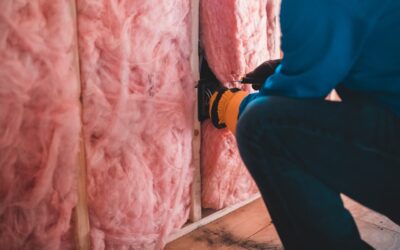
Batts (ComfortBatt, Safe’n’Sound, and equivalents from Johns Manville and Thermafiber) are the stud-bay product: friction-fit thermal and acoustic fill for walls, floors, and rafters. This is 90 percent of residential use.
Rigid boards (Comfortboard 80/110) are dense structural-ish panels for continuous exterior insulation over sheathing, rim-band wraps, and below-grade exterior walls — the mineral-wool alternative to foam board. They install under siding furring at R-4.2 per inch, stay noncombustible (foam needs thermal barriers), and drain and dry. They cost more than foam per R and compress slightly under aggressive furring-screw torque, so fastener schedule matters. If your project is choosing between board types, the foam side of that decision — EPS, XPS, polyiso — is covered in our rigid insulation comparison.
Installation: Genuinely DIY-Friendly
Mineral wool is the most forgiving batt insulation to install well, because it holds its shape:
- Cut with a serrated bread knife or insulation saw against a board — clean edges, no compressing struggle. Cut pieces 1/4 inch oversize for a snug friction fit.
- Fill, don’t stuff. Split batts around wiring (half behind the cable, half in front), cut precise notches for boxes, and trim around pipes. The material’s stiffness makes this precision easy in a way floppy fiberglass never is.
- No facing, plan the vapor detail separately. Mineral wool batts come unfaced; in climates that require an interior vapor retarder, add a smart membrane or kraft detail per local code.
- Protect yourself sensibly. Gloves, long sleeves, an N95, and eye protection — the fibers itch less than fiberglass for most people but are still mineral fibers.
- Expect the weight. Overhead installs (floors above garages) are where the density fights you; wire supports or insulation hangers hold batts that gravity wants back.
Mineral Wool vs Fiberglass: The Honest Comparison
| Factor | Mineral Wool | Fiberglass Batt |
|---|---|---|
| R per inch | 4.0–4.3 | 2.9–3.8 |
| 2×4 wall | R-15 | R-11–R-13 (R-15 HD available) |
| Fire | Noncombustible, 2,000°F+ | Noncombustible fibers, lower melt point |
| Sound | Excellent | Fair–good |
| Moisture | Sheds, dries, no mold food | Mats when wet, slow to dry |
| Sag over time | None | Possible in walls/ceilings |
| Cost/sq ft (R-15 class) | $1.40–$2.10 | $0.70–$1.20 |
Fiberglass wins exactly one row — price — and it is a big row: mineral wool runs 50 to 100 percent more per square foot. The rational split most builders land on: fiberglass or blown insulation in big attic fields where dollars per R dominate (see our attic insulation guide for that decision), mineral wool in walls, rim joists, sound partitions, and anywhere fire or moisture resilience earns the premium.
Cost and Where to Buy
Expect $1.40 to $2.10 per square foot for R-15 batts and $2.00 to $2.80 for R-23 — a bag covering about 60 square feet of 2×4 wall runs $90 to $120 at big-box stores, which now stock ROCKWOOL ComfortBatt and Safe’n’Sound routinely (a big change from five years ago, when mineral wool meant a special order). Comfortboard and other rigid panels still usually come through lumberyards and commercial suppliers. Budget planning for a typical project: sound-insulating one bedroom’s walls, about $150 to $250 in material; the walls of a 2,000-square-foot new build in R-15, roughly $2,500 to $4,000 versus $1,300 to $2,200 in fiberglass. DIY installation erases the labor line entirely — this is among the most beginner-friendly insulation work in the house.
Mineral Wool FAQs
Is mineral wool safe? Modern mineral wool fibers are classified as not carcinogenic to humans (IARC Group 3); the resin binders in current products meet indoor-air standards. Handle with basic PPE like any fiber product.
Does it need a vapor barrier? The wool itself doesn’t care, but your wall assembly might — follow your climate zone’s vapor-retarder code exactly as you would with fiberglass.
Can it get wet? It tolerates incidental wetting and dries without damage. Standing water and chronic leaks ruin assemblies regardless of insulation — fix the water first.
Is it worth the premium? In 2×4 walls (R-15 in a bay that fiberglass serves at R-13), in any wall you want quiet, and anywhere fire matters — yes. In a 1,500-square-foot attic flat — usually not; spend the difference on depth instead.