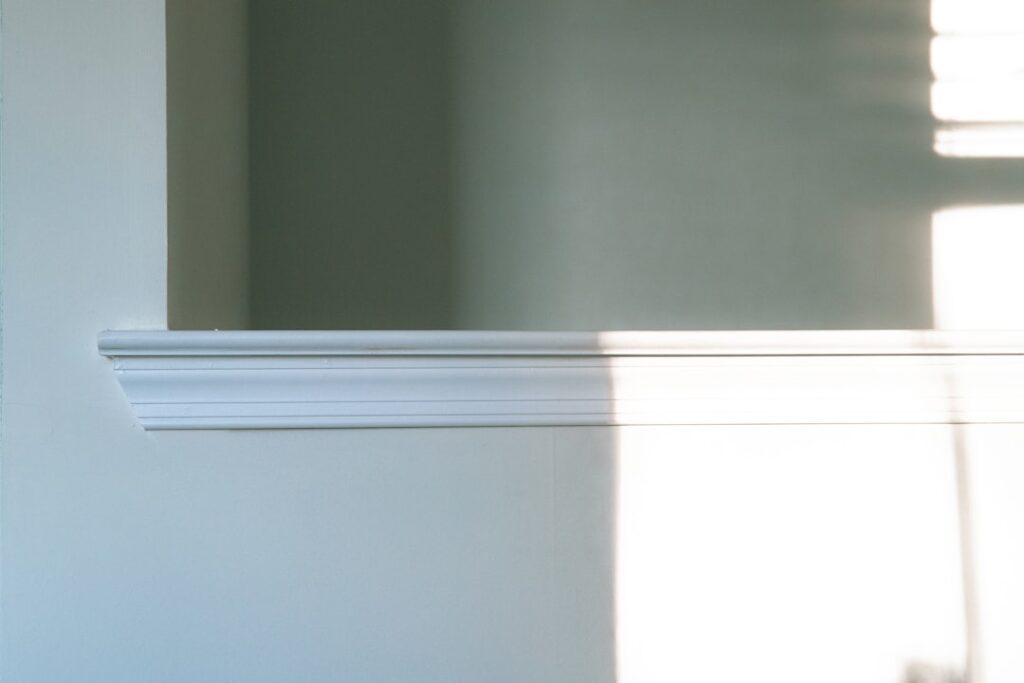
The trend toward stripped-down, contemporary interiors has made minimalist window trim one of the most requested details in modern remodels and new builds. Instead of the wide colonial casings and stacked profiles of traditional homes, minimalist trim either shrinks the molding to a whisper-thin reveal or eliminates it entirely with a clean drywall return. The result is a window that reads as a crisp opening in the wall rather than a framed picture, letting the glass, the view, and the light take center stage. This guide explains the main approaches, materials, costs, and what it takes to get those razor-clean lines right.
What Minimalist Window Trim Actually Means
Minimalist trim is a design philosophy more than a single product. It covers a spectrum of choices that all share the goal of visual quiet:
- Trimless drywall returns wrap the drywall directly into the window jamb with no wood casing at all, finished with a metal bead for a sharp corner.
- Thin flat-stock casing uses a narrow, square-edged board, often just 1 to 2.5 inches wide, in place of ornate profiles.
- Reveal or shadow-gap details introduce a small recessed channel between the drywall and the window, creating a deliberate shadow line that looks intentional and architectural.
- Picture-frame flat casing mitered at the corners with no sill or apron for a balanced, four-sided clean frame.
The most dramatic and most demanding is the fully trimless return, because with no molding to hide imperfections, every millimeter of the drywall edge is on display.
Why Homeowners Choose the Minimalist Look
Beyond pure aesthetics, minimalist trim offers several practical appeals. It makes rooms feel larger and calmer by reducing visual clutter around every opening. It suits modern, Scandinavian, and Japandi interiors where restraint is the point. It also creates uninterrupted wall planes that let bold paint colors, textured plaster, or large art wrap continuously without a busy frame breaking the surface. For homeowners chasing a gallery-like or architect-designed feel, the absence of chunky casing is exactly the statement they want.
Materials That Work Best
Because minimalist trim leaves so little to hide behind, material selection and preparation matter more than on a traditional job.
- Metal corner bead (L-bead or J-bead) is the key to trimless returns. A tear-away L-bead gives a clean drywall-to-jamb termination and a crisp, durable edge.
- MDF flat stock is affordable, dead straight, and paints to a flawless finish, making it popular for thin flat casings.
- Poplar or pine flat boards suit painted or lightly stained thin casings where you want real wood.
- Reveal trim beads such as extruded aluminum reveal profiles create precise, repeatable shadow gaps that would be nearly impossible to hand-cut consistently.
Whatever you choose, straightness is everything. A bowed board or a wavy drywall edge that would disappear behind a wide colonial casing becomes glaringly obvious on a minimalist detail.
What It Costs
Costs vary widely with method and who does the work. Thin flat-stock casing is comparable to or slightly cheaper than traditional trim in materials, running roughly $2 to $6 per linear foot for MDF or pine. Labor, however, can be higher because the tolerances are tighter and there is less room to hide gaps.
Trimless drywall returns often cost more than they look like they should. There is no casing to buy, but the drywall and finishing labor is finicky and skilled, and a good taper charges accordingly. Expect professional trimless returns to run $75 to $200 or more per window depending on size and access. Reveal-bead systems add the cost of the specialty beads, typically $2 to $5 per linear foot, plus careful installation. Across a whole house, minimalist details can cost as much as or more than traditional trim once you account for the precision required.
Installation Considerations
Trimless Returns
The drywall must be cut precisely to the window opening, the L-bead set perfectly flush and straight, and the mud feathered so the transition to the jamb is dead flat. Any hump, dip, or wavy line is permanent and obvious. This is expert-level drywall work; it is the single hardest minimalist detail to execute well.
Thin Flat Casing
Flat casing is more forgiving and very DIY-friendly. Cut clean miters or square butt joints, glue and pin the pieces, fill nail holes, and caulk the interior seam to the wall. Because the profile is simple, a homeowner with a miter saw and a nail gun can get excellent results.
Reveal Details
Shadow-gap systems rely on the specialty bead being installed plumb and level with consistent depth. Buy the manufacturer’s matched components rather than improvising, and dry-fit before committing.
Common Mistakes to Avoid
- Attempting trimless returns over bowed framing. If the rough opening or jamb is not straight and true, no amount of mud will save the look. Shim and true everything first.
- Skimping on the corner bead. A flimsy or poorly set bead produces a wavy edge that reads as sloppy, not sleek.
- Ignoring caulk lines. On thin casing, a heavy or uneven caulk bead against the wall undermines the crisp intent. Tool it thin and clean.
- Choosing warped stock. Minimalist trim exposes every defect. Hand-pick straight boards and store them flat.
- Forgetting expansion. Trimless drywall butting a window has no reveal to absorb seasonal movement, so hairline cracks can appear. A small caulked reveal or a flexible bead helps.
Coordinating Trim with Walls and Windows
Minimalist trim rarely stands alone as a design decision; it works as part of a whole approach to how your walls and openings read. Because there is little or no casing to create contrast, the relationship between the wall color, the window frame color, and any trim becomes the main visual event. Many designers lean into a monochromatic scheme where thin casing or the drywall return is painted the same color as the wall, so the opening dissolves into the surface and the eye goes straight to the glass and the view. Others deliberately paint a slim casing a contrasting color to draw a crisp graphic line around the window as an intentional accent.
The window frames themselves matter too. Black-framed windows have become popular precisely because they pair so well with minimalist trim, providing their own clean, thin border without any wood casing at all. If you are choosing new windows alongside a minimalist trim plan, consider how the frame finish, whether black, bronze, or white, will interact with your trimless or thin-cased openings. The goal throughout is restraint and intention: every element should feel deliberate, and nothing should compete with the simplicity you are working to achieve.
Maintenance and Long-Term Durability
Minimalist details, particularly trimless drywall returns, ask for a little more thoughtfulness over the life of the home than chunky traditional casing. Because there is no substantial wood molding to absorb bumps, the exposed drywall edges at a window return are more vulnerable to dings and chips from furniture, vacuum cleaners, and daily traffic, especially at lower windows. Using a durable metal corner bead rather than paper tape gives those edges far better impact resistance, and keeping touch-up paint on hand makes the occasional scuff a five-minute fix.
Seasonal movement is the other consideration. Houses expand and contract, and a trimless return that butts directly against a window jamb has no reveal to hide the hairline crack that movement can produce. Incorporating a small caulked reveal, a shadow gap, or a flexible bead at the transition gives the assembly somewhere to move without cracking, which is why experienced installers build in that detail rather than mudding the drywall tight to the window. With a quality bead, a flexible transition, and occasional touch-ups, minimalist trim holds up just as well as traditional casing while keeping its clean, contemporary look.
Is Minimalist Trim Right for Your Home?
Minimalist window trim shines in modern and transitional interiors and pairs beautifully with large windows, high ceilings, and simple color palettes. It is less at home in a traditional colonial or Victorian, where the absence of substantial casing can look unfinished rather than intentional. If your style leans clean and contemporary, decide honestly how much precision your walls and your budget allow: thin flat casing gives you 80 percent of the look with far less risk, while a true trimless return delivers the purest result and demands the most skill. Match the method to your tolerance for perfection, and your windows will feel like effortless, architectural openings rather than framed afterthoughts.