Plenty of people buy a can of “black” stain and end up with chocolate brown. Minwax True Black stain exists to solve exactly that. It is color 274 in the Minwax Wood Finish line, an oil-based penetrating stain, and it is the darkest, most neutral black in that range. Ebony (2718) and Jacobean (2750) sit next to it on the color chart, but both read warmer and browner on most woods.
Because it is a penetrating, semi-transparent stain, True Black colors the wood without hiding the grain. On open-grain oak the pores fill dark and the result looks dramatic. On tight-grained maple or birch the color can look blotchy or gray unless you prepare the surface. One coat is often enough on oak; pine and maple usually need a pre-stain conditioner and sometimes a second coat.
- Minwax True Black Stain by Wood and Coats
- True Black vs. Ebony vs. Jacobean
- Tools and Materials
- How to Apply True Black Stain Step by Step
- Oil-Based vs. Water-Based True Black
- Where Minwax True Black Stain Works Best
- Fire Safety and Ventilation
- Troubleshooting True Black Stain
- Cost and When to Call a Pro
- Frequently Asked Questions
The manufacturer lists a 2 to 3 hour dry time, a 2 to 3 hour recoat time, and coverage of about 500 to 600 square feet per gallon. It is sold in half-pint and quart cans, and is rated for interior use only.
Minwax True Black Stain by Wood and Coats
Wood species changes the result more than any other factor. Use this table as a starting point, then test on a scrap or the underside of the piece before you commit.
| Wood | Prep | Typical coats | Expected look |
|---|---|---|---|
| Red oak | Sand to 150 grit | 1, sometimes 2 | Deep black with visible grain pattern |
| White oak | Sand to 150 grit | 1 to 2 | Charcoal to black, slightly cooler than red oak |
| Pine | Sand to 180 grit, pre-stain conditioner | 2 | Dark black with softer grain contrast, some blotch risk |
| Maple or birch | Sand to 180 grit, pre-stain conditioner | 2, possibly 3 | Dark gray to black, can look uneven without conditioner |
| Poplar | Sand to 180 grit, conditioner recommended | 2 | Black with slight green undertone showing in thin spots |
| Walnut | Sand to 150 grit | 1 | Very dark, nearly opaque black with rich depth |
Wait the full 2 to 3 hours between coats. A second coat deepens color, but on dense woods extra coats mostly sit on the surface, which leads to tacky spots and poor topcoat adhesion.
True Black vs. Ebony vs. Jacobean
All three are dark colors in the same oil-based Wood Finish line, so they apply the same way. The difference is undertone.
- True Black (274) is the most neutral black. Choose it when you want a crisp, modern black finish on cabinets, furniture, stair treads or picture frames.
- Ebony (2718) is a very dark color that often reads as deep brown-black. It was the go-to dark Minwax color for years, and many projects described as “black stained” were actually done in Ebony.
- Jacobean (2750) is a dark brown with warm undertones. It looks rich and traditional, but nobody would call it black on light woods.
If you are matching an existing piece, stain three scrap boards side by side, let them dry overnight, then apply the same topcoat you plan to use. A clear topcoat changes how dark and how warm the stain reads, so compare finished samples rather than wet stain.
Tools and Materials
- True Black stain in the right size (a quart covers roughly 125 to 150 square feet in one coat)
- Sandpaper in 120, 150 and 180 grit, plus a sanding block or random-orbit sander
- Pre-stain wood conditioner for pine, maple, birch, poplar and other blotch-prone woods
- Lint-free staining rags or a foam brush for application
- Clean cotton rags for wiping off excess
- Tack cloth or a microfiber cloth for dust removal
- Nitrile gloves, safety glasses and a respirator rated for organic vapors if ventilation is limited
- A metal container with a tight lid and water for used rags
- A clear topcoat such as an oil-based or water-based polyurethane
How to Apply True Black Stain Step by Step
- Sand evenly. Remove old finish completely. Sand through the grits to 150 on oak and 180 on softer or blotch-prone woods. Uneven sanding shows up dramatically under black stain.
- Remove dust. Vacuum, then wipe with a tack cloth. Dust trapped under black stain shows as gray specks.
- Condition if needed. On pine, maple, birch or poplar, apply a pre-stain conditioner and stain within the window listed on its label.
- Stir, do not shake. Pigment settles at the bottom. Stir thoroughly before and during the job.
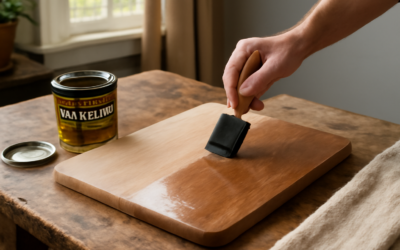
- Apply generously. Work with a lint-free rag or brush along the grain, one manageable section at a time.
- Wipe off the excess. Wipe with clean rags along the grain. The longer the stain sits before wiping, the darker the result, so keep timing consistent across the piece.
- Let it dry. Allow at least 2 to 3 hours, longer in cool or humid conditions.
- Add a second coat if needed. Repeat the apply and wipe process for deeper color.
- Topcoat. Once the stain is completely dry, apply a clear protective finish. Oil-based polyurethane adds a slight amber tone; water-based clear finishes keep the black cooler.
Oil-Based vs. Water-Based True Black
Minwax also sells True Black in a water-based semi-transparent stain. It dries much faster and cleans up with water, which is handy for small furniture or trim. The manufacturer does not recommend the water-based version for large surfaces like floors because the fast dry time makes lap marks likely. For floors, stair treads and big tabletops, the oil-based penetrating version gives more working time.
Neither of these is opaque. If you want solid jet black with no grain showing, Minwax also sells True Black in its water-based Solid Color Stain, or you can use paint.
Where Minwax True Black Stain Works Best
Black stain is unforgiving on large flat surfaces but stunning where grain and shape can show. Minwax True Black stain is a strong choice for oak dining tables, open-grain stair treads with a natural-finish riser contrast, picture frames, floating shelves, accent doors and vintage furniture you want to modernize. On kitchen cabinets it reads clean and contemporary, though fingerprints and dust show more on black than on mid-tone finishes, so a satin topcoat is easier to live with than gloss.
Fire Safety and Ventilation
Oil-soaked rags are a real fire hazard. Rags, steel wool and sanding dust soaked with oil-based stain can heat up and catch fire on their own as the oil cures. The manufacturer’s guidance is to place them in a sealed, water-filled metal container and dispose of them according to local fire regulations. Never leave a pile of used rags in a trash can, garage corner or bucket.
Work with windows open and a fan pulling air out of the room. Keep stain vapors away from pilot lights, space heaters, furnaces and any open flame. Wear gloves and eye protection, and use a respirator per the label if you cannot ventilate well. Never mix stain with other chemicals.
Troubleshooting True Black Stain
Blotchy color. Usually caused by skipping conditioner on pine or maple, or by uneven sanding. Sand back, condition and restain, or switch to a gel stain on very blotch-prone woods.
Looks brown or gray, not black. Some woods absorb little stain. Apply a second coat after the first dries, and let it sit longer before wiping.
Sticky surface after a day. Too much stain was left on the surface. Wipe with a rag dampened with mineral spirits to remove excess, then let it dry fully before topcoating.
Topcoat streaks gray. Stain was not fully dry, or the first topcoat pass dragged pigment. Wait longer and use light pressure on the first coat of finish.
Lap marks on large surfaces. Keep a wet edge and work in smaller sections. On floors, work board by board.
Cost and When to Call a Pro
A quart of oil-based stain is an inexpensive purchase, typically under $20, and a full DIY furniture refinish with sandpaper, conditioner and topcoat usually stays under $75. Professional refinishing of a dining table often runs a few hundred dollars, while staining a hardwood floor black is commonly priced around $3 to $8 per square foot including sanding and topcoat.
Hire a pro for floors, staircases and kitchen cabinets. Black shows every sanding scratch and lap mark, and floor refinishers have the drum and edge sanders to get an even surface. If the piece has old paint and the home was built before 1978, test for lead before sanding.
Frequently Asked Questions
What is the color number for Minwax True Black?
True Black is listed as 274 in the Minwax Wood Finish oil-based penetrating stain line. Ebony is 2718 and Jacobean is 2750.
Is True Black darker than Ebony?
True Black is the more neutral black. Ebony is very dark but often reads as a brown-black on many woods, so True Black is the better pick for a crisp black finish.
How many coats of True Black stain do I need?
One coat is often enough on oak and walnut. Pine, maple, birch and poplar usually need a conditioner first and two coats for deep, even color.
How long does True Black need to dry before polyurethane?
The stain dries in about 2 to 3 hours under normal conditions. Let it dry completely before topcoating, and give it longer in cool or humid weather or after a heavy coat.
Can I use True Black stain on hardwood floors?
Yes, the oil-based penetrating version is suitable for interior wood floors. The water-based version is not recommended for large surfaces like floors because it dries too fast to avoid lap marks.