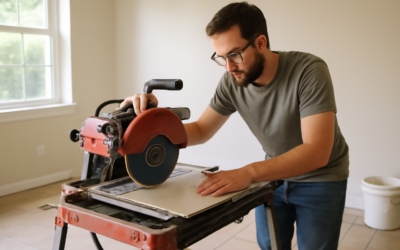
When a tile project moves beyond a handful of straight cuts, a quality wet saw becomes essential. An MK tile saw, made by MK Diamond, is one of the most recognized names in the trade, common on professional job sites and in serious DIY garages alike. The brand has a long reputation for durable wet saws and diamond blades built to cut ceramic, porcelain, and stone cleanly.
Part of our Tile & Grout guide — explore the full guide →
A wet saw uses water to cool a diamond blade as it grinds through hard tile, which keeps dust down and produces a crisp edge. Understanding how these saws work and how to choose one helps you get professional-looking results without ruining expensive tile.
How a Wet Saw Works
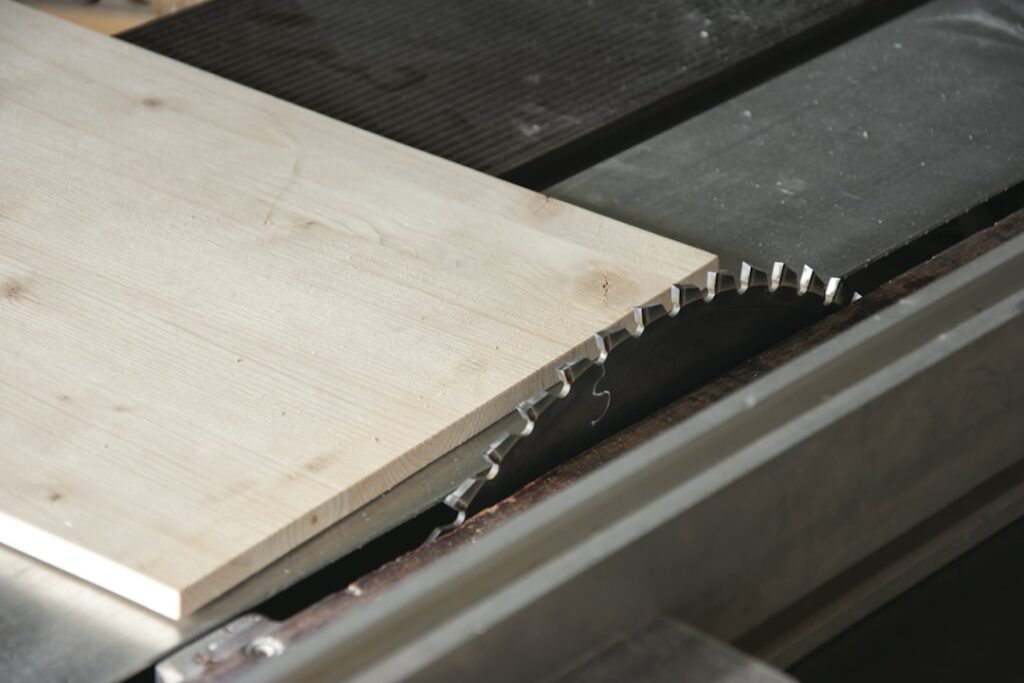
Unlike a circular saw with teeth, a tile saw uses a smooth, diamond-coated rim blade that grinds rather than cuts. Water continuously bathes the blade, cooling it and flushing away slurry. That water is what prevents chipping, overheating, and the cloud of silica dust dry cutting creates.
The tile rides on a sliding table or you push it past a stationary blade, depending on the design. Either way, the combination of a true diamond blade and steady water flow is what separates a clean porcelain cut from a chipped mess.
Types of MK Tile Saws
MK Diamond offers a range of saws sized for everything from a weekend backsplash to a full commercial floor. The right type depends on your tile size and how often you cut.
- Tabletop and benchtop saws: Compact and portable, ideal for backsplashes and small bathrooms.
- Rail or sliding-table saws: The tile or the head moves along a rail, giving accurate cuts on larger tile.
- Bridge saws: The motor and blade ride above a fixed table on a bridge, excellent for big-format porcelain.
- Larger pro saws: Higher horsepower and bigger blade capacity for thick stone and heavy daily use.
For most homeowners tackling a single room, a tabletop or compact rail saw covers the work. Reserve bridge and large pro saws for big-format tile or frequent use.
Choosing the Right Blade
The blade matters as much as the saw. A good diamond blade matched to your material is the difference between a smooth edge and a chipped one.
- Continuous-rim blades: Smoothest cuts, best for porcelain, glass, and polished tile.
- Turbo and segmented blades: Faster, more aggressive cuts for stone and thick material, with a slightly rougher edge.
- Material-specific blades: Dedicated blades for porcelain, glass, or natural stone optimize the cut.
Always confirm the blade is rated for wet cutting and for your tile type, and match the arbor size to your saw. A worn or wrong blade chips tile no matter how good the saw is.
Setting Up and Cutting
A clean cut starts with proper setup. Take a few minutes to get it right and your tile will thank you.
- Place the saw on a stable, level surface and fill the water reservoir per the manual.
- Confirm the blade is the correct type, tightly mounted, and spinning freely.
- Check that water reaches the blade before you start a cut.
- Mark your tile clearly and align it to the guide or fence.
- Feed the tile slowly and steadily, letting the blade do the work rather than forcing it.
- Ease off near the end of the cut to avoid chipping the back edge.
Forcing the tile is the most common mistake. Let the blade grind at its own pace and keep the water flowing throughout.
Safety First
A tile saw combines a fast-spinning blade with water and electricity, so safety is non-negotiable. Plug into a GFCI-protected outlet to guard against shock around the water. Wear eye protection against flying chips and slurry, and hearing protection during long sessions.
Keep the blade guard in place, keep your fingers well clear of the blade path, and never reach across a spinning blade. Use a push stick or the table to feed small pieces rather than pushing them by hand. Read and follow MK Diamond’s manual for your specific model, and always cut with water as designed, since dry cutting tile releases hazardous silica dust.
What MK Saws Cost
Pricing spans a wide range with size and capability. Use these as estimates that shift with model and retailer.
- Compact tabletop saws: roughly $100 to $300.
- Mid-size rail and sliding-table saws: about $300 to $800.
- Larger bridge and pro saws: $800 to several thousand dollars.
- Quality diamond blades: typically $30 to $150 depending on size and material.
- Daily rental: around $40 to $90 if you would rather not buy.
If you have just one project, renting a saw makes sense. If you tile regularly or want a tool that lasts, buying a well-built MK saw is a sound investment.
Maintenance and Care
A wet saw lasts for years if you clean it after every use, and neglecting that is the fastest way to ruin one. Tile slurry is abrasive and hardens like cement, so it must come off before it sets. Drain and rinse the water reservoir, wipe down the table and rails, and clear slurry from the pump and water lines so flow stays strong.
Keep these habits in mind to protect the saw and your cut quality:
- Flush the pump and reservoir after each session to prevent clogs.
- Inspect the blade for wear and glazing; a dull diamond blade chips tile and overheats.
- Keep the rails and sliding table clean so cuts stay straight.
- Check that water nozzles aim at the blade and are not blocked by debris.
- Store the saw dry to prevent corrosion on metal parts.
A clean saw with a sharp blade cuts better, lasts longer, and is safer to operate.
Buy or Rent?
The decision comes down to volume. A single backsplash or small bath rarely justifies buying, and a rental gets you a capable saw for a day or two. But if you plan multiple rooms, tile floors, or ongoing projects, owning a durable wet saw saves money and frustration over time.
Whichever route you take, match the saw size to your largest tile, fit it with the correct diamond blade, and respect the safety basics. With water flowing, a sharp blade, and a steady feed, an MK tile saw delivers the clean, professional edges that make a tile job look truly finished.
Prefer to explore on your own?
See how new flooring looks in your actual room in seconds — free, no signup.
Try the free Floor Studio →