A bathroom vanity is the single most visible piece of furniture in the room — and the one that dates a renovation fastest. Swap an oak builder-grade vanity for a sleek floating walnut piece with an integrated stone top, and a tired bathroom looks 10 years newer overnight. The strongest modern bathroom vanity ideas share three traits: clean horizontal lines, mixed materials (wood paired with stone or matte metal), and lighting integrated into the design rather than tacked on as an afterthought.
Part of our Bathroom Remodeling & Flooring guide — explore the full guide →
- Floating Vanities: The Defining Modern Look
- Material Combinations That Work
- Single vs Double Sink: Match the Bathroom
- Storage Without Cluttering the Look
- Vessel, Undermount, or Integrated Basin
- Lighting: Built-In Beats Stuck-On
- Hardware, Faucets, and Finishes
- Small Bathroom Vanity Solutions
- Custom vs Stock vs Semi-Custom
- Realistic Total Renovation Costs
- FAQ
Floating Vanities: The Defining Modern Look
Wall-mounted “floating” vanities sit 12-18 inches above the floor with no visible legs or toe kick. The result feels weightless, makes the bathroom appear larger, and dramatically simplifies floor cleaning. Structural requirements are real — the wall behind needs solid blocking between studs to support a loaded vanity (often 200-400 pounds with stone top and plumbing). Most pre-fab floating vanities ship with a French cleat system; custom installs use steel brackets bolted directly into framing.
Popular floating vanity widths: 24, 30, 36, 48, 60, and 72 inches. The 48-inch single-sink and 60-inch double-sink are the two best-sellers in 2026, available from West Elm, CB2, Restoration Hardware, Wayfair’s house brands, and direct-from-factory suppliers like AKDY and Eviva.
Material Combinations That Work
The most successful modern vanities pair two or three contrasting materials. Five proven combinations:
- Walnut + white quartz + matte black hardware: Warm, contemporary, easy to source.
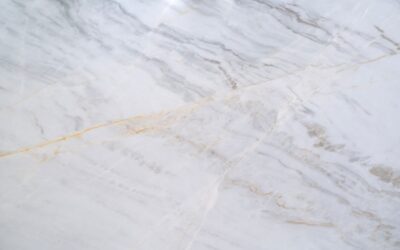
- White oak + honed Carrara marble + brushed brass: Soft modern, leans Scandinavian.
- High-gloss lacquer (white or charcoal) + integrated solid surface basin: Minimalist Euro look.
- Concrete-look porcelain top + rift-cut oak base + black fixtures: Industrial modern.
- Painted shaker base + soapstone top + polished nickel: Modern transitional.
Single vs Double Sink: Match the Bathroom
A single vanity needs at least 24 inches of width to function; 30-36 inches is the sweet spot. Double sinks need a minimum of 60 inches — anything less and the basins crowd the faucet. For small primary bathrooms under 80 sq ft, a single 36-inch vanity with a long stone top often looks more luxurious than a cramped double. Save the double for bathrooms 100 sq ft and up.
Storage Without Cluttering the Look
Modern doesn’t have to mean storage-poor. Push-to-open soft-close drawers (Blum Tip-On hardware, hidden Tip-On Blumotion runners) eliminate visible pulls while giving full extension. Inside, U-shaped drawer organizers route the cabinet around the plumbing trap below the basin, recovering 30-40% of the storage that would otherwise be lost. Outlet strips installed inside the top drawer (Docking Drawer or hardwired strips like Legrand) keep hair tools plugged in and out of sight.
For floating vanities, add a slim wall-mounted medicine cabinet above and recessed wall niches in the shower to compensate for the lost under-sink volume.
Vessel, Undermount, or Integrated Basin
Each basin style affects both look and function:
- Undermount: Cleanest look, easiest to wipe crumbs and water into. Requires a stone or solid surface top. Most popular for modern.
- Integrated: Basin and counter are one continuous piece (concrete, solid surface, porcelain). Zero seams, zero grime traps. $400-1,200 premium.
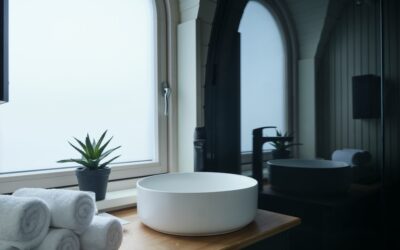
- Vessel: Bowl-on-counter look. Visually striking but harder to clean around the base, and counter height drops to 30 inches so the bowl rim hits a usable 35 inches.
- Semi-recessed: Basin sits half-in, half-on top. Niche choice, useful for shallow vanities under 18 inches deep.
Lighting: Built-In Beats Stuck-On
Modern vanities increasingly include integrated LED lighting — a strip under the toe kick adds nighttime ambiance, and a recessed LED behind a backlit mirror eliminates the harsh shadows that traditional sconces cast. For new installations, plan for: 3000K-3500K color temperature (warm white that flatters skin), at least 800-1200 lumens at the face, and a dimmer to drop output for late-night use. Pair with a fog-free LED mirror like the Krugg Bijou or Sussex Verge.
Hardware, Faucets, and Finishes
Hardware drives the modern feel more than any other element. Long, slim cabinet pulls (8-12 inches on drawers) read more contemporary than knobs. Push-to-open eliminates hardware entirely. Faucets have shifted from polished chrome to four dominant finishes: matte black, brushed nickel, brushed brass (champagne bronze), and gunmetal. Mix metals carefully — pick one dominant finish for plumbing fixtures and a complementary finish for hardware. Three different metals in one bathroom usually looks busy.
Small Bathroom Vanity Solutions
For half-baths and powder rooms under 30 sq ft, a wall-hung console (Kohler Purist, Duravit Cape Cod, Lacava Aquaquattro) gives the look of a custom piece in a 24-inch footprint. Pair with a wall-mounted faucet and a slim mirror to reclaim counter space. For small full baths, a 30-inch floating vanity with a single drawer plus a tower of open shelving above maximizes vertical storage without crowding the floor.
Custom vs Stock vs Semi-Custom
Stock floating vanities run $400-1,800 for popular sizes and finishes. Semi-custom from cabinet brands like KraftMaid or Decora ranges $1,500-4,500. Full custom from a local cabinet shop typically runs $3,500-9,000+ depending on materials and dimensions. The key advantage of custom: dimensions tailored to non-standard wall lengths and plumbing configurations, plus material choices (rift-cut white oak, fumed eucalyptus, fluted fronts) that stock vendors don’t offer.
Realistic Total Renovation Costs
- Vanity unit: $400-9,000+
- Stone or solid surface top: $300-2,500
- Basin (if not integrated): $80-450
- Faucet and drain: $120-700
- Backlit mirror or LED mirror: $250-1,200
- Plumbing relocation (if needed): $400-1,200
- Installation labor: $400-1,800
A stylish, mid-range floating vanity refresh comes in at $2,500-5,500 fully installed without moving plumbing.
FAQ
How high should a modern bathroom vanity be?
Standard “comfort height” is 36 inches to the top of the counter, up from the older 32-inch standard. Floating vanities sit 32-36 inches off the floor depending on user preference and integrated basin design.
Are floating vanities hard to install?
They require solid in-wall blocking between studs to carry the load. If walls weren’t built with blocking, you’ll need to open the drywall and add 2×8 or 2×10 blocking before mounting. A pro can do this in 2-4 hours.
What’s the most durable countertop for a vanity?
Quartz (Caesarstone, Cambria, Silestone) is the most stain- and chip-resistant. Sintered stone (Dekton, Neolith) handles heat, scratches, and stains slightly better but costs 30-50% more.
Can I put a vessel sink on a floating vanity?
Yes, but lower the vanity 4-6 inches because the bowl adds height. Standard floating + vessel pushes the rim too high for short users.
What color is most popular for modern bathroom vanities right now?
Natural wood tones — especially warm white oak, walnut, and rift-cut oak — are dominating 2026 trend forecasts. High-gloss white and matte charcoal remain strong second choices.