If you have ever wiped toothpaste, hair dye, or a spilled bottle of foundation off a bathroom counter, you already understand why a quartz bathroom vanity has become the default choice in mid- and high-end remodels. Engineered quartz is roughly 90 to 94 percent ground natural stone bound with resin, which produces a surface that is nonporous, stain-resistant, and never needs sealing. Unlike granite or marble, it will not soak up the daily cocktail of cosmetics and cleaning products that a bathroom throws at it.
Part of our Countertops guide — explore the full guide →
Quartz is a popular vanity top choice, and for good reason. Here is what you actually need to know about cost, color, edges, and installation before you order a slab.
- Why Quartz Beats the Alternatives in a Bathroom
- What a Quartz Bathroom Vanity Costs
- Choosing a Color and Pattern
- Edge Profiles and Thickness
- Integrated vs. Undermount Sinks
- Quartz vs. Granite, Marble, and Cultured Marble
- Standard Sizes and Backsplash Options
- Installation and Timeline
- Care and Longevity
Why Quartz Beats the Alternatives in a Bathroom
Bathrooms are a punishing environment: constant moisture, temperature swings, and a rotating cast of staining liquids. Natural marble looks stunning but etches when it meets anything acidic, including many face washes and toilet-bowl cleaners. Granite needs resealing every year or two to stay water-resistant. Laminate is cheap but swells the moment water sneaks into a seam.
Quartz sidesteps all of it. Because the surface is nonporous, bacteria and mold cannot take hold in it, water beads instead of soaking in, and you clean it with nothing more than mild soap and a soft cloth. For a room defined by water and stains, that is exactly the property you want.
What a Quartz Bathroom Vanity Costs
Quartz is sold by the square foot, installed, and the range is wide because color, brand, and thickness all move the number. For a bathroom vanity top you should budget:
- Entry-level quartz: $50 to $70 per square foot installed, typically solid or lightly speckled colors from value lines.
- Mid-range quartz: $70 to $100 per square foot installed, including most veined and marble-look patterns.
- Premium and designer quartz: $100 to $150 per square foot installed, covering dramatic bookmatched veining and thick 2 cm to 3 cm profiles.
A standard 25-by-22-inch single-sink vanity top uses about 4 to 5 square feet, so a real-world installed cost often lands between $350 and $750 for mid-range material. A 60-inch double vanity roughly doubles that. Templating and fabrication, which include cutting the sink hole and faucet holes, are usually bundled into that installed price by a reputable fabricator.
Choosing a Color and Pattern
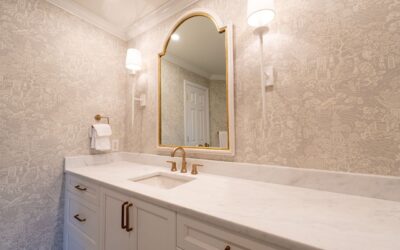
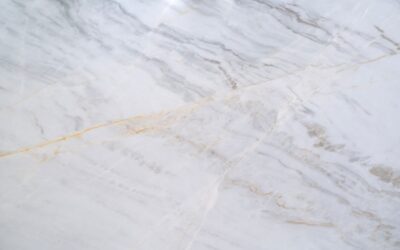
Bathrooms are smaller than kitchens, which gives you license to be bolder. Still, resale value favors flexibility. The safest and most popular direction is a soft white or light gray with subtle veining that mimics Carrara or Calacatta marble; it brightens a small room and pairs with nearly any cabinet color.
For a modern powder room, a dramatic dark quartz with bold white veining makes a striking statement against a floating vanity. Warmer households lean toward cream and greige tones that flatter oil-rubbed bronze and brushed-gold fixtures. Whatever you choose, view the full slab in person under bathroom-appropriate lighting, because a 12-inch sample never shows how the veining will actually run across your top.
Edge Profiles and Thickness
The edge profile quietly sets the whole vanity’s style. Contemporary bathrooms almost always use a clean eased or square edge on a 2 cm (¾ inch) slab, often with a mitered buildup to fake a thicker 4 cm look. Traditional bathrooms favor softer profiles.
- Eased / square: A crisp, minimal edge; the modern default and the least expensive.
- Beveled: A small angled cut that adds a touch of detail without fuss.
- Bullnose / half-bullnose: A rounded edge that is softer to lean against and safer around children.
- Ogee: An S-curve for formal, traditional vanities; costs more to fabricate.
Standard quartz slabs come in 2 cm and 3 cm thicknesses. The 3 cm slab feels more substantial and can span the vanity without a plywood backer, while a 2 cm top is usually mounted over a support substrate. Mitered edges to build up thickness add roughly $20 to $40 per linear foot.
Integrated vs. Undermount Sinks
Because quartz is nonporous, an undermount sink is the natural pairing; the counter sheds water straight into the bowl with no lip to trap grime. A rectangular undermount porcelain sink is the workhorse choice and easy to keep clean. Some homeowners choose a vessel sink sitting on top of the quartz for a spa look, which lets you use a thicker, more dramatic slab as a flat platform.
Whatever sink you pick, have the faucet holes drilled at the fabrication shop, not on site. Drilling engineered quartz in place risks chipping the surface and voids many warranties.
Quartz vs. Granite, Marble, and Cultured Marble
It helps to see where quartz sits against the alternatives you will be shown in a showroom. Granite is a natural stone with unique veining and excellent heat resistance, but it is porous and needs sealing every year or two to stay stain-resistant in a bathroom. Marble is the most luxurious-looking, yet it is soft and acid-sensitive, so common bathroom products etch dull spots into it within months. Cultured marble, a molded resin-and-stone-dust product, is inexpensive and comes with an integrated sink, but it scratches, dulls, and can crack under a dropped curling iron.
Quartz splits the difference: it delivers stone looks and durability without sealing, without acid etching, and without the softness of cultured marble. The only real trade-offs are its sensitivity to extreme direct heat and a price that sits above laminate and cultured marble but below high-end natural stone. For a room defined by water and cosmetics, that balance is why it is specified so often.
Standard Sizes and Backsplash Options
Bathroom vanity tops come in a handful of standard footprints, which keeps fabrication simple and cost predictable. Common single-sink widths are 25, 31, 37, and 49 inches, all at a standard 22-inch depth, while double-vanity tops run 61 and 73 inches wide. If your cabinet is an odd size, quartz is cut to order from a full slab, so almost any dimension is possible at a modest upcharge.
Decide on the backsplash while you are specifying the top. A matching 4-inch quartz backsplash is the classic, easy-clean choice and hides the wall-to-counter seam. A full-height quartz backsplash behind the sink creates a seamless, high-end look and protects the wall from splashes, though it adds material cost. Alternatively, skip the stone backsplash entirely and run a tile backsplash up the wall for a decorative accent; just have the fabricator finish the back edge of the top cleanly for that option.
Installation and Timeline
Quartz is heavy: a 3 cm top can weigh 20 to 25 pounds per square foot, so a double-vanity slab may top 100 pounds. Professional installation is worth the modest cost because the fabricator templates the exact opening, cuts the slab on a CNC machine, and sets it dead level on a bed of silicone. An out-of-level top telegraphs into standing water around the faucet base and poor caulk lines.
The typical timeline runs one to two weeks from template to install. The installer sets the slab, seams it if the run is long, secures the sink, and caulks the backsplash and wall junction. You can usually use the vanity within 24 hours once the silicone skins over.
Care and Longevity
Daily care could not be simpler: wipe with warm water and a drop of dish soap. Avoid abrasive scouring pads, bleach, and harsh alkaline or acidic cleaners, which can dull the resin over time. Blot spills of hair dye or self-tanner promptly; while quartz resists staining, prolonged contact with strong dyes is the one thing that can leave a mark.
Keep a curling iron or flat iron off the bare surface, because extreme direct heat can discolor the resin binder. With that light touch, a quartz bathroom vanity will look showroom-fresh for 15 to 25 years and outlast nearly every other component in the room. Between its immunity to water, its stain resistance, and its zero-maintenance sealing, it is the most trouble-free countertop you can put in a bathroom, and the reason it has quietly become the standard.