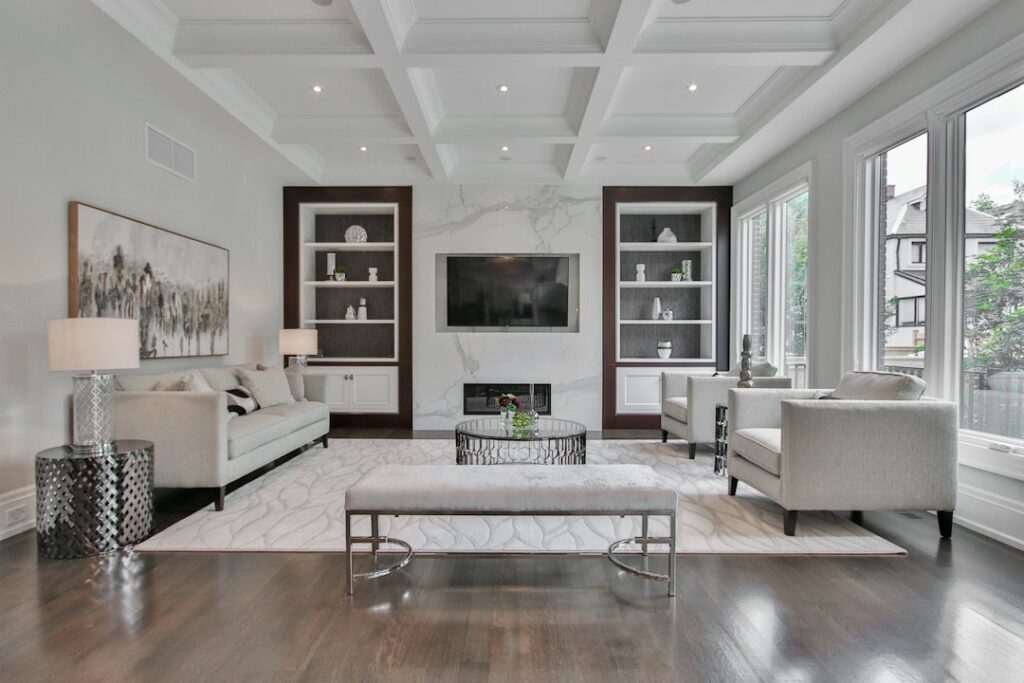
The fastest way to ruin a beach-inspired room is to spell it out. Anchors on pillows, “Life’s a Beach” signs and shelves of seashells turn a relaxed space into a gift shop. Modern coastal decor takes the opposite route: it captures the light, texture and calm of a shoreline through color, natural materials and open space, with almost no literal nautical objects at all.
The quick answer: start with white or warm white walls, add a palette of sand, driftwood gray and two or three soft blues or greens, use light woods like white oak or ash, cover floors with natural fiber rugs, choose slipcovered or linen upholstery, and keep decor minimal. If you add a coastal object, make it one beautiful item, such as a single large piece of coral-inspired art or a photograph of water, rather than a collection.
- What Defines Modern Coastal Decor
- Building a Coastal Color Palette
- Materials, Furniture and Textiles
- Coastal Farmhouse, Coastal Cottage and Beach Cottage Variations
- Modern Coastal Interior Design Room by Room
- How to Avoid Kitschy Coastal Decor
- Lighting, Window Treatments and Art
- Budget, Upkeep and When to Call a Pro
- Frequently Asked Questions
That base works on the coast or a thousand miles inland, and it flexes toward farmhouse or cottage looks with a few changes.
What Defines Modern Coastal Decor
Classic beach decor relied on themes: navy and red stripes, rope, lighthouses. Modern coastal decor relies on atmosphere. Its defining traits:
- Light-filled rooms: sheer window treatments, pale walls and mirrors that bounce daylight.
- Natural textures: jute, sisal, seagrass, rattan, linen, cotton and weathered wood.
- Soft, nature-sourced color: the blues and greens of water, the beiges of sand, the grays of driftwood.
- Clean lines: simple furniture shapes without heavy ornament.
- Restraint: clear surfaces and room to move.
Contemporary coastal decor pushes the modern side further with matte black or brushed nickel accents, larger-scale abstract art and fewer textiles. It still keeps the light woods and natural fibers that make the style feel relaxed.
Building a Coastal Color Palette
A good coastal palette starts with the shore itself. Pick a warm or soft white for walls and trim, then layer:
- Sand tones: oatmeal, flax, pale tan.
- Water tones: seafoam, misty blue, soft aqua, slate blue.
- Driftwood tones: warm gray, greige, weathered oak.
- Accent depth: one deeper shade such as navy, deep teal or charcoal in small amounts.
Avoid saturated primary blues and bright turquoise across large surfaces; they quickly look dated. Instead, use blue in soft, gray-leaning shades on a bedroom wall, a kitchen island or a bathroom vanity. Test paint samples on several walls, since coastal colors shift a lot between north and south light.
Materials, Furniture and Textiles
Woods
Choose light to medium woods with visible grain: white oak, ash, maple, or a whitewashed or cerused finish. Light hardwood or wood-look vinyl plank flooring in a natural or slightly gray tone sets the stage. Mixing a whitewashed dining table with rattan chairs and a white oak floor creates layered warmth without clashing.
Natural Fiber Rugs
A natural fiber area rug is the single most useful coastal piece. Jute is soft and chunky, sisal is tighter and more durable, and seagrass resists stains thanks to its smooth surface. All three add sandy texture. Use a non-slip pad, keep the edges flat to avoid tripping, and choose a washable cotton or synthetic flat-weave for bathrooms and spots near entries where water is common, since plant fibers can stain or mildew when damp.
Furniture and Upholstery
Look for slipcovered sofas in white or oatmeal performance fabric, linen-look armchairs, rattan or cane accent pieces and simple tables. Skip heavy, ornate pieces. Upholstery in washable performance fabric is worth it for families and homes near sand and sun.
Textiles
Use linen curtains hung high and wide, cotton or linen bedding, chunky knit throws and a mix of pillows in solid blues, subtle stripes and textured neutrals. Keep patterns quiet and small in scale.
Coastal Farmhouse, Coastal Cottage and Beach Cottage Variations
Modern coastal is a base that blends well with other styles.
Coastal Farmhouse Decor
Coastal farmhouse decor adds shiplap or board-and-batten walls, a farmhouse sink, weathered wood beams and black or galvanized metal accents. Swap farmhouse reds and heavy plaids for blue and sand tones. A white shiplap wall, a natural wood table and woven pendant lights capture the blend.
Coastal Cottage Decor
Coastal cottage decor is softer and a bit more traditional: beadboard wainscoting, painted furniture, small floral or ticking-stripe fabrics, and collected vintage pieces. Think of a small, sunny home with white-painted floors or pale wood and blue-and-white ceramics.
Beach Cottage Decor
Beach cottage decor is the most casual. Painted wood floors, slipcovers, open shelving and a well-loved quality are central. It suits vacation homes and small spaces where low maintenance matters more than polish.
Modern Coastal Interior Design Room by Room
Living Room
Ground the room with a large jute or sisal rug. Add a white slipcovered sofa, two rattan or linen chairs and a light wood coffee table. Hang sheer linen curtains, place a large leafy plant in a corner and finish with one oversized piece of art showing water, sky or abstract washes of blue.
Kitchen
White or soft blue-gray cabinets, a white or light veining stone-look counter, a handmade-look tile backsplash and woven pendant lights fit well. Wood open shelves can display white dishes and a few glass bottles. Keep counters mostly clear.
Bedroom
Layer white linen bedding with a textured throw in sand or seafoam. A rattan or upholstered linen headboard, light wood nightstands and ceramic lamps keep the room airy. Paint one wall a soft misty blue if you want more color.
Bathroom
Use white or pale tile, a light wood or blue-painted vanity, a woven basket for towels and a washable cotton rug. Brushed nickel or matte black fixtures look modern, and a single plant such as a fern handles the humidity.
Entry and Outdoor Spaces
A durable flat-weave runner, a bench, hooks for beach bags and a basket for sandals work at the entry. On a porch, add teak-look or all-weather wicker seating, outdoor cushions in solid blues and an outdoor rug rated for weather.
How to Avoid Kitschy Coastal Decor
- Remove literal signs and slogans. Let color and texture suggest the coast.
- Limit nautical objects to one or two per room, and choose ones with real craft, like a hand-thrown vase or a framed vintage chart.
- Avoid matching sets. Mix woods, fibers and finishes.
- Choose scale over quantity. One large art piece beats ten small framed shells.
- Bring in real nature: plants, branches and stone instead of plastic starfish.
- Edit by season. Store some textiles and accessories so rooms do not fill up over time.
Lighting, Window Treatments and Art
Coastal rooms depend on light, so treat windows carefully. Hang curtain rods 4 to 6 inches higher than the window frame and extend them 8 to 12 inches past each side so panels stack off the glass and let in the most daylight. Sheer or lightweight linen panels in white or flax diffuse sun without blocking it. Where privacy matters, woven wood or bamboo shades add texture and pair well with sheers layered on top. In bedrooms, a blackout liner behind linen curtains keeps the look while improving sleep.
For fixtures, woven rattan, seagrass or rope-wrapped pendants are the signature choice, but keep them to one or two per open area so they do not feel themed. Clear or seeded glass pendants over an island, ceramic table lamps in white or soft blue, and simple brushed nickel or matte black sconces round out the plan. Use warm white bulbs around 2700K to 3000K; very cool light makes soft blues look icy.
Art is where many coastal rooms tip into kitsch. Choose large-format photography of water or sky, abstract paintings in washes of blue and sand, botanical prints of sea grasses, or a single framed textile. Natural wood or thin white frames suit the style. One oversized piece over the sofa or bed reads as calm and confident, while a cluster of small seashell prints reads as souvenir shop.
Budget, Upkeep and When to Call a Pro
A paint-and-textiles refresh for one room may cost a few hundred dollars. A full living room with a new sofa, a large natural fiber rug, chairs and lighting typically runs a few thousand dollars or more. Installing new light wood or wood-look flooring, shiplap walls or a new kitchen backsplash adds to that. Natural fiber rugs need weekly vacuuming and prompt blotting of spills; avoid steam cleaning jute. Performance fabrics and slipcovers can usually be machine washed.
Hire a pro for new flooring installation, shiplap or beadboard on a large scale, new light fixtures that require wiring changes, and kitchen or bath renovations. A designer consultation can help you choose a palette that works with your home’s light and existing finishes before you buy.
Frequently Asked Questions
What colors are used in modern coastal decor?
Warm whites, sand and oatmeal tones, driftwood grays and soft blues and greens, with a small amount of navy or charcoal for depth.
Can I use modern coastal decor if I do not live near the beach?
Yes. The style relies on light, natural texture and soft color rather than location, so it works in suburban, urban and rural homes alike.
What is the difference between coastal farmhouse and coastal cottage decor?
Coastal farmhouse adds shiplap, rustic wood and metal accents, while coastal cottage is softer and more traditional, with beadboard, painted furniture and small-scale fabrics.
Is a jute rug good for a coastal living room?
Yes. Jute adds sandy texture and comfort underfoot, though it should stay away from moisture and needs a non-slip pad to keep edges flat.
What flooring suits a modern coastal home?
Light hardwood, wood-look vinyl plank or pale tile in natural, whitewashed or slightly gray tones suits the style and pairs well with natural fiber rugs.