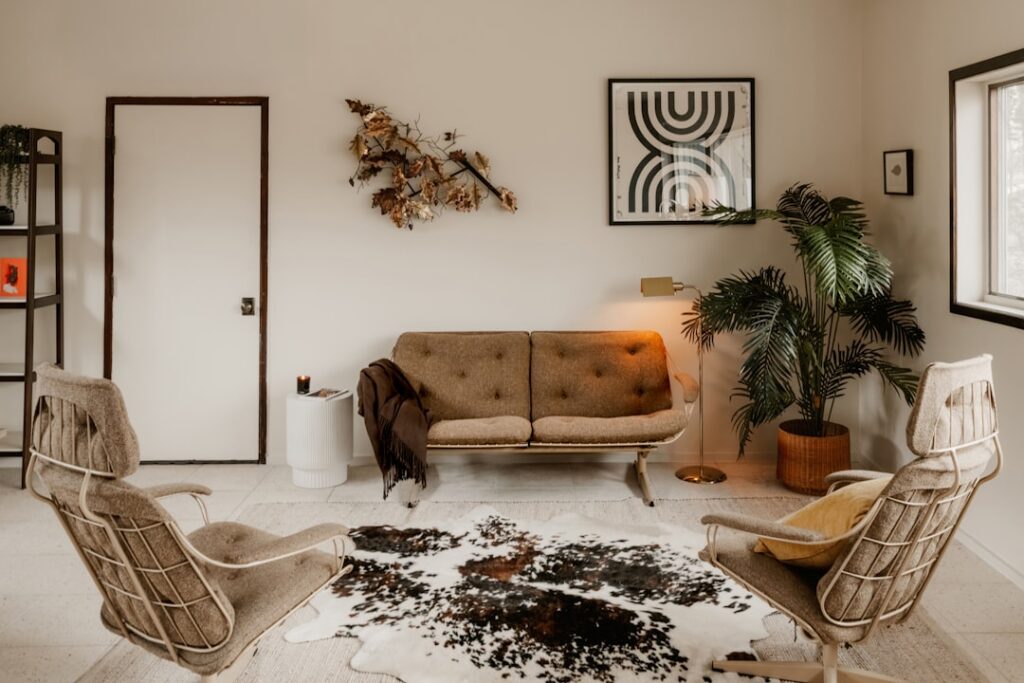
Cowhide has shaken off its old ranch-house reputation, and today a modern cowhide rug is just as at home in a sleek city loft as it is in a mountain retreat. The natural shape, the organic markings, and the smooth low-pile surface bring texture and warmth to contemporary rooms without the fuss of a plush pile. It layers beautifully over larger rugs, defines a seating area, and adds a touch of the unexpected. Whether you go with genuine hide or a convincing faux, the result is a piece that feels designer-level with very little effort.
Why Cowhide Fits Modern Interiors
Contemporary design loves clean lines and honest materials, and cowhide delivers both. Its irregular, freeform shape breaks up the boxy geometry of a modern room, while its flat, short-haired surface keeps the look sleek rather than shaggy. Because each hide is unique, it reads as a natural, one-of-a-kind element in spaces that can otherwise feel too polished. Designers use cowhide to add a layer of texture and a subtle organic note that softens minimalist rooms full of glass, metal, and concrete.
Popular Modern Cowhide Styles
The category has grown well beyond the classic brown-and-white hide:
- Natural brown, black, and white — the timeless look, with authentic markings unique to each hide.
- Solid dyed hides — gray, charcoal, taupe, or even white for a monochrome modern scheme.
- Metallic and printed hides — subtle gold, silver, or geometric overlays for a glam contemporary edge.
- Patchwork cowhide — pieced squares or geometric layouts that create a rectangular, more structured rug.
- Faux cowhide — printed synthetic versions that mimic the shape and markings at a fraction of the cost.
For a truly modern statement, solid dyed gray or a metallic-accented hide feels current, while patchwork gives you a tailored rectangular option if the freeform shape does not suit your layout.
Real Versus Faux Cowhide
This is the big decision, and both have a place. Genuine cowhide is a natural byproduct of the beef industry, extremely durable, naturally stain- and odor-resistant, and it can last decades with basic care. Each hide is unique, and the texture is unmistakably authentic. The downsides are cost, the fact that it is an animal product some households prefer to avoid, and the need for specialized cleaning.
Faux cowhide, made from printed polyester or acrylic, offers the same shape and pattern for far less money, appeals to vegan households, and is often machine washable. The tradeoffs are a less authentic feel, thinner construction, and generally shorter lifespan. If budget, ethics, or easy care are priorities, faux is a smart pick. If you want the real texture and longevity and do not mind the price, genuine hide is worth it.
Sizing and Layering Ideas
Cowhides come in irregular sizes, typically measured at their widest points, and a full hide often runs roughly 6 by 7 feet or larger. Because they are not standard rectangles, think about how the shape works in your space. A single hide defines a seating area or anchors a chair-and-side-table vignette nicely. One of the most popular modern moves is layering: place a cowhide at an angle over a larger jute, wool, or flatweave rug to add texture and a focal point. This works especially well in living rooms and under coffee tables. A hide also looks striking at the foot of a bed or in a home office beneath a desk chair.
Cleaning and Care
Genuine cowhide is easier to maintain than people expect. Shake it out or vacuum with the grain using a brushless attachment to lift dust. For spills, blot immediately with a clean cloth, then wipe with a damp cloth and mild soap if needed, always working with the direction of the hair and drying it flat. Never soak a real hide or machine wash it, and keep it out of prolonged direct sunlight, which can fade the natural color. If the hide develops curling edges, lay it flat under books or weights for a few days, or use double-sided rug tape at the corners.
Faux cowhide is more forgiving. Many versions are machine washable on a gentle cold cycle, and all can be spot-cleaned with mild soap and water. Check the manufacturer’s tag, since backings vary. Either way, a rug pad or grip tape keeps the rug from sliding on hard floors.
What a Modern Cowhide Rug Costs
Prices vary widely by authenticity and size. A genuine full-size cowhide typically runs $150 to $500, with premium dyed, metallic, or exotic-pattern hides climbing to $600 or more. Patchwork cowhides, which use multiple pieces, often cost $300 to $800 depending on size. Faux cowhide rugs are far cheaper, usually $40 to $150. For a durable, long-term piece with authentic character, a real hide justifies its price. For a budget-friendly, easy-care, or animal-free option, faux delivers the same look for less.
Best Rooms and Design Pairings
A cowhide’s low profile and organic shape make it flexible, but it truly shines in a few settings. In a modern living room, it defines a seating vignette or layers over a larger rug beneath a glass or metal coffee table, softening the room’s hard edges. In a home office, a hide under the desk and chair adds warmth to an otherwise utilitarian space. At the foot of a bed or beside it as a step-out rug, a smaller hide brings a touch of luxury underfoot. It also works beautifully in an entryway, where its durability shrugs off traffic.
For pairings, cowhide loves contrast. It plays off sleek materials, so set it against a leather sofa, a tufted bench, or mid-century wood furniture for a designed look. Neutral hides in gray, black, or taupe suit minimalist and Scandinavian rooms, while a metallic or patchwork hide adds glam to a contemporary space. Keep the surrounding palette calm and let the hide’s markings be the visual interest.
Buying Tips and What to Watch For
When shopping for a genuine hide, quality varies, so inspect a few things. Run your hand across the surface; a good hide has full, even hair with no bald patches, and the leather backing should be supple rather than stiff or cracking. Ask about the tanning process, since well-tanned hides resist shedding and odor far better than cheaply processed ones. For faux versions, check the backing quality and confirm whether it is machine washable. Because hides are natural and irregular, always confirm the actual measured dimensions rather than relying on a nominal size, and if the exact markings matter to you, request a photo of the specific piece you will receive rather than a stock image.
The Bottom Line
A modern cowhide rug is one of the most versatile texture layers you can add to a contemporary room. Decide first between genuine hide, prized for its authenticity and durability, and faux, valued for its price and easy care. Consider the irregular shape when planning placement, and lean into layering over a larger rug for a designer look. Keep it clean with simple, gentle methods and a rug pad underneath, and this bold, organic piece will bring warmth and personality to your space for years to come.