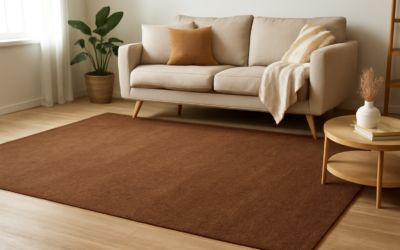
No two are ever alike, and that is the entire point of a brown cowhide rug. Because each one comes from a single animal hide, the shape, the mottling, and the exact shade of brown are unrepeatable, so the rug you buy is genuinely one of a kind. These hides bring a natural, tactile warmth that no machine-woven rug can fake, which is why designers reach for them in everything from a rustic mountain cabin to a sleek downtown loft. This guide covers how to judge quality, care for the hair-on leather, and place the hide so it earns its keep.
- What Makes Cowhide Different From Other Rugs
- Spotting a Genuine Hide
- Caring for Hair-On Leather
- Flattening Curled Edges and Preventing Slips
- Styling a Brown Cowhide in Rustic Rooms
- Styling a Brown Cowhide in Modern Spaces
- Understanding Brown Hide Shades and Markings
- Durability and Where a Hide Holds Up
- Choosing the Right Size and Placement
What Makes Cowhide Different From Other Rugs
A cowhide is not woven, tufted, or backed with the usual jute mesh. It is the actual tanned hide of a cow with the hair left on, trimmed into its natural silhouette rather than a rectangle. That single-piece construction is why the rug lies so flat and feels supple underfoot.
Brown hides span a wide range, from pale caramel and honey tones through rich chocolate and nearly black chestnut. Some are solid, some carry the natural brindle striping of the breed, and others show a tricolor mix of brown, white, and black. The leather underside is smooth and firm, and a quality hide has no cracking or stiffness when you fold a corner.
Spotting a Genuine Hide
Real cowhide and printed imitations can look similar in a photo, so knowing the tells protects your money. Genuine hides carry a natural, irregular outline and a leather back, while fakes are often perfectly rectangular with a fabric or foam backing.
- Edges: Authentic hides have organic, slightly uneven borders; printed rugs are cut to clean geometric shapes.
- Hair direction: Real hair grows in natural swirls and cowlicks that shift as you run your hand across it.
- Backing: A true hide shows smooth tanned leather underneath, not woven cloth.
- Weight: A single genuine hide weighs roughly 6 to 12 pounds and drapes with substance.
Expect to pay $150 to $400 for a quality full-size hide around 6 by 7 feet; prices well below that often signal a synthetic print.
Caring for Hair-On Leather
Cowhide is surprisingly low-maintenance, but it wants the opposite of how you treat a woven rug. Never soak it or run it through a wash cycle, since water can stiffen or warp the leather. For routine upkeep, shake the hide outdoors and vacuum lightly in the direction of the hair growth using a brushless attachment.
Spills call for quick, gentle action. Blot liquid immediately with a dry cloth, wipe along the grain with a barely damp rag if needed, and let the hide air dry flat away from direct heat. For a stubborn spot, a small dab of mild leather cleaner works; harsh detergents and steam cleaners do not. Treated this way, a good hide easily lasts 15 to 20 years.
Flattening Curled Edges and Preventing Slips
Fresh out of the box, a rolled hide often has edges that curl up. Lay it flat in a warm room and the leather relaxes within a few days; for stubborn corners, place a stack of heavy books on them overnight. Gently flexing a curled edge back and forth by hand also helps break the memory of the roll.
Because the smooth leather back can slide on hardwood or tile, add a non-slip rug pad cut to roughly the hide’s footprint. The pad grips the floor, protects the leather from abrasion, and keeps the irregular shape from shifting every time you walk across it.
Styling a Brown Cowhide in Rustic Rooms
In a cabin, farmhouse, or Western-inspired space, a brown hide feels completely at home. Layer it over wide-plank wood floors near a stone fireplace and it reinforces the natural, rugged palette. The organic shape breaks up all the straight lines of timber and stone, and the brown tone ties into leather furniture and reclaimed wood beams.
For extra depth, layer a smaller cowhide over a larger flat-weave jute or wool rug. The contrast of textures reads as collected and intentional rather than matchy, a trick interior designers lean on constantly in lodge-style interiors.
Styling a Brown Cowhide in Modern Spaces
Do not assume a hide only belongs in a hunting lodge; it plays beautifully against clean contemporary lines too. In a minimalist loft with concrete floors and a low-slung sofa, a solid chocolate hide adds a hit of organic warmth that keeps the room from feeling cold. The irregular outline becomes a soft sculptural counterpoint to hard architectural angles.
Pair it with metal, glass, and monochrome upholstery to let the natural texture stand out. A caramel hide under a glass coffee table, or a dark brindle hide anchoring a pair of leather lounge chairs, bridges the gap between rustic material and modern form without any effort.
Understanding Brown Hide Shades and Markings
The word “brown” hides a huge range once you start shopping. Solid hides in caramel, tan, or deep chocolate offer a clean, uniform look that suits modern rooms. Brindle hides carry darker striping over a brown base, giving a wild, textured pattern that reads rustic. Tricolor and exotic-print hides mix brown with white and black patches for maximum visual punch.
Each pattern was determined by the animal’s breed and coloring, so no dye was involved in a natural hide. If a rug’s brown looks unnaturally even and saturated, it may be a dyed or stenciled hide, which is legitimate but a different product than a natural-color skin. Decide up front whether you want the raw authenticity of natural markings or the consistency of a dyed piece, and shop accordingly.
Durability and Where a Hide Holds Up
Cowhide is tougher than its luxe look suggests, which is part of why it has stayed popular for decades. The dense hair and thick leather resist crushing, so a hide bounces back from foot traffic that would flatten a plush wool pile. It handles dry, high-use zones like living rooms, home offices, and entries well, and it does not shed or pill the way tufted rugs can.
Where hides struggle is moisture and grease. Keep them out of bathrooms, kitchens near the stove, and covered patios exposed to rain, since standing water and oils can stain the leather and stiffen it permanently. Place your hide in a dry, sheltered spot and it will outlast most woven rugs by years, developing a soft patina rather than wearing thin.
Choosing the Right Size and Placement
Because hides come in natural sizes, you buy by the piece rather than by neat dimensions. A typical single hide runs about 6 to 7 feet at its widest and 7 to 8 feet long, enough to sit under a coffee table with the front legs of a sofa resting on it. Smaller hides work beautifully beside a bed, in an entry, or draped over the back of a sofa or bench as an accent.
When you shop, remember that a brown cowhide rug is chosen as much for its individual markings as its measurements, so request actual photos of the specific hide when buying online. Match the shade to your room’s undertones, confirm the piece is a genuine single hide, and give it a non-slip pad, and you will have a durable, characterful rug that only looks better with age.