The entryway takes more abuse than any other floor in the house. Snowmelt, road salt, sand, pet nails, suitcase wheels, and the occasional spilled coffee all land there first. Picking the right tile means balancing looks with the right slip resistance, water absorption, and grout plan. The best modern entryway tile ideas use large-format porcelain, encaustic cement, terrazzo-look porcelain, or geometric mosaics that frame the doorway like a rug.
Part of our Tile & Grout guide — explore the full guide →
This guide pulls together patterns that read current in 2026, the brands worth pricing, and the technical specs that separate a 30-year tile from one that cracks at year three.
Large-Format Porcelain: The Designer’s Default
Twelve-inch tiles look dated. Twenty-four by 48-inch porcelain reads modern, hides grout lines, and makes a small foyer look bigger. The trade-off is a flatter substrate requirement, ANSI A108.02 calls for 1/8 inch in 10 feet for tiles 15 inches and larger. Below-grade slabs and older homes often need self-leveler ($1 to $2 per square foot) before installation.
Brands to price out:
- Daltile Volume 24×48: $4 to $7 per sq ft, available in matte concrete and natural stone looks
- MSI Brixstyle and Surf series: $3 to $6 per sq ft
- Florida Tile Berkshire: $5 to $9 per sq ft, made in USA
- Crossville Laminam thin tile: $9 to $14 per sq ft for 6 mm slim format
Demand a DCOF (Dynamic Coefficient of Friction) rating of 0.42 or higher for entryway use per ANSI A326.3. Anything lower turns into a skating rink when wet.
Encaustic Cement and Cement-Look Patterns
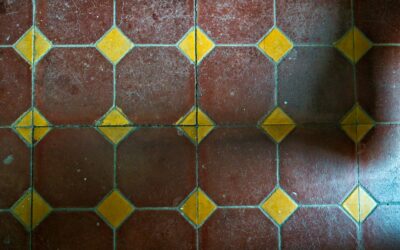
Bold geometric patterns inspired by Moroccan, Portuguese, and Cuban tile have a permanent place in modern design. True cement encaustic tile from Granada Tile, Cle, or Zia runs $15 to $30 per square foot, requires sealing every 6 to 12 months, and demands an experienced installer. The look is unbeatable, but the maintenance is real.
Porcelain look-alikes give 95 percent of the visual at a fraction of the cost and zero sealing. Top options:
- Merola Tile Twenties series at Home Depot: $4 per sq ft, 8×8 inch
- Daltile Memoir: $6 per sq ft, multiple patterns
- Bedrosians Cloe encaustic-look: $5 to $8 per sq ft
- Wayfair Sample Sale collections often dip below $3 per sq ft
A common move is to inset a 5 by 7 foot patterned “rug” of cement tile inside a larger field of solid porcelain. The pattern frames the door, the field connects to adjacent rooms.
Terrazzo Comes Back, Properly
Terrazzo had its 2018 moment, faded, and returned as a more confident design in 2025. Modern terrazzo combines a neutral base (white, gray, taupe, sometimes black) with oversized aggregate in muted earth tones rather than the rainbow chips of the 1980s.
True poured-in-place terrazzo runs $35 to $75 per square foot installed and requires a National Terrazzo and Mosaic Association certified contractor. Porcelain terrazzo tile delivers the same look for $5 to $12 per sq ft. Top picks include Marazzi Terrazzo Gemma, Florida Tile Liquid Color, and Lea Concreto. All are floor-rated and finish in PEI 4 wear class, which holds up to commercial foot traffic.
Penny Round and Hex Mosaics
For smaller foyers under 50 square feet, mosaic patterns punch above their weight. Penny rounds in matte black, charcoal, or warm white create a textured but cohesive entry. Two-inch hex in marble-look porcelain reads as upscale without the maintenance of real Carrara.
Daltile Octagon and Dot, MSI Pebbles, and Bedrosians Cloe all offer mosaics in the $5 to $12 per square foot range, sold on 12 by 12 inch mesh-backed sheets. The DCOF on small-format mosaics is usually higher than large-format tile thanks to the additional grout area, which is good for slip resistance but worse for maintenance.
For a 30 to 50 square foot entry, expect about 4 hours installation time plus another 2 hours for grouting. DIY-friendly with a wet saw rental from Home Depot ($60 per day) and a 1/8 inch trowel.
Grout: The Detail That Makes or Breaks the Look
Grout choice changes the entire visual. Three options:
- Matching grout (same color as tile): contemporary, minimal, makes the floor look monolithic. Best with large-format porcelain.
- Contrasting grout (charcoal grout on white tile, or vice versa): emphasizes the pattern, works with hex and penny round
- Tone-on-tone (one shade off): the safe middle ground
For entryways, use epoxy grout like Mapei Kerapoxy CQ or Custom Building Products SpectraLock Pro Premium. Epoxy resists road salt, doesn’t need sealing, and stays clean for 20+ years. The cost is $1.50 to $3 per square foot extra over cementitious grout, well worth it in this high-traffic spot.
Heated Floors in the Entry
Heated floors transform a tile entry from “cold first step” to a feature. A 30 square foot mat from WarmlyYours TempZone or Schluter Ditra-Heat runs $300 to $600 plus a thermostat ($150 to $300). The mat installs in mortar under the tile and adds 1/4 to 1/2 inch height. Wattage runs 12 watts per square foot, so a 30 sq ft entry uses about 360 watts, similar to running a hair dryer for 15 minutes.
Quick-melt benefits in cold climates: snow on boots melts in the entry instead of being tracked through the house. NEC requires GFCI protection and a dedicated 20-amp circuit for these systems, so factor in $200 to $400 for an electrician if no nearby junction exists.
Transitions to Adjacent Rooms
The way the tile meets hardwood, carpet, or LVP defines whether the project looks built-in or like a contractor add-on. Three modern transition strategies:
- Flush flat transition: undermounted Schluter SCHIENE strip ($25 to $45 per linear foot), tile and hardwood meet at the same plane
- Defined “doormat” border: a contrasting tile border at the room edge, then field tile beyond
- Curved or angled border: laser-cut hexagons or scalloped edge transitions to hardwood, like a Persian rug edge
Avoid the cheap T-molding strip from the big box store. It reads as a quick fix and instantly downgrades the project.
Cost Range and Lifespan
A 50 square foot tile entry installed by a contractor runs $1,500 to $4,500 depending on tile selection, substrate prep, and heating systems. Materials alone for a DIY install: $300 to $900 plus $200 to $400 in tools, thinset, and grout. The labor saving is real, but a poorly set tile floor with hollow spots and crooked grout joints will show forever.
Properly installed porcelain entryway tile lasts 30 to 50 years with no major maintenance. Encaustic cement looks great longer than that if sealed regularly. Most owners replace entryway tile for design taste, not because the floor failed.
Prefer to explore on your own?
See how new flooring looks in your actual room in seconds — free, no signup.
Try the free Floor Studio →