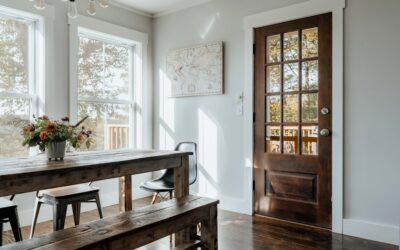
Few upgrades change the feel of a home as cheaply and quickly as swapping dated brass for modern interior door knobs. The right modern interior door knobs pull a room into the current decade with clean lines, on-trend finishes, and smooth hardware, and you can outfit a whole house in a weekend. The key is matching the style, finish, and function to how each door is actually used.
Part of our Windows & Doors guide — explore the full guide →
What Makes a Knob Read as Modern
Modern hardware is defined by simplicity. Think smooth geometric shapes, low-profile square or round rosettes (the plate behind the knob), and matte or brushed finishes rather than shiny, ornate designs. Concealed screws, where nothing shows on the face of the knob, are a hallmark of a contemporary look, giving a clean, uninterrupted surface.
Levers have overtaken round knobs in modern design because they look sleek and are easier to operate, especially for kids, older adults, and anyone with full hands. Both work, but if you want the most current look, a low-profile lever on a square rose is the strongest choice.
Knobs vs. Levers
The first decision is knob or lever, and each has trade-offs.
- Round knobs: Compact and traditional-leaning, though modern versions with square roses look current. Require a full grip to turn.
- Levers: The dominant modern style. Easier to operate, ADA-friendly, and available in the cleanest contemporary profiles.
One caution with levers: on a door that swings, orient the lever so it doesn’t snag pockets or bags, and be aware that a lever is easier for a toddler or pet to open than a knob.
Choosing a Finish
Finish is what ties your hardware to the rest of the room. The most popular modern finishes are:
- Matte black: The current favorite, bold against light doors, versatile with mixed metals.
- Satin nickel: A warm silver-gray that hides fingerprints and suits almost any palette.
- Brushed brass or champagne bronze: A warm gold that feels current without the shine of old polished brass.
- Matte white: A crisp, minimal look for very contemporary or Scandinavian-style interiors.
Coordinate the door hardware with nearby elements like light switch plates and cabinet pulls where they’re visible together. You don’t have to match every metal in the house, but adjacent hardware should relate.
Getting the Function Right
Every door needs the correct function, and buying the wrong type is the most common mistake. There are four:
- Passage: Turns from both sides, no lock. For hallways, closets, and rooms that don’t need privacy.
- Privacy: Locks from inside with an emergency release outside. For bedrooms and bathrooms.
- Dummy: Fixed, non-turning pull. For closet doors held by a ball catch or the inactive half of double doors.
- Keyed entry: Locks with a key. Rare on interior doors, used for home offices or storage.
Walk the house and list each door’s function before ordering so you buy the right mix. Nothing’s more frustrating than installing a passage knob on a bathroom door.
Sizing and Compatibility
Modern knobs and levers fit standard doors, but confirm the numbers. Interior doors are usually 1-3/8 inches thick. The backset, from door edge to bore center, is almost always 2-3/8 inches, occasionally 2-3/4 inches; most sets adjust for both. The bore hole is typically 2-1/8 inches in diameter. If you’re replacing existing knobs, new hardware drops right into the same holes. Cutting fresh holes calls for an installation kit with a hole saw, and most sets include a template.
Installing Modern Door Knobs
Replacing existing hardware is a ten-minute-per-door job with just a screwdriver.
- Unscrew the two mounting screws on the interior rose and separate the two halves of the old knob.
- Remove the two screws holding the old latch in the door edge and pull the latch out.
- Slide the new latch in with the beveled side facing the direction the door closes, and screw the plate to the edge.
- Insert the exterior half so its spindle passes through the latch, then attach the interior half.
- Drive the mounting screws evenly and check that the knob turns freely and the latch retracts.
- Verify the latch lines up with the strike plate; adjust the strike if the door doesn’t catch cleanly.
For concealed-screw modern sets, the mounting screws hide behind a snap-on rose cover, so the finished face shows no fasteners at all.
What to Budget
Modern hardware spans a wide range. Basic passage or privacy knobs and levers run $12 to $30 each. Mid-range hardware with concealed screws and solid construction costs $30 to $60. Designer sets from brands like Emtek, Baldwin, or Schlage’s premium lines run $60 to $120 apiece. For a typical home with 10 to 15 interior doors, budgeting $200 to $600 outfits the whole house at the mid-range level.
Buy from a single line and finish so every door matches exactly, and order a couple of extras for closets you might have missed. Multi-packs of a single function often save money over buying individually.
Maintenance and Longevity
Modern finishes are durable but not indestructible. Clean with a soft, damp cloth and mild soap only; abrasives and harsh chemicals dull matte finishes and can strip brushed coatings. If a set feels loose over time, snug the mounting screws, and add a drop of dry lubricant to a stiff latch rather than oil, which attracts dust.
Well-chosen modern interior door knobs are one of the best returns on a small budget in home updating. They erase the dated feel of builder-grade brass, unify a home’s look, and take almost no skill to install. Pick a consistent finish, match each door’s function, and you’ll enjoy hardware that looks sharp and operates smoothly for years to come.
Round Rose vs. Square Rose
The rose, the plate behind the knob or lever, does more to signal modern versus traditional than the knob shape itself. A round rose reads slightly more classic and forgiving, while a square rose is unmistakably contemporary and pairs beautifully with square-edged doors and minimalist interiors. Both mount the same way, so it’s purely an aesthetic call.
One practical note: if you’re replacing old hardware, a larger rose can hide wear marks or a slightly oversized bore hole left by the previous knob, whereas a small, tight rose exposes any imperfection in the door face. When updating older doors with visible rings from decades-old hardware, a generously sized round or square rose gives you cover. For new doors or doors in great shape, a slim low-profile rose delivers the cleanest modern look. Decide based on both the style you want and the condition of the door beneath.
A Room-by-Room Function Cheat Sheet
To make ordering foolproof, here’s how the functions typically map across a home.
- Bedrooms and bathrooms: Privacy sets, so the door locks from inside with an outside emergency release.
- Hallways, linen closets, and kids’ play areas: Passage sets that latch but don’t lock.
- Reach-in closets with ball catches: Dummy knobs, which are fixed pulls.
- Home offices or storage you want to secure: Keyed entry sets.
- Double doors: An active passage or privacy knob on one leaf, a dummy on the other, plus flush bolts.
Print or jot this list, walk the house counting doors of each type, and order accordingly. Buying two or three spares of your most common function is smart, since it’s easy to miscount and a matching backup saves a return trip.
Levers and Fire-Rated Doors
One overlooked point in some homes is the door between the garage and the house, which is typically a fire-rated door required by code. If you’re updating hardware there, use a set rated for a fire door, and never install a spring-latch that fails to positively latch, since that door must stay closed and latched to slow the spread of fire and fumes. A self-closing hinge is often required as well. For the rest of the interior doors, standard modern knobs and levers are fine, but give that one garage-to-house door the correct fire-rated hardware it needs.