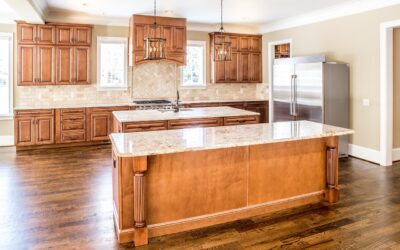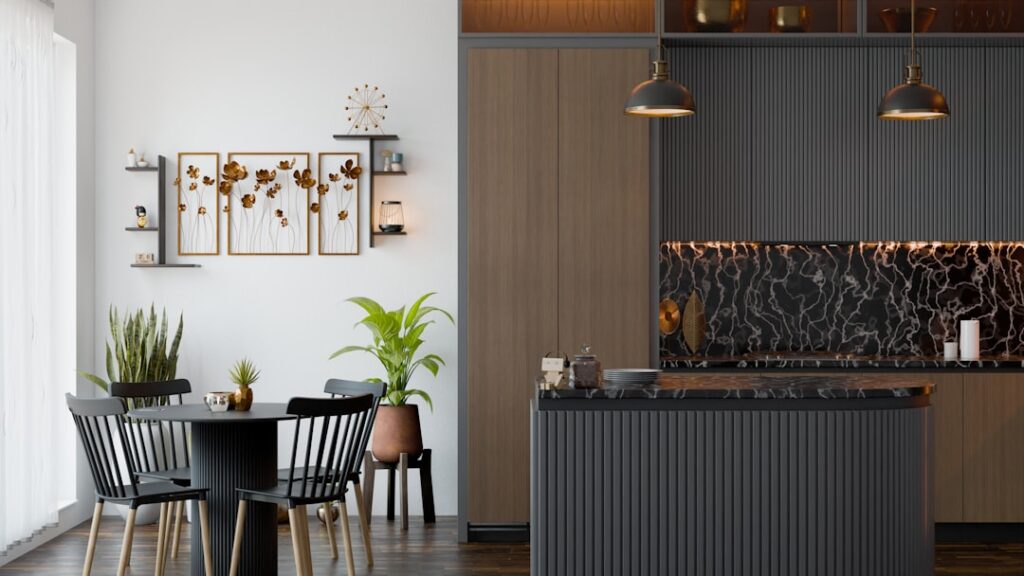
The most common lighting mistake in a kitchen remodel is hanging pendants too high, too far apart, or too small for the island below them — and it makes an expensive renovation look unfinished. Getting modern kitchen island lighting right comes down to a handful of measurable rules about size, height, and spacing, plus a few style choices that separate a builder-grade result from a designer one. Nail the numbers and even a modest fixture budget looks intentional. This guide walks through exactly how the pros plan it.
Part of our Kitchen Remodeling guide — explore the full guide →
Pendants, Linear, or Recessed — Pick Your Style
Modern islands typically use one of three approaches. A row of individual pendants is the most popular and flexible look, working with almost any decor. A single linear suspension fixture — one long horizontal light — reads sleek and architectural, ideal for minimalist and contemporary kitchens. Recessed can lights alone give a clean, uncluttered ceiling but lack the design statement most people want over an island. Many of the best kitchens combine recessed lighting for general coverage with pendants or a linear fixture as the focal point.
How Many Pendants and What Size
The number of pendants depends on your island length. A quick working rule:
- Islands up to 4 feet: one larger pendant or two small ones
- Islands 4 to 7 feet: two to three pendants
- Islands 7 to 10 feet: three pendants, or a single linear fixture
- Islands over 10 feet: three to four pendants or a long linear light
For sizing individual pendants, a rough guide is to keep each pendant roughly 12 to 30 inches wide depending on island scale — larger islands carry bigger fixtures without looking crowded. Odd numbers (one, three) tend to look more balanced than even numbers for a series of pendants, though two works fine on shorter islands.
The Right Hanging Height
This is where most people go wrong. Pendants should hang so the bottom of the fixture sits about 30 to 36 inches above the countertop. That keeps light where you need it, lets you see across the island without a fixture in your face, and preserves the sightline when you are seated at the counter. In rooms with ceilings above the standard 8 feet, add roughly 3 inches of height for every additional foot of ceiling. Measure from the finished countertop, not the floor, and account for counter overhangs and bar seating.
Spacing Pendants Evenly
Even spacing is what makes a row of pendants look professionally installed. Rather than eyeballing it, divide the island length into equal segments:
- Measure the total island length
- For evenly spaced pendants, treat each light as the center of an equal section
- Keep the outer pendants roughly 12 to 18 inches in from the island ends, never hung right at the edge
- Maintain equal gaps between fixtures — typically 24 to 30 inches apart center to center
Symmetry reads as intentional. Uneven gaps, even by a couple of inches, are the detail that quietly makes a kitchen look off.
Bulbs and Color Temperature
Light color changes the entire mood of a kitchen. Color temperature is measured in Kelvin (K), and for a modern kitchen the sweet spot is:
- 2700K to 3000K (warm white): cozy, inviting, flatters wood and warm tones
- 3500K (neutral): a balanced, clean look popular in contemporary kitchens
- 4000K (cool white): crisp and bright, good for hardworking prep zones but can feel clinical
Most designers land around 2700K to 3000K for island pendants to keep the space warm and welcoming. Choose LED bulbs for efficiency and long life, and put the pendants on a dimmer — the single best upgrade for flexibility, letting you go bright for cooking and low for dinner. Aim for bulbs with a high color-rendering index (CRI 90+) so food and finishes look true.
Matching Fixtures to Your Kitchen Style
Modern does not mean one look. For an industrial kitchen, matte black metal or exposed-bulb pendants fit. Minimalist and Scandinavian kitchens favor simple glass globes or slim linear fixtures in brass or black. Mid-century modern pairs beautifully with sculptural or teardrop shapes. Finish coordination matters more than matching everything exactly — pull your pendant finish from another metal already in the room, like cabinet hardware or the faucet, so the lighting feels connected rather than random.
Layering the Whole Kitchen
Island pendants are the star, but they should not do all the work. Good kitchen lighting layers three types: ambient (recessed cans or a ceiling fixture for overall brightness), task (under-cabinet lights and the island pendants for work surfaces), and accent (toe-kick or in-cabinet lighting for atmosphere). Put each layer on its own switch or dimmer. When the island pendants are one part of a layered plan, the whole kitchen feels considered, and you can shift the mood from bright morning prep to soft evening entertaining with a couple of dimmer adjustments.
Bringing It Together
Great modern kitchen island lighting is equal parts math and taste. Get the fixture count matched to island length, hang the pendants 30 to 36 inches above the counter, space them evenly with the outer lights pulled in from the ends, and choose warm 2700K to 3000K LED bulbs on a dimmer. Then let the fixture style echo the metals already in your kitchen. Follow those rules and even an affordable set of pendants will look like it came off a design-magazine page — because the difference between amateur and professional lighting is almost always the measurements, not the price tag.
Common Mistakes to Avoid
A few recurring errors undo an otherwise good plan, and they are easy to sidestep once you know them. The most frequent is hanging pendants too high — mount them up near the ceiling and they light the ceiling instead of the countertop, leaving the work surface dim and the fixtures looking like an afterthought. Keep the bottom of each pendant 30 to 36 inches above the counter, no higher. The second mistake is choosing fixtures out of scale: tiny pendants over a big island look lost, while oversized fixtures crowd the space and block sightlines. Match fixture size to island length before you fall in love with a look.
Mismatched color temperature is another quiet culprit. If your island pendants glow warm at 2700K but your recessed cans are cool 4000K, the kitchen reads as disjointed even if nothing else is wrong. Standardize the Kelvin rating across every bulb in the room. Finally, skipping the dimmer is a missed opportunity — pendants on a fixed switch give you exactly one brightness, while a dimmer lets the same fixtures serve bright morning prep and soft evening dining. It is a $20 upgrade that changes how the whole kitchen feels.
Frequently Asked Questions
How high should pendants hang over a kitchen island?
The bottom of each pendant should sit about 30 to 36 inches above the countertop. In rooms with ceilings taller than 8 feet, add roughly 3 inches of height per additional foot of ceiling.
How many pendants do I need?
It depends on island length: one or two for islands up to 4 feet, two to three for 4 to 7 feet, and three or a single linear fixture for 7 to 10 feet. Odd numbers usually look most balanced.
What color temperature is best?
For a warm, inviting modern kitchen, 2700K to 3000K LED bulbs are the standard choice. Aim for a high color-rendering index (CRI 90+) so food and finishes look true, and put the lights on a dimmer.
Pendants or a linear fixture?
Individual pendants are the most flexible and popular look. A single linear suspension reads sleeker and more architectural, and it suits long islands and minimalist kitchens especially well.