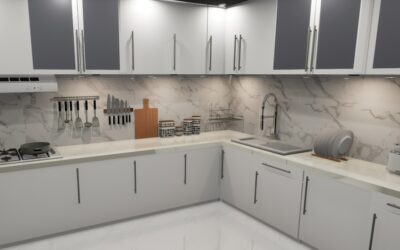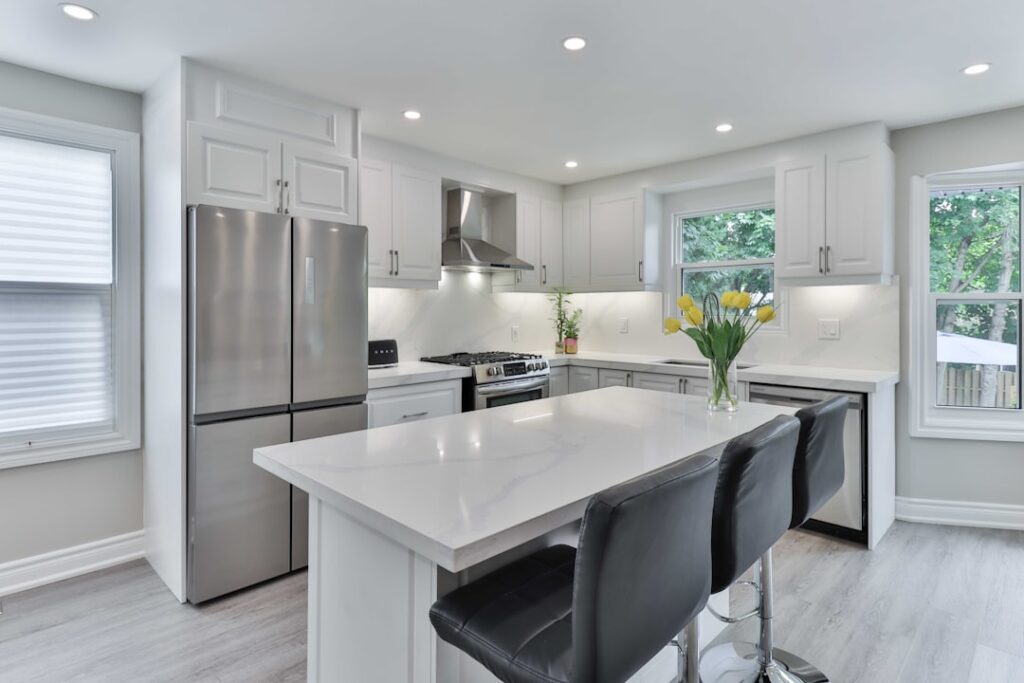
Old World Tuscan kitchens defined the early 2000s with heavy granite, ornate corbels, deep gold walls, and faux-finish glazing on every cabinet. The look fell out of favor by 2015 because the dark color palette swallowed light and the busy detailing dated quickly. The modern Tuscan kitchen evolution keeps the warmth and craftsmanship but strips away the heaviness, blending Mediterranean bones with current cabinetry, lighter stone, and cleaner detailing for a kitchen that still feels Italian without feeling 2003.
Part of our Kitchen Remodeling guide — explore the full guide →
- What Defines the Modern Tuscan Style
- Cabinet Choices and Finishes
- Counters and Backsplash
- Flooring That Anchors the Style
- Lighting That Sets the Atmosphere
- Range and Hood Statement Pieces
- Wall Treatments and Color
- Open Shelving and Accessory Choices
- Kitchen Island Detailing
- Hardware and Plumbing Fixtures
What Defines the Modern Tuscan Style
The hallmarks of the new approach are a warm neutral palette, mixed natural materials, hand-finished textures, and one or two strong rustic accents. Compare to the old version which leaned on faux-finished cabinets, dark gold walls, and ornamental ironwork.
Three core elements separate modern from traditional Tuscan kitchens:
- Color palette of creamy whites, warm taupes, and soft terracotta rather than deep golds and burgundies
- Streamlined Shaker or slab cabinets instead of arched and routered raised panels
- Honed stone surfaces instead of polished granite with ornate edges
The character still feels old-world Italian but reads current and timeless rather than dated.
Cabinet Choices and Finishes
Cabinetry sets the foundation. Modern Tuscan kitchens favor flat-panel or simple Shaker doors in painted finishes or natural wood. Three combinations consistently work:
Creamy off-white Shaker cabinets in a warm white like Benjamin Moore Swiss Coffee or Sherwin-Williams Alabaster create a fresh background that lets stone and wood elements speak. Pair with brushed brass or oil-rubbed bronze hardware.
Two-tone palettes with white uppers and walnut or stained oak base cabinets ground the kitchen and add warmth. Rift-cut white oak with a natural matte finish reads especially current.
Painted lower cabinets in dusty olive green or warm terracotta against creamy uppers create an intentional Mediterranean flavor without going kitschy. Farrow & Ball Treron or Sherwin-Williams Roycroft Bronze Green both work beautifully.
Skip ornate raised panels, glazed finishes, and heavy crown molding. Those details push the look back into 2005.
Counters and Backsplash
Countertop choice has the biggest impact on whether the kitchen reads old or modern Tuscan. Honed soapstone, leathered quartzite like Taj Mahal, and honed Calacatta marble all deliver Mediterranean character with current detailing. Avoid polished black granite and busy beige granites with movement, which were the signature of 2000s Tuscan kitchens.
For backsplashes, three options stand out. The first is honed limestone or travertine in a 4 by 8 inch subway brick layout, which adds Italian texture without going rustic. The second is hand-glazed zellige tile in cream, soft white, or warm terra cotta. The third is a single slab of marble or quartzite that wraps from counter to underside of the upper cabinets, creating a sleek modern hero element with old-world stone character.
Flooring That Anchors the Style
Hardwood and stone both work for modern Tuscan floors. Wide plank European oak in a wire-brushed natural finish reads warm and current. Avoid dark stained hardwoods with heavy distressing. They date the look immediately.
For stone floors, large-format porcelain tile in travertine or limestone visuals delivers Tuscan character with much better durability than real stone. Daltile and Marazzi both make 24 by 24 inch porcelain that mimics natural travertine convincingly. Run tiles with thin grout joints and a sanded grout in a warm beige to keep the look monolithic.
Lighting That Sets the Atmosphere
Modern Tuscan lighting uses warm bulbs but moves away from the wrought-iron chandeliers of the 2000s. Three lighting strategies that read fresh:
- Linear pendant lights in brass or bronze over the island, replacing massive multi-arm chandeliers
- Sconces flanking the range hood or window, adding visual warmth at counter level
- Recessed cans on dimmers for general light, with all bulbs at 2700K to 3000K for warm tones
Visual Comfort, Hudson Valley, and Generation Lighting all carry pendant and sconce lines that suit the modern Tuscan aesthetic in the $250 to $800 per fixture range.
Range and Hood Statement Pieces
The range and hood are where modern Tuscan kitchens often shine. A 36 inch dual fuel range in matte white or stainless steel sits beautifully against a plaster or limestone hood surround. La Cornue, Bertazzoni, and Wolf all make ranges that suit the style.
For hoods, a hand-troweled plaster surround tapering up to the ceiling delivers Mediterranean drama without heavy ornamentation. DIY plaster hood wraps run $300 to $700 in materials. Custom-built versions from a local plasterer cost $1,500 to $3,500.
Wall Treatments and Color
Skip the gold sponged walls of the original Tuscan style. Modern walls work best in flat or eggshell paint in warm whites and creams. Benjamin Moore White Dove, Sherwin-Williams Creamy, and Farrow & Ball Slipper Satin all set a neutral background that lets natural materials speak.
Add depth with one feature wall in soft terracotta, dusty sage, or olive. A single accent wall in a pantry or nook adds Mediterranean character without committing the whole kitchen to a saturated color.
Open Shelving and Accessory Choices
Open shelving in walnut or rift-cut oak carries small accent pieces beautifully. Style with handmade pottery in cream and terra cotta tones, a few well-chosen cookbooks, and small terracotta pots with herbs. Keep groupings minimal, with negative space between items.
Skip the rooster figurines, faux ivy garlands, and wine grape decor that defined the original Tuscan look. Those accessories now read instantly dated. Replace with one or two larger statement pieces like a vintage olive oil jug, a hand-thrown ceramic bowl, or a single piece of contemporary Italian art.
Kitchen Island Detailing
The island is the strongest opportunity for old-world warmth. Choose a contrasting paint or stain to the perimeter cabinets. A walnut-stained or olive-green island against creamy perimeter cabinets reads Italian farmhouse without being heavy. Add furniture-style legs or a single corbel detail at the counter overhang to nod to traditional Tuscan craftsmanship.
Pendant lights, three across rather than one large fixture, light the island workspace and add visual rhythm.
Hardware and Plumbing Fixtures
Brass and bronze hardware tie the modern Tuscan look together. Aged brass cabinet pulls from Rejuvenation, Schoolhouse Electric, or Top Knobs run $12 to $35 each. Coordinate with a brass or oil-rubbed bronze faucet from Newport Brass, Rohl, or Waterstone in a bridge or articulated arm style.
Skip polished chrome and pure stainless plumbing. Both finishes read contemporary modern, not Mediterranean.
The successful modern Tuscan kitchen blends warmth and history with the cleaner detailing of current design. The result is a kitchen that feels rooted and timeless, suited to both casual breakfasts and serious Italian cooking, without slipping into the heavy-handed ornament of the original style.