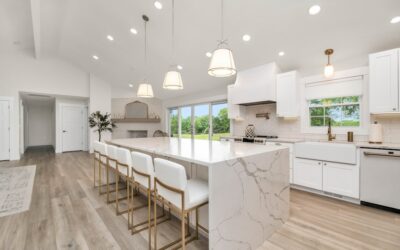
Walk into almost any kitchen showroom in the country and you will likely run into samples from one supplier more than any other. MSI quartz countertops have become a default option for remodelers, builders, and homeowners because the brand sits in the value sweet spot, offering engineered stone that competes on looks with pricier names while staying easier to find and afford. MSI, short for M S International, is a distributor rather than a manufacturer in the traditional sense, and understanding what that means helps you shop smart and avoid surprises at the fabricator’s shop.
Part of our Countertops guide — explore the full guide →
What MSI Quartz Is
MSI sells engineered quartz under brand names including Q Premium Natural Quartz and the Stile collection. Like all engineered quartz, the slabs are roughly 90 to 93 percent ground natural quartz crystals bound with resins and pigments, then compacted and cured into hard, nonporous slabs. The result is a surface harder than granite, completely sealed against liquids, and consistent from slab to slab in a way natural stone never is.
Because MSI is a nationwide distributor with warehouses across the country, its slabs are stocked widely. That availability is a real advantage. You are far less likely to fall in love with a color and then learn it is back-ordered for months.
The Look: Patterns and Collections
MSI’s catalog leans heavily into marble-look designs, which is what most buyers want right now. Soft white backgrounds with gray or gold veining dominate, alongside solid neutrals and a few bolder concrete and dark options.
- Calacatta and Carrara looks — White slabs with dramatic or delicate veining that mimic Italian marble without the staining worries.
- Solid and near-solid neutrals — Clean whites, grays, and beiges for a contemporary, uncluttered kitchen.
- Concrete and industrial tones — Matte grays and warm taupes for modern and transitional spaces.
- Movement-heavy statement slabs — Bold veining meant for waterfall islands and feature walls.
Finishes are typically polished, though some lines offer a softer matte or suede finish that hides fingerprints and water spots better in high-use kitchens.
Why Homeowners Choose It
The appeal comes down to a balance of performance and price. Quartz in general is nonporous, so it never needs sealing, resists stains from wine, coffee, and oil, and stands up to acidic foods like lemon juice and vinegar that would etch marble. It is also highly scratch resistant, registering around 7 on the Mohs hardness scale.
MSI specifically tends to price below premium import brands while offering comparable looks, which is why it shows up so often in mid-range and builder-grade remodels. Most MSI quartz lines carry a manufacturer warranty when installed by an authorized fabricator, so keep your paperwork and buy through a certified shop to protect that coverage.
The Trade-Offs to Know
No surface is perfect, and quartz has two real weaknesses. First, it is not heat-proof. The resins that bind the quartz can scorch, discolor, or crack if you set a pan straight off the burner onto the slab. Always use trivets and hot pads; treat a 350°F skillet as a threat, not a guest. Second, sustained direct sunlight can fade or yellow some quartz over years, so it is a questionable choice for an outdoor kitchen or a sunroom with floor-to-ceiling south-facing glass.
One more practical note: quartz is heavy and hard, which makes it a job for professional fabricators with the right saws and seam tools. This is not a DIY countertop.
What MSI Quartz Costs
Engineered quartz pricing is usually quoted installed, per square foot, including fabrication and a standard edge. Expect a range driven by color complexity and slab thickness.
- Entry-level solids and simple patterns — roughly $50 to $65 per square foot installed.
- Mid-range marble-look designs — roughly $65 to $90 per square foot installed.
- Premium statement and heavy-vein slabs — $90 to $120 or more per square foot installed.
A typical 40-square-foot kitchen often lands between $2,500 and $4,500 fabricated and installed. Upgrades like mitered waterfall edges, full-height backsplashes, and undermount sink cutouts add to the total, so get an itemized quote rather than a single per-foot number.
Living With and Caring For Quartz
Daily care could not be simpler. Wipe with warm water and a few drops of dish soap, or a pH-neutral stone cleaner. Skip bleach, oven cleaner, and abrasive scouring pads, which can dull the polished surface over time. Clean spills of permanent dye, ink, or nail polish quickly, since those are among the few substances that can stain even nonporous quartz. Use a cutting board to protect your knives, not the counter, and keep that trivet within reach. With this minimal routine, an MSI quartz countertop holds its finish for decades, which is exactly why it has become such a common sight in modern kitchens and baths.
MSI Quartz Versus Granite and Marble
Buyers often weigh quartz against natural stone, and the differences are clear-cut. Granite is a natural stone, so every slab is unique, but it is porous and needs periodic sealing to resist stains, and its patterns are limited to what nature quarried. Quartz like MSI is nonporous and never needs sealing, offers consistent color from slab to slab, and comes in a wider range of engineered marble looks. Marble is the beauty queen but the high-maintenance one; it etches from acids and stains easily, while a marble-look quartz gives you the same elegance without the worry. The main edge natural stone retains is heat tolerance, since granite shrugs off a hot pan that could scorch quartz resin. For most kitchens, the no-sealing, stain-resistant convenience of quartz wins.
How to Shop Smart for MSI Quartz
A few habits lead to a better outcome and fewer surprises. Always view a full slab in person rather than judging from a small sample, because veining and movement look completely different at full scale. Buy through an authorized fabricator so the manufacturer warranty stays valid, and keep all your paperwork. Ask the fabricator how many slabs your project needs and whether they can be cut from sequential slabs so the veining flows naturally across seams. Get an itemized quote that breaks out the slab cost, fabrication, edge profile, cutouts, and installation separately, since a single per-foot number hides where the money goes. Finally, ask to see where seams will land and request that they be placed in less visible spots when possible. A little diligence up front means the finished counters look exactly like the slab you fell for in the showroom.