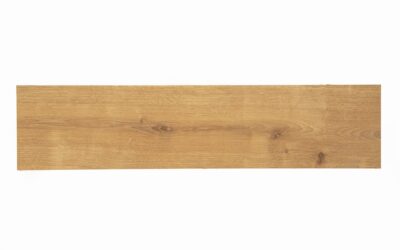
Wood-look planks get all the attention in the vinyl aisle, but the stone side of the rack has quietly become just as convincing. Modern natural stone effect vinyl flooring uses high-resolution printing and registered embossing — texture that follows the printed pattern — to reproduce slate clefts, travertine pitting, and marble veining closely enough that visitors touch the floor to check. Unlike the stone it imitates, it is warm, quiet, waterproof, and needs no sealing. This is a whole-home guide to the category: which stone looks exist, how tile-format LVT compares with sheet vinyl, the specs that separate convincing from cheap, and where each product belongs in the house.
The Stone Looks, Decoded
Manufacturers cluster their stone visuals around four natural references, each with a distinct character. Slate looks feature layered, cleft texture in charcoal, rust, and multicolor blends — the most texture-forward option and the most forgiving of dirt. Travertine looks reproduce the pitted, banded beige-and-cream surface of the Roman classic; they read warm and traditional and pair naturally with wood cabinetry. Marble looks carry dramatic veining on white, gray, or black grounds for a polished, formal effect, most popular in bathrooms and entries. Concrete and limestone looks — soft, low-pattern grays and greiges — are the fastest-growing group because they suit modern interiors and hide wear patterns evenly. Within each family, better lines print many unique faces per pattern (sometimes 20 or more) so repeats are hard to spot across a large room.
Tile-Format LVT vs Sheet Vinyl
Format determines how the floor installs, repairs, and reads. Luxury vinyl tile (LVT) in stone visuals comes as 12×12, 12×24, 16×32, and 18×36 pieces, in click-locking rigid-core (SPC/WPC) or glue-down flexible construction. Advantages: individual damaged tiles can be replaced, the tile geometry itself reinforces the stone illusion, and many products accept real grout in a 1/8 inch joint for maximum realism. Pattern layout amplifies whichever look you choose: large tiles in a one-third offset mimic ashlar paving, 12×24 pieces in a brick pattern read as tumbled travertine, and some premium collections supply mixed-size modular sets that repeat a French-pattern layout — the strongest single realism cue available in vinyl. Sheet vinyl comes in 12-foot rolls printed with stone patterns, delivering a nearly seamless waterproof membrane at the lowest price in flooring. Its drawbacks: visuals and texture are a step behind LVT, repairs require patching, and installation of large sheets is awkward DIY.
- Choose tile-format LVT for realism, DIY-friendly click installation, and repairability.
- Choose groutable LVT when you want guests genuinely fooled — grouted joints defeat the “is it vinyl?” tap test visually.
- Choose sheet vinyl for rentals, budget renovations, laundry rooms, and maximum seam-free water protection at $1 to $3 per sq ft.
Texture and Embossing: Where Realism Lives
Print quality gets a floor 60 percent of the way to convincing; texture does the rest. Entry-level products lay a generic pebbly emboss over any print, and the disconnect between what you see and what you feel breaks the illusion. Mid-range and premium lines use embossed-in-register (EIR) texturing, where the physical surface follows the printed image — the cleft ridge you see on a slate visual is a ridge you can feel. Surface finish matters too: honest stone-effect floors use low-sheen matte or satin wear layers, since real slate and travertine are never glossy. When comparing samples, drag your fingertips across them with your eyes closed, then check the pattern under raking light from a window. The product that passes both tests is the one that will pass in your hallway.
Construction, Wear Layers, and Other Specs
Under the stone picture, quality is measured in familiar vinyl terms. Wear layer: 12 mil handles bedrooms and low-traffic areas, 20 mil is the residential workhorse for halls, kitchens, and family rooms, and 22 to 28 mil crosses into light-commercial durability. Core: SPC (stone plastic composite) rigid cores are dense, dent-resistant, and stable through temperature swings; WPC cores are thicker, softer underfoot, and quieter; flexible glue-down LVT is thinnest and most stable of all under rolling loads. Thickness runs 4 to 8 mm for rigid core, with attached acoustic pads on better lines. Certifications worth seeing on the box: FloorScore for indoor air quality, and a residential warranty of 15-plus years with light-commercial coverage as a sign the maker trusts its wear layer.
What It Costs Across the Market
Stone-effect vinyl spans a wide but honest price ladder. Sheet vinyl in stone patterns: $1 to $3 per sq ft. Entry click-lock stone-look LVT: $2 to $3.50. Mid-range EIR-textured rigid core from Shaw, Mohawk, MSI, and Mannington: $3 to $5. Premium lines from Karndean, COREtec, and designer collections, including groutable formats: $5 to $8. Installation adds $1.50 to $4 per sq ft professionally, with groutable installs at the top of that range. Against the materials it imitates, the math is stark: honed travertine installed commonly runs $12 to $25 per sq ft and slate $10 to $20, before ongoing sealing. A 500 sq ft main level in quality stone-effect LVT lands around $2,500 to $4,500 installed.
Room-by-Room Fit
Because the category is waterproof, it goes anywhere in the house, but some placements shine. Bathrooms and laundry rooms are the natural habitat — marble-look LVT delivers the spa aesthetic without ice-cold tile or grout maintenance. Entries and mudrooms suit slate looks, whose busy texture hides grit between sweepings. Basements are rigid-core territory: SPC floats directly over concrete with a vapor-appropriate underlayment, ignoring the moisture that rules out hardwood. Kitchens deserve their own considerations around cabinets and appliances (a topic that justifies a dedicated guide). Sunrooms need one check: intense direct sun can heat and fade some vinyl, so look for enhanced UV-stable wear layers and honor the manufacturer’s temperature range. The one place to hesitate is over existing badly uneven floors — stone-effect vinyl is thin, and it telegraphs subfloor sins that real 3/8 inch stone would bridge.
Honest Pros and Cons
In its favor: waterproof construction, warm and quiet underfoot, no sealing or special cleaners, DIY-friendly formats, strong realism in mid-range products and up, and one-half to one-quarter the installed cost of real stone. Against it: it adds no thermal mass and none of stone’s resale cachet in luxury markets; heavy furniture can dent it; sharp grit can scratch wear layers; and cheap smooth-gloss versions actively look fake. Natural stone effect vinyl flooring rewards buyers who spend one tier above entry level — the $4 per sq ft EIR-textured product delivers most of the stone experience with none of the stone problems, which is exactly the trade most households want.
Prefer to explore on your own?
See how new flooring looks in your actual room in seconds — free, no signup.
Try the free Floor Studio →