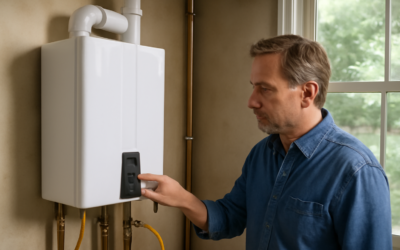
Search for a Navien electric tankless water heater and you’ll hit an immediate surprise: Navien built its reputation almost entirely on gas condensing technology, not electric heating elements. That distinction matters more than any spec sheet, because it shapes what you can actually buy, what it costs to run, and whether an electric unit even makes sense for your household. Before you commit to a purchase, it pays to understand where Navien fits and where a different approach serves you better.
- What Navien Actually Makes
- How Electric Tankless Water Heaters Work
- Sizing an Electric Tankless Unit
- Cost of an Electric Tankless System
- When Electric Makes More Sense Than Gas
- What to Choose If You Want the Navien Name
- Installation and Maintenance Basics
- Recirculation and Hot Water Wait Times
- Warranty, Lifespan, and Long-Term Value
- Comparing Total Cost of Ownership
- The Bottom Line for Your Home
What Navien Actually Makes
Navien is a South Korean manufacturer best known in the US for its NPE and NPN series of gas-fired condensing tankless water heaters. These units run on natural gas or propane and reach efficiency ratings up to 0.96 UEF, which is why plumbers recommend them so often. The company also produces combi-boilers that handle both domestic hot water and home heating from a single wall-mounted cabinet.
Electric tankless is a different animal. Navien’s core lineup does not center on electric point-of-use or whole-home electric units the way brands like Stiebel Eltron, EcoSmart, and Rheem do. If your heart is set on the Navien name specifically, you’ll most likely end up looking at their gas condensing models rather than a pure electric heater.
How Electric Tankless Water Heaters Work
An electric tankless unit heats water on demand by passing it across high-wattage heating elements. There’s no storage tank, no standby heat loss, and no pilot light. When you open a hot tap, a flow sensor triggers the elements, and cold water becomes hot within seconds as it moves through the copper or stainless heat exchanger.
The trade-off is electrical demand. A whole-home electric tankless heater capable of supplying a family often draws 27 to 36 kilowatts, which means multiple 40-amp or 50-amp double-pole breakers and, frequently, a 200-amp service panel. Homes with 100-amp service usually cannot support a full-size electric unit without a costly panel upgrade.
Sizing an Electric Tankless Unit
Sizing comes down to two numbers: your incoming groundwater temperature and your peak flow rate in gallons per minute. Electric tankless heaters are rated by temperature rise, the number of degrees Fahrenheit they can lift the water at a given flow.
- A single bathroom faucet needs roughly 0.5 to 1.0 GPM
- A modern low-flow shower runs about 1.5 to 2.0 GPM
- A kitchen sink pulls around 1.5 GPM
- Cold northern groundwater can arrive at 40°F, requiring a 65°F rise to reach a comfortable 105°F shower
In the warm South, where incoming water might already sit at 70°F, a smaller electric unit performs beautifully. In Minnesota or Maine, the same unit struggles to keep up with two simultaneous showers. This climate sensitivity is exactly why gas units like Navien’s dominate colder markets.
Cost of an Electric Tankless System
The equipment itself is where electric tankless shines. A quality whole-home electric unit runs $500 to $900, well below the $1,000 to $1,500 you’ll spend on a Navien gas condensing model. But installation flips that math. Electric units often require a panel upgrade ($1,500 to $3,000) and heavy-gauge wiring, while gas units need venting and a gas line.
Operating cost is the deciding factor for most homeowners. Electricity typically costs three to four times more per unit of heat than natural gas. If your home has an affordable gas supply, a Navien gas tankless will cost noticeably less to run over its 15-to-20-year lifespan, even though electric units convert nearly 100% of the energy they consume into hot water.
When Electric Makes More Sense Than Gas
Electric tankless earns its place in specific situations. If you have no gas line and no desire to run one, electric sidesteps that expense entirely. For point-of-use applications, a small electric unit under a remote bathroom sink or at a workshop sink delivers instant hot water without a long pipe run.
Electric also wins on venting. There’s no combustion, so no flue, no condensate drain for exhaust, and no carbon monoxide concern. That makes electric units attractive for tight closets, apartments, and additions where routing a gas vent would be impractical or expensive.
What to Choose If You Want the Navien Name
If reliability and the Navien brand matter most and you have gas service, look at the NPE-2 series. The NPE-240A2, for example, delivers strong flow rates for a three-to-four-bathroom home and includes a built-in recirculation pump for faster hot water at distant fixtures. These units carry solid warranties, often 15 years on the heat exchanger for residential installs.
Homeowners without gas who still want tankless performance should compare Stiebel Eltron Tempra, EcoSmart ECO, and Rheem RTEX electric models. These brands specialize in electric heating and offer self-modulating power that matches energy draw to actual demand, trimming waste on partial loads.
Installation and Maintenance Basics
Whichever route you take, plan for professional installation. Electric tankless heaters require correctly sized breakers, proper wire gauge, and, in many jurisdictions, a permit and inspection. A licensed electrician verifies your panel can handle the load before anyone mounts the unit.
Maintenance is light but not optional. Flush the heat exchanger with vinegar or a descaling solution once a year, more often in hard-water regions, to prevent mineral scale from choking flow. Clean the inlet filter screen every few months. Both electric and gas tankless units last far longer when scale is kept in check, and skipping this step is the fastest way to lose efficiency.
Recirculation and Hot Water Wait Times
One complaint that follows every tankless heater, gas or electric, is the so-called cold water sandwich and the wait for hot water at distant fixtures. Because a tankless unit fires only when flow begins, water sitting in the pipes between the heater and your faucet still has to clear before hot water arrives.
This is where Navien’s gas condensing units pull ahead of most electric options. Higher-end Navien NPE models include an internal recirculation pump and a buffer tank that keep a small reservoir of hot water ready and can prime the lines on a schedule or on demand. Electric tankless units rarely offer built-in recirculation, though you can add an external recirculation pump and a dedicated return line. For a large home where the master bath sits far from the heater, recirculation dramatically shortens the wait, and it’s a feature worth prioritizing regardless of fuel type.
Warranty, Lifespan, and Long-Term Value
Tankless heaters are a long-term investment, and warranty coverage reflects that. A quality unit should last 15 to 20 years with proper maintenance, roughly double the 8-to-12-year life of a conventional tank. Navien backs its residential gas condensing units with strong coverage, often 15 years on the heat exchanger, 5 years on parts, and 1 year on labor when professionally installed.
Electric tankless brands typically offer similar heat-exchanger warranties, sometimes lifetime on the elements for units like the Stiebel Eltron Tempra. The key detail buyers miss is that most warranties require documented annual descaling to stay valid, especially in hard-water regions. Factor the descaling routine and the occasional element or gas-valve replacement into your ownership cost, and a tankless unit still comes out ahead of repeatedly replacing tank heaters over the same span.
Comparing Total Cost of Ownership
When you weigh electric against gas over a full lifespan, look past the sticker price. An electric unit wins on equipment cost and installation simplicity where a gas line and venting aren’t already present, and it never risks combustion byproducts. A gas condensing unit like Navien’s wins on operating cost in most markets and handles high simultaneous demand in cold climates without straining your electrical panel.
Run the math for your own home: multiply your realistic daily hot water use by your local energy rates for both electricity and gas, then add the installation differences, including any panel upgrade an electric unit would trigger. For many households with existing gas service, the gas route pays back within a few years. For gas-free homes and point-of-use needs, electric is the clear winner.
The Bottom Line for Your Home
The honest takeaway is that a true Navien electric tankless water heater isn’t the product most shoppers imagine, because Navien’s strength lies in gas condensing technology. If you have gas service and want the Navien name, their gas tankless line is an excellent investment that will outperform electric on running costs in most climates. If you’re set on electric, a purpose-built electric brand will serve you better than forcing the Navien label onto a category it doesn’t lead. Match the fuel to your home, size the unit to your climate and flow needs, and you’ll enjoy endless hot water without the standby waste of an old tank heater.