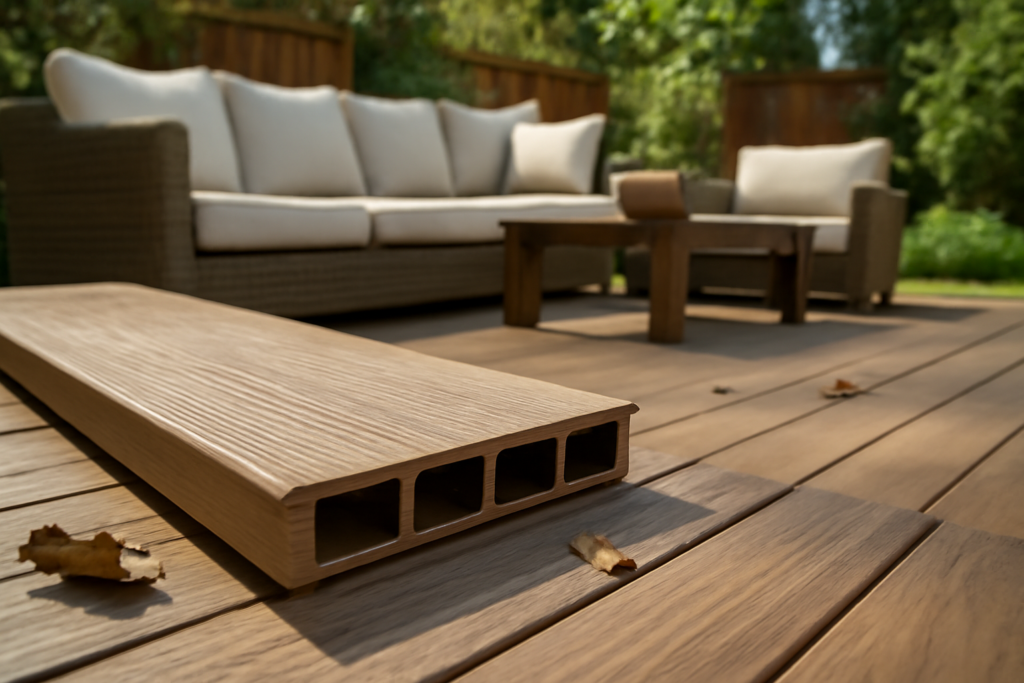
Most capped composites only wrap three sides of the board and leave the bottom groove exposed, but the NewTechWood Cortes Plus composite decking board is fully encased on all four sides in the company’s UltraShield polymer cap. That 360-degree shield is the headline feature and the reason these boards resist moisture, staining, and fading better than a lot of competitors in the same price bracket. After installing NewTechWood on several projects, the thing that stands out is how little the boards move or absorb water compared to older wood-flour composites. If you are shopping capped composite, the Cortes Plus deserves a serious look.
Part of our Decks & Outdoor guide — explore the full guide →
What the Cortes Plus Board Is
NewTechWood is a US-headquartered brand whose decking is built around its UltraShield technology, a co-extruded cap fused around a wood-plastic composite core. The core blends recycled hardwood fiber with recycled HDPE, and the cap seals it completely. The Cortes Plus is one of NewTechWood’s fully capped (four-sided) product lines, positioned above the entry-level boards and below the ultra-premium options.
The full wrap matters because the most vulnerable part of any composite is the grooved edge and the cut end where the raw core is exposed. By capping all four sides, NewTechWood keeps water out of those grooves at the fastener slots, which is where three-sided boards can swell or grow surface mold over time. The result is a board that shrugs off spilled wine, greasy barbecue drips, and standing water far better than an uncapped or partially capped composite.
Board Dimensions and Profiles
Cortes Plus boards measure a nominal 1 inch thick by 5.5 inches wide, matching standard 5/4×6 decking so trim, railing, and fascia line up cleanly. Common lengths are 12 feet and 16 feet, with 20-foot boards available in some markets to reduce butt joints on longer runs. The line comes in a grooved-edge profile for hidden fasteners and a solid, square-edge profile for perimeter boards, stair nosing, and picture-frame borders where you top-screw.
- Grooved boards: Milled slot on each edge for hidden clips, giving a fastener-free surface.
- Solid boards: No groove, for borders and stairs, installed with color-matched screws or plugs.
- Fascia: Wide, thin wrap boards to skirt the frame and hide the joists.
Colors run through realistic wood tones with subtle streaking, including grays like Icelandic Smoke and Roman Antique, and warm browns like Teak and Peruvian Teak. The variegated coloring hides pollen, scuffs, and everyday grime much better than a single flat shade, which is a real advantage on a deck that actually gets used.
NewTechWood Cortes Plus Cost
Material cost for Cortes Plus decking generally runs $5 to $9 per square foot, placing it squarely in the mid-tier of the capped composite market. On a 320-square-foot deck, plan on roughly $1,600 to $2,900 in decking boards before you add framing, fasteners, and railing.
Installed by a contractor, a full composite deck typically costs $35 to $60 per square foot depending on height, stairs, and railing complexity. Here is a realistic breakdown for a mid-size Cortes Plus deck:
- Cortes Plus decking boards: $1,600 to $2,900
- Pressure-treated substructure and ledger: $700 to $1,400
- Hidden clips and screws: $150 to $350
- Railing system: $1,500 to $4,000
- Labor: $4,000 to $8,000
NewTechWood backs the boards with a strong residential warranty covering fade and stain resistance, generally in the 25-year range for fully capped lines. That is competitive with the major national brands and reflects confidence in the UltraShield cap.
Installing With Hidden Clips
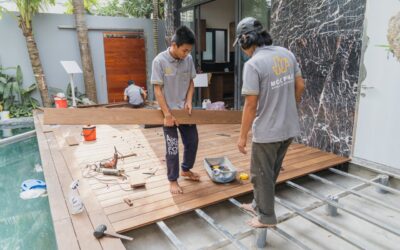
Grooved Cortes Plus boards install with hidden fasteners that seat in the edge slot and screw into the joist, leaving no visible screws on the deck surface. NewTechWood makes matched stainless clips, and most universal composite clips also fit the groove. Snap a straight chalk line, fasten the starter board with edge screws, then set a clip at every joist as you work across the deck. A box of clips generally covers about 100 square feet.
Frame the substructure at 16 inches on center for standard perpendicular decking. Tighten that to 12 inches on center any time boards run at a 45-degree angle or on stair treads, because the diagonal span is longer and any sag will show. Composite is heavier and more flexible than wood, so proper spacing is not optional.
Gapping and Cutting
Leave a 3/16-inch gap along the board sides for drainage and thermal movement, and an end gap of about 1/8 to 1/4 inch depending on the temperature at install, widening the gap in cold weather when the boards are contracted. Composite expands and contracts with heat more than wood, so never butt board ends tight. Stagger butt joints across the deck so seams do not align in a single line, which both looks better and spreads any movement.
Cut Cortes Plus with a fine-tooth carbide blade, 40 tooth or higher, on a sharp miter or circular saw. A dull blade will chip the cap and leave a ragged edge. There is no need to seal cut ends because the core is highly water-resistant, but keep the fine composite dust swept off the surface so it does not sit wet and stain.
How It Performs Over Time
The four-sided cap is the star in daily use. Water beads and runs off, spills wipe up, and the boards do not develop the surface mildew that plagues cheaper composites. Cleaning is nothing more than soap, water, and a soft brush, and the deck never needs sanding, staining, or sealing.
Heat is the honest trade-off, as with every composite. Darker colors like the deep browns get hot in direct summer sun, running warmer underfoot than a light gray board, so pick a lighter tone for a south-facing deck where you will go barefoot. Scratch resistance from the UltraShield cap is good, though dragging a heavy grill or metal furniture can still leave a mark like it would on any capped composite.
How Cortes Plus Compares to Other Composites
Within NewTechWood’s own catalog, the Cortes Plus sits above the entry-level boards and below the premium lines, offering full four-sided capping without the top-shelf price. Cross-shopped against the national brands, it competes with mid-tier lines like Trex Enhance Naturals and TimberTech Prime Plus on both price and performance. The spec that actually matters when you compare is the capping: many competing boards in this price range are capped on only three sides, leaving the bottom groove exposed. Cortes Plus wraps all four sides, and over years of wet weather that difference shows up as fewer swollen edges and less surface mildew.
- Capping: Four-sided UltraShield on Cortes Plus versus three-sided on many rivals in the same tier.
- Core: Recycled wood fiber and HDPE, comparable to most wood-plastic composites.
- Heat: Similar to other wood-filled composites; PVC boards run cooler but cost more.
- Warranty: Roughly 25-year fade and stain coverage, on par with the major brands.
If you want the absolute coolest, most grain-realistic surface and price is no object, a premium PVC board edges it out. For value with genuinely durable construction, Cortes Plus is hard to beat.
Common Installation Mistakes to Avoid
Two errors cause most composite deck failures, and both trace back to movement. The first is butting board ends tight because it looks clean on install day; the boards then expand in summer heat and buckle. Always leave the recommended end gap and adjust it for the temperature the day you install. The second is running angled or diagonal boards on 16-inch joist spacing, which leaves the deck feeling spongy and lets the boards sag between supports. Tighten to 12 inches on center anywhere boards run at 45 degrees or on stairs.
One more worth stressing: composite needs ventilation underneath. Do not fasten Cortes Plus flat against a solid surface with no airflow. Trapped heat and moisture below the boards leads to uneven expansion and warping. If you deck over a slab or patio, build a sleeper system that keeps at least a few inches of air moving beneath the boards so heat can escape and any water can drain and dry.
Is the Cortes Plus Worth It?
For a homeowner who wants a genuinely low-maintenance deck without paying top-shelf PVC prices, the NewTechWood Cortes Plus is an easy recommendation. The fully capped construction protects the grooves and ends where composites usually fail, the color range is realistic and forgiving, and the pricing lands in the reasonable middle of the market with a warranty to match the big brands. Choose a lighter color if sun exposure is a concern, frame it correctly at 16 inches on center, and this board will give you decades of good-looking, wash-and-go decking with none of the annual upkeep a wood deck demands.