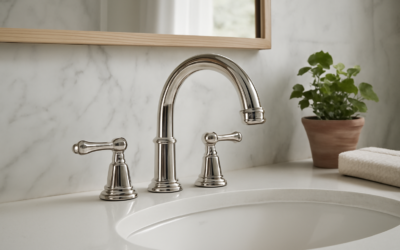
Nickel outsells nearly every other faucet finish in mid-range bathroom remodels, and there is a good reason for that popularity. A nickel bathroom faucet hides water spots and fingerprints better than chrome, pairs with almost any color palette, and holds up to daily use without pitting or flaking. But not all nickel finishes are created equal, and the difference between a $60 big-box model and a $250 designer piece is more than skin deep. This guide walks you through finishes, valve types, installation, and the small maintenance habits that keep the metal looking new for a decade or more.
Part of our Bathroom Remodeling & Flooring guide — explore the full guide →
Brushed Nickel vs. Polished Nickel
The first choice you face is between brushed and polished nickel, and it changes both the look and the upkeep. Brushed nickel has a soft, satin sheen with faint directional grain that scatters light and, crucially, disguises water spots and toothpaste splatter. It is the workhorse finish for family bathrooms. Polished nickel, by contrast, is buffed to a warm, mirror-like shine that reads as more luxurious and slightly warmer than chrome. It looks stunning in a formal powder room but shows every fingerprint, so you will wipe it more often.
Warmth is worth understanding. Chrome carries a cool, blue-white tone. Nickel leans warmer, with a subtle golden cast that flatters cream, beige, and warm-gray tile. If your bathroom already features warm brass or bronze hardware, satin nickel bridges the gap far better than icy chrome ever could.
What You Pay for a Nickel Faucet
Price tracks with valve quality, spout construction, and brand more than the finish itself. Here is a realistic breakdown:
- $40 to $90: Entry-level single-handle models from big-box brands. Often zinc-alloy bodies with a plated finish. Fine for a rental or low-traffic guest bath.
- $100 to $180: Solid-brass bodies, ceramic-disc cartridges, and PVD (physical vapor deposition) brushed-nickel coatings that resist scratching. This is the sweet spot for most homeowners.
- $200 to $400: Designer widespread and wall-mount faucets with heavier castings, lifetime finish warranties, and premium cartridges from Kohler, Moen, or Delta’s higher lines.
Spend the extra money on the cartridge and the finish process, not the styling. A PVD-coated faucet bonds the color at a molecular level and virtually never flakes, while cheap electroplating can wear through at the handle within a few years.
Choosing the Right Configuration
Your sink’s pre-drilled holes dictate what you can install, so measure before you shop. Single-hole faucets use one deck opening and suit modern vessel and undermount sinks. Centerset models fit sinks with three holes spaced 4 inches apart and combine the spout and handles on one base plate. Widespread faucets also use three holes but space the handles 8 to 16 inches from the spout, giving an upscale, custom look. Wall-mounted nickel faucets free up counter space and pair beautifully with vessel bowls, but they require in-wall rough-in plumbing, so plan them during a remodel rather than as a swap.
Handle Style and Flow Rate
Single-handle designs let you set temperature with one motion and are easiest for kids and older hands. Two-handle widespread setups give precise hot-cold control and a traditional silhouette. Whatever you pick, look for a WaterSense label; those faucets cap flow at 1.5 gallons per minute or less, trimming water use without a weak stream.
Installing a Nickel Bathroom Faucet
Swapping a faucet is a genuine weekend DIY job that runs about 60 to 90 minutes. Shut off both supply valves under the sink, then open the faucet to release pressure. Disconnect the supply lines with a basin wrench, remove the old mounting nuts, and lift the faucet out. Clean the deck of old plumber’s putty or silicone before setting the new unit. Most modern nickel faucets ship with a rubber gasket, so you can skip putty; if yours requires a seal, use a thin bead of 100 percent silicone.
Thread the new supply lines finger-tight, then give them a quarter turn with a wrench, no more. Overtightening cracks fittings and strips threads. Turn the water back on slowly, remove the aerator, and run the line for 30 seconds to flush debris before checking for leaks under the deck and at every joint.
Keeping Nickel Looking New
The single biggest enemy of any nickel finish is hard-water mineral buildup, not scratches. Wipe the faucet with a soft microfiber cloth after use, especially polished nickel. For weekly cleaning, use warm water and a drop of dish soap; dry immediately to prevent spotting. Avoid these finish-killers:
- Abrasive pads, powders, or magic-eraser sponges that scratch the surface
- Ammonia, bleach, and acidic cleaners that dull and etch the coating
- Leaving vinegar on the finish longer than five minutes
For stubborn lime scale, wrap the spout in a paper towel dampened with equal parts white vinegar and water, leave it five minutes, then rinse and dry. This lifts deposits without harsh scrubbing. Never soak a nickel faucet in straight vinegar overnight; the acid can cloud the finish.
Pairing Nickel With Your Bathroom
Design coordination is where nickel earns its keep. Brushed nickel matches satin-nickel cabinet pulls, towel bars, and shower trim for a cohesive metal story. It also plays well with matte-black accents if you want a two-tone contemporary look; keep black to fixtures like the mirror frame and lighting so the palette stays intentional. In a warm, traditional bath, polished nickel echoes the glow of oil-rubbed bronze without clashing.
One practical tip: buy your faucet and matching accessories in the same brand line when possible. Manufacturers tint their nickel slightly differently, so a Moen faucet next to a Delta towel bar may reveal a mismatch under bright vanity lighting.
Common Problems and Fixes
Most faucet complaints trace to the cartridge, not the finish. A dripping spout usually means a worn ceramic disc or O-ring, a $10 to $20 part you can swap in 20 minutes. Low flow almost always comes from a clogged aerator; unscrew it, soak it in vinegar, and rinse. If a handle feels loose, tighten the hex set screw hidden under the decorative cap. Keep the model number, because most quality brands ship replacement cartridges free under a lifetime warranty.
Is a Nickel Faucet Right for You?
If you want a finish that flatters warm and cool palettes, hides everyday mess, and survives a busy household, nickel is hard to beat. Choose brushed for family bathrooms and polished for a showpiece powder room. Prioritize a solid-brass body, a ceramic-disc cartridge, and a PVD finish, and you will get a faucet that looks sharp and runs leak-free for 15 years or more. With a modest cleaning routine and the right cartridge, a well-chosen nickel bathroom faucet is one of the safest upgrades you can make in a bathroom refresh.
Frequently Asked Questions
Does brushed nickel go out of style?
Brushed nickel has held its place as a top-selling faucet finish for more than two decades, which makes it about as timeless as bathroom hardware gets. Its neutral, warm-gray tone works with traditional, transitional, and modern rooms alike, so it rarely reads as dated. Trend finishes like matte black and champagne bronze come and go, but nickel remains a safe, resale-friendly default that new buyers almost never object to.
Is nickel better than chrome for a bathroom?
For most families, yes. Chrome is cheaper and slightly more scratch-resistant, but its high-gloss surface shows water spots and fingerprints far more than brushed nickel. Nickel’s satin texture hides everyday mess, needs less wiping, and brings a warmer tone that flatters more color palettes. Chrome still wins if you want an ultra-modern, cool look or the lowest possible price.
Can you use a magic eraser on a nickel faucet?
No. Melamine-foam sponges are mildly abrasive and will dull or scratch a nickel finish over time, especially on polished nickel. Stick to a soft microfiber cloth with warm soapy water for routine cleaning and a diluted vinegar compress for lime scale. Save abrasive cleaners for surfaces rated to handle them.
How long does a nickel faucet last?
A quality nickel faucet with a solid-brass body and a PVD finish easily lasts 15 to 20 years. The finish itself rarely fails on PVD-coated models; the cartridge is usually the first part to wear, and most premium brands replace it free under a lifetime warranty. Cheaper electroplated faucets may show finish wear at the handle within five to seven years.
What sink hole configuration do I need?
Count the holes in your existing sink or countertop before buying. One hole calls for a single-hole faucet, three holes 4 inches apart take a centerset, and three holes 8 to 16 inches apart take a widespread. If you want to change configurations, you may need a new sink or a deck plate to cover unused holes.