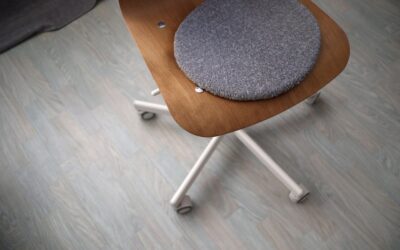
A rolling office chair can wreak havoc on hardwood flooring. Every swivel, push-back, and shift grinds trapped grit against the finish, and hard plastic casters concentrate your full body weight into tiny contact points. Over weeks and months, the result is a constellation of scratches, scuffs, and dull spots directly beneath your desk.
An office chair mat is the simplest and most cost-effective solution. But not all mats are created equal — the wrong one can yellow, curl, crack, or even damage your finish. This guide helps you pick the right office chair mat for hardwood floors so you can work in comfort without sacrificing your beautiful wood surface.
- Why You Need a Chair Mat on Hardwood
- Types of Office Chair Mats for Hardwood
- Key Features to Look For
- Best Office Chair Mats for Hardwood in 2026
- Chair Caster Upgrades
- Common Mistakes to Avoid
- Caring for Your Chair Mat
- Alternative Floor Protection Strategies
- Frequently Asked Questions
- Final Thoughts
Why You Need a Chair Mat on Hardwood
Scratch Prevention
Standard nylon casters pick up dust, dirt, and tiny debris particles. Every time you roll, those particles act like sandpaper against the polyurethane or oil finish on your hardwood. A chair mat creates a barrier between the casters and the floor.
Dent Protection
The weight of a person plus a heavy office chair concentrates force through small caster wheels. Over time this causes impressions in softer wood species like pine, fir, and even red oak. A mat distributes that weight across a larger surface area.
Easier Rolling
Mats provide a smooth, consistent surface for rolling. You will find that your chair moves more freely and quietly on a mat than on bare wood, which can reduce strain on your shoulders and back during long work sessions.
Reduced Maintenance
Without a mat, you may need to screen and recoat or fully refinish the area under your desk every few years. A quality mat eliminates that need, saving hundreds of dollars in maintenance costs.
Types of Office Chair Mats for Hardwood
Tempered Glass Mats
Tempered glass mats are the premium option. They are completely transparent, ultra-smooth for rolling, and will never yellow, curl, or crack. Glass mats are heavy — typically 30 to 50 pounds — so they stay in place without adhesive or grippers. They cost more upfront but last indefinitely.
Pros: Crystal-clear aesthetics, lifetime durability, smooth rolling, eco-friendly.
Cons: Expensive ($150 to $400+), heavy, can feel cold underfoot, may show smudges.
Polycarbonate Mats
Polycarbonate is a rigid, clear plastic that resists cracking and yellowing far better than traditional PVC. Good polycarbonate mats lie flat out of the box and maintain their shape for years. They are lighter than glass and more affordable.
Pros: Clear, durable, crack-resistant, moderate price ($50 to $150).
Cons: Can still yellow slightly after several years, may slide on smooth floors without grip pads.
PVC (Vinyl) Mats
PVC mats are the most common and most affordable option. Budget models cost as little as $20, but they tend to curl at the edges, yellow over time, and crack in cold rooms. Higher-quality PVC mats with thicker gauges perform better but still have a shorter lifespan than polycarbonate or glass.
Pros: Cheap, widely available, flexible.
Cons: Yellowing, curling, cracking, may off-gas chemicals, can stick to certain finishes in warm weather.
Rubber Mats
Rubber chair mats grip the floor and provide excellent cushioning. However, rubber can react chemically with certain floor finishes, leaving discolouration or sticky residue. Always check that the mat is labelled safe for hardwood before purchasing.
Pros: Non-slip, cushioned, durable.
Cons: Not transparent, potential chemical reaction with floor finishes, limited style options.
Fabric and Carpet-Top Mats
These mats have a fabric or low-pile carpet surface bonded to a non-slip rubber or TPE backing. They add warmth and texture to a home office and protect the floor well. Rolling resistance is higher than on hard mats, which some users prefer for chair stability.
Pros: Warm, stylish, soft underfoot, floor-safe backings available.
Cons: Harder to roll on, can trap dust and crumbs, require vacuuming.
Key Features to Look For
Size
Measure the area your chair covers during a full work session — including how far back you push and how far you roll to the sides. Standard mat sizes are 36×48 inches and 46×60 inches. A mat that is too small defeats the purpose because your chair rolls off the edge and onto bare floor.
Thickness
For hardwood floors, a thickness of 1/8 inch to 1/4 inch is typical for hard mats (glass or polycarbonate). Thicker is not necessarily better — you want a mat that sits low enough to slide under the desk comfortably and that does not create a trip hazard at the edges.
Smooth vs. Textured Underside
Mats designed for hardwood should have a smooth underside. Mats with studded or gripper undersides are made for carpet and will scratch and dent hardwood. Always verify the product is labelled specifically for hard floors.
Lip or No Lip
Some mats include a lip — an extended section that slides under the desk. Lips protect the floor in the foot area but can create a raised edge that catches your feet. Rectangular mats without a lip are simpler and more versatile.
Anti-Slip Features
On smooth hardwood, mats can slide around as you roll. Look for mats with micro-textured undersides or use removable grip pads at the corners. Avoid adhesive-backed mats — the adhesive can damage the floor finish when removed.
Best Office Chair Mats for Hardwood in 2026
Best Glass Mat: Vitrazza
Vitrazza is the market leader in tempered glass chair mats. Available in multiple shapes and custom sizes, their mats are 1/4-inch thick and carry a lifetime warranty. They are a premium investment but the last mat you will ever buy.
Best Polycarbonate Mat: Deflecto EconoMat
Deflecto’s polycarbonate line is widely available, affordable, and performs well on hardwood. The clear design shows off your floor, and the rigid material lies flat without curling.
Best Fabric Mat: Anji Mountain Bamboo or Office Comfort Mat
Anji Mountain offers bamboo and fabric-top mats that double as decorative area rugs. They protect hardwood well and add style to a home office. The non-slip backing is designed to be safe on finished wood.
Best Budget: Amazon Basics PVC Mat
If budget is the priority, a basic PVC mat still beats no mat at all. Replace it every couple of years before yellowing and curling become issues.
Chair Caster Upgrades
Another approach — used alone or alongside a mat — is replacing your chair’s standard hard plastic casters with floor-friendly alternatives:
- Soft rubber casters: Rollerblade-style wheels with polyurethane coatings roll smoothly without scratching hardwood. They cost $15 to $40 for a set of five.
- Felt-padded casters: Some casters feature felt pads that glide silently over wood. They protect the floor but may roll less freely.
- Stationary glides: If you do not need to roll, replace casters with felt-bottom glides. This eliminates movement-related wear entirely.
Upgrading your casters is a smart complement to a chair mat, especially if the mat does not cover the entire area where you might roll.
Common Mistakes to Avoid
- Using a carpet mat on hardwood: Studded-back mats designed for carpet will gouge and scratch hardwood surfaces.
- Leaving debris under the mat: Lift the mat regularly and sweep underneath. Trapped grit can scratch the finish just like a rolling caster would.
- Ignoring chemical compatibility: Some rubber and PVC products contain plasticisers that react with polyurethane finishes. Check manufacturer compatibility claims.
- Buying too small: A mat that does not cover your full rolling area leaves exposed wood at risk.
Caring for Your Chair Mat
- Clean the mat surface weekly with a damp cloth and mild soap to remove dust and oils.
- Lift and sweep underneath monthly to prevent grit build-up between the mat and floor.
- Inspect for cracks or sharp edges on plastic mats. A cracked mat can dig into the floor.
- Avoid dragging the mat when repositioning — lift it to prevent scratching the floor.
Alternative Floor Protection Strategies
If a chair mat does not appeal to you, consider these alternatives:
- Area rug with a pad: A thick rug under the desk protects the floor and adds warmth, but rolling is harder.
- Standing desk: Eliminate the rolling chair altogether with a sit-stand desk and an anti-fatigue mat.
- Hardwood-safe chair: Some task chairs use wide, soft casters or sled bases designed for hard floors.
- Protective floor coatings: A commercial-grade polyurethane finish is more scratch-resistant than standard residential finishes. It will not eliminate damage from casters entirely but extends the time between refinishes.
For homeowners considering an even tougher floor surface in a dedicated office, engineered wood flooring with a thick aluminium-oxide finish offers enhanced scratch resistance compared to site-finished solid hardwood.
Frequently Asked Questions
Do chair mats damage hardwood floors?
A properly chosen mat with a smooth underside will not damage hardwood. Mats with studded or textured undersides, or mats made from chemically incompatible materials, can cause scratches and discolouration.
How often should I replace a plastic chair mat?
Budget PVC mats should be replaced every 1 to 3 years. Quality polycarbonate mats last 5 to 10 years. Tempered glass mats last a lifetime.
Can I use a rug instead of a chair mat?
Yes, but rolling will be harder and the rug may bunch up. Use a rug pad underneath to prevent slipping, and choose a flat-weave rug rather than a thick pile.
What size chair mat do I need?
For most home office setups, a 46×60-inch mat provides ample coverage. Measure your actual rolling area and add a few inches of buffer on all sides.
Final Thoughts
An office chair mat is a small investment that protects a much larger one — your hardwood floor. Tempered glass and polycarbonate mats offer the best combination of clarity, durability, and floor safety. Whichever type you choose, make sure it is specifically designed for hard floors, sized generously for your workspace, and cleaned regularly underneath. Your floor will thank you for it.
Prefer to explore on your own?
See how new flooring looks in your actual room in seconds — free, no signup.
Try the free Floor Studio →