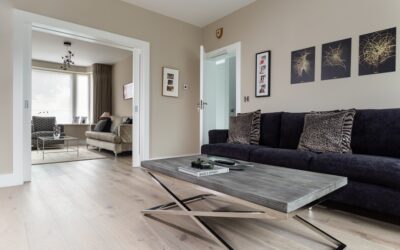
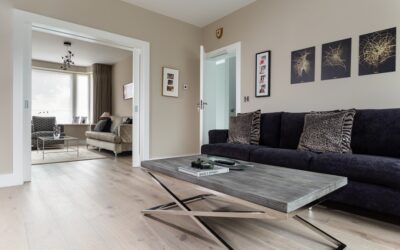
Most laminate sold in big-box stores is engineered for residential foot traffic, not the eight-hour-a-day grind of rolling chair casters, dropped staplers, and a hundred employees walking the same path five times a day. Office laminate flooring is a distinct subcategory rated for commercial use, with AC4 or AC5 wear surfaces and reinforced cores designed to handle decades of point loads from chair wheels and filing cabinets. Pricing runs $2 to $6 per square foot for the material, with installed costs landing between $5 and $9 per square foot for a turnkey job.
What AC Ratings Actually Mean for Offices
The Abrasion Class (AC) rating runs from AC1 to AC6 and indicates how well the laminate wear layer holds up to scratching, denting, and surface abuse. AC3 is moderate residential. AC4 is general commercial (small offices, light retail). AC5 is heavy commercial (large offices, public buildings, classrooms). AC6 is industrial and large public spaces.
For a typical office under 5,000 square feet with normal staffing, AC4 is the minimum. For open-plan offices with 50-plus employees, AC5 is the right spec. Pergo Outlast+, Mohawk RevWood Plus, and Quick-Step NatureTEK Select all offer AC4 product lines in the $3 to $5 per square foot range. Shaw Repel and Mannington Restoration sit at AC5 commercial grade.
The Real Pros for Office Use
Three factors make laminate a strong fit for office buildouts. First, cost per square foot is half of LVT and a quarter of engineered hardwood at comparable visual quality. Second, installation is fast, a 5,000-square-foot office floor installs in two to three days with a crew of three, including baseboards. Third, the surface scratches less than wood under chair casters with the right wear layer.
- $3 to $5 per sq ft installed, dramatically cheaper than alternatives
- Click-lock floating installation, no glue cleanup or VOC concerns
- AC4/AC5 wear surfaces stand up to office traffic 15 to 25 years
- Most products are FloorScore certified for indoor air quality
- Replaceable plank by plank if damage occurs in localized areas
The Honest Drawbacks
Laminate is not bulletproof. The wear surface is a printed image protected by an aluminum oxide melamine coating, so deep gouges from dropped objects can break through and expose the HDF core underneath. Once exposed, the damage cannot be sanded out the way you would refinish hardwood.
Moisture is the other weakness. Standard laminate cores are HDF (high-density fiberboard) that swells permanently when wet. Coffee spills wiped up within ten minutes cause no problem. A burst pipe at night across an open-plan floor often means full replacement. For executive bathrooms and break room kitchenettes, specify a waterproof laminate like AquaGuard from Floor & Decor or Pergo Extreme.
Brand Spotlight: Mohawk RevWood Plus
Mohawk Industries reformulated their laminate line into RevWood Plus to target the office and light commercial market specifically. The boards measure 7.48 inches wide by 47.24 inches long with a 12mm total thickness, including a 0.6mm wear layer and a hydrophobic GenuEdge surface treatment that wraps the edges to repel moisture from spills. AC4 commercial rating ships standard, and the click-lock locking system uses Uniclic technology licensed from Unilin. Pricing at flooring distributors lands around $3.80 to $4.40 per square foot, with the All Pet Protection warranty covering 30 years residential and 10 years light commercial. Cherry, oak, and hickory visuals dominate the office-appropriate colorways, with widths and lengths designed to look like real engineered hardwood from across a conference room.
Chair Caster Damage: The Real Threat
Standard rolling chair casters are hard nylon or polyurethane wheels that put roughly 50 to 90 psi of point load on the floor under a 200-pound user. On AC3 residential laminate, this creates visible scratching and indentation within 12 to 18 months. On AC4 commercial laminate, the same wear pattern takes 5 to 7 years to appear. On AC5, it stretches to 10-plus years.
Two upgrades extend life dramatically. First, switch from hard-wheel chair casters to soft polyurethane casters designed for hard floors (Herman Miller Aeron and Steelcase Leap both offer these as an option at about $35 to $60 per chair). Second, install chair mats only in the highest-wear positions, like reception and dedicated power-user desks. Universal chair mats across an entire office often look industrial and undermine the point of choosing a nice floor.
Installation Specifics for Commercial Use
Office buildings present three special concerns. First, expansion gaps of 1/2 inch at every wall and column matter more in a 5,000-square-foot continuous floor than in a residential room. Skip them and the floor buckles by summer. Second, transitions between zones (lobby to corridor, corridor to open office) need T-molding every 30 linear feet to break up runs and let the floor breathe.
Third, the underlayment. A 3mm to 5mm closed-cell foam with an integrated vapor barrier (like Quietwalk Plus or Roberts Super Felt) adds $0.40 to $0.80 per square foot but cuts sound transmission by 18 to 22 decibels and protects against slab moisture. In an office on grade or below grade, vapor protection is non-negotiable.
How Office Laminate Compares to LVT
Luxury vinyl plank (LVP) and laminate compete head-to-head in the office category. LVP is fully waterproof, dent-resistant, and quieter underfoot. Laminate looks more like real wood when viewed up close, costs 30% to 50% less, and resists scratching better under chair casters. For a high-end law firm or design studio, LVP usually wins on aesthetics and durability. For accounting offices, call centers, and tenant improvements on a budget, laminate delivers more value per dollar spent.
Where Office Laminate Earns Its Place
The strongest applications are tenant improvement buildouts, medical office reception areas, professional services (legal, accounting, insurance), real estate offices, training rooms, and back-of-house in retail. For executive suites with high-design budgets, hardwood or LVT often wins. For volume office space where the goal is a clean, professional look at a controlled budget and a 15 to 20-year life cycle, modern office laminate flooring is hard to beat.
Prefer to explore on your own?
See how new flooring looks in your actual room in seconds — free, no signup.
Try the free Floor Studio →