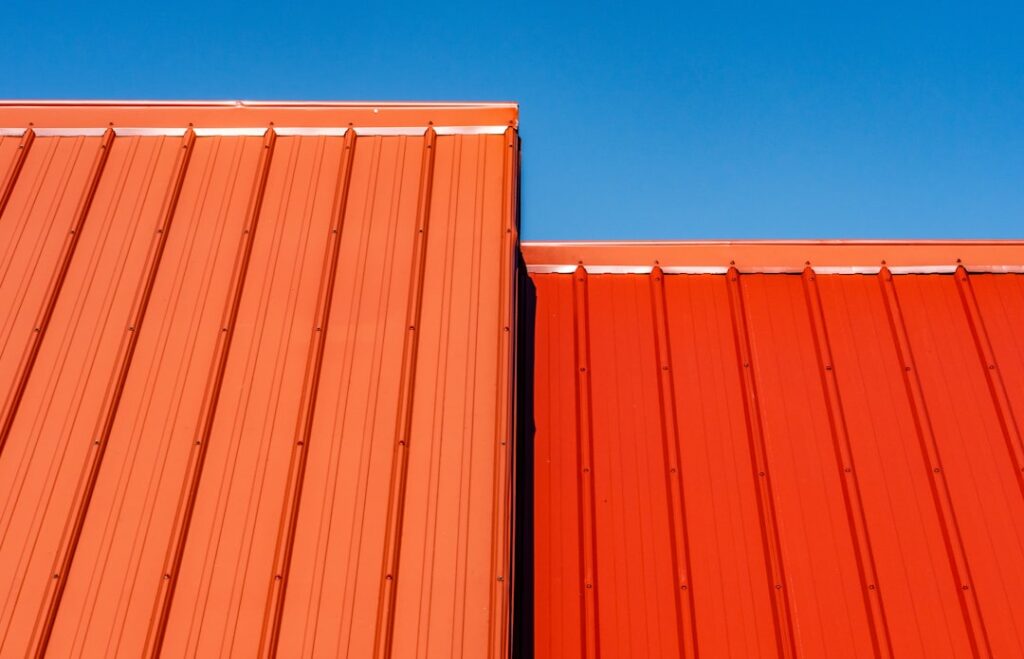
You notice it at 5 p.m. when the sun rakes low across the panels: shimmering waves running down the flat pans of a brand-new standing seam roof. That waviness is oil canning metal roof distortion — named for the way an old oil can’s bottom pops and dimples — and it triggers more angry phone calls to metal roofing contractors than actual leaks do. Here’s the uncomfortable industry truth up front: oil canning is inherent to light-gauge flat metal, every manufacturer’s literature disclaims it, and no warranty covers it. The good news is that it’s purely visual, and a handful of ordering and installation decisions can reduce it to near-invisibility.
- What Oil Canning Is
- Why It's Cosmetic, Not Structural
- What Causes It
- 1. Stresses Born at the Mill and Roll Former
- 2. Thermal Expansion With Nowhere to Go
- 3. Substrate Problems
- 4. Handling and Installation
- Prevention: The Spec Sheet That Minimizes It
- Setting Expectations by Panel Type and Situation
- If Your New Roof Already Shows It
What Oil Canning Is
Oil canning is elastic buckling — a visible waviness or “pillowing” in the flat areas of metal panels, most obvious on wide standing seam pans and flat wall panels. The steel or aluminum isn’t creased or damaged; it’s carrying slight internal stresses that make the flat plane pop gently out of true, the way a playing card bows when you compress its edges. The waves move: they can appear in morning sun, vanish at noon, and reappear in the afternoon as panel temperature changes. Low-angle light, dark glossy colors, and long sightlines make it dramatic; diffuse light hides it completely, which is why a roof can look perfect at the final walkthrough and wavy in the listing photos taken at golden hour.
Why It’s Cosmetic, Not Structural
The deflections involved are tiny — typically fractions of a millimeter to a couple millimeters of out-of-plane movement across a 12- to 20-inch pan. Nothing about it affects water shedding, fastener engagement, seam integrity, paint adhesion, or panel lifespan. Engineering bodies and the Metal Construction Association classify it explicitly as an aesthetic phenomenon. That’s also why every major manufacturer excludes oil canning from warranty coverage — Sheffield, McElroy, ATAS, Drexel and the rest all carry disclaimer language stating oil canning “is not a cause for panel rejection.” If a contractor promises you a zero-oil-canning roof, they’re promising something the mills themselves won’t. What you can legitimately demand is that the known aggravators below be avoided.
What Causes It
1. Stresses Born at the Mill and Roll Former
Coil steel carries residual stresses from the rolling process — full-hard, non-tension-leveled coil especially. When a roll former bends ribs into the sheet, uneven stress release shows up as waves in the flats. Ordering panels from tension-leveled coil is the single biggest upstream fix.
2. Thermal Expansion With Nowhere to Go
A 40-foot dark steel panel can change length by over half an inch across a 100°F temperature swing. If clips or fasteners pin the panel so it can’t float, the expansion has to be absorbed as bowing in the flats. Fixed-clip systems on long runs, screws overtightened through slotted holes, and panels pinned at both ends are classic culprits.
3. Substrate Problems
Metal telegraphs everything beneath it. Uneven decking, a wavy purlin line, proud fastener heads in the sheathing, or lumpy underlayment laps all read through a flat pan. Framing that’s out of plane by 1/4 inch produces panels that are out of plane by 1/4 inch — permanently.
4. Handling and Installation
Carrying long panels flat (they must be carried on edge), dragging them over the stack, springing them into alignment, or stretching one edge during seaming all induce local stresses. Over-driving clip fasteners and crowding panel modules — forcing a 16-inch panel into 15-7/8 inches of space — do the same. A rushed crew can make premium coil look terrible.
Prevention: The Spec Sheet That Minimizes It
- Order striations or ribs in the pan. Minor corrugations — striations, pencil ribs, or a single stiffening bead — break up the flat surface and are far and away the most effective single measure, hiding the vast majority of visible waviness. Most architects now spec striated pans by default; a dead-flat pan is a deliberate aesthetic risk you accept in writing.
- Go heavier gauge. 24 gauge resists visible buckling markedly better than 26; 22 gauge better still. For aluminum, .040 over .032. Budget roughly 10 to 20 percent more for the gauge upgrade.
- Narrow the pan. A 12-inch panel oil-cans visibly less than an 18-inch panel of the same gauge — less unsupported flat width. Narrower modules also look more custom.
- Specify tension-leveled, “vision-quality” coil and note oil canning minimization on the order. Mills offer stress-relieved coil for exposed architectural work.
- Choose low-gloss and lighter colors. Matte finishes and light colors scatter raking light; dark high-gloss charcoal is the worst-case canvas.
- Use floating clips sized for the run, torque fasteners to spec, and verify the deck is flat — 1/4 inch in 20 feet is a reasonable acceptance target before panels go down. Shim or plane high spots; don’t let the metal bridge them.
- Backer rod trick: on site, some installers lay a foam backer rod or slit foam strip under the center of each pan, crowning the flat slightly upward so it can’t invert into a wave. It works, several manufacturers acknowledge the method, and it costs pennies a foot — but it must be consistent, or you trade random waves for a visible crown line.
Setting Expectations by Panel Type and Situation
Risk isn’t uniform across metal roofing, and calibrating expectations before ordering prevents most disputes. Ranked from most to least prone: wide flat-pan standing seam (16- to 18-inch pans, no striations) in 26 gauge and a dark gloss color is the maximum-risk build — on a long south-facing plane, assume visible waviness in raking light and only order it dead-flat if the architecture demands the look and everyone signs off. Mid-risk: 24-gauge flat pans on short runs, or striated pans in dark colors, where occasional shimmer appears in worst-case light and reads as normal to most eyes. Low-risk: striated or pencil-ribbed pans in matte mid-tones, 12- to 16-inch modules — the standard residential spec precisely because oil canning becomes a non-topic. Effectively immune: ribbed exposed-fastener profiles (R-panel, corrugated, ag panel), whose geometry stiffens the sheet everywhere, and stamped or stone-coated metal shingles with no long flat planes at all. Wall panels deserve a special caution: vertical flat-seam and box-rib wall cladding shows oil canning more than roofs because viewers stand close and light rakes across walls at all hours — architects spec 22 gauge, embossed textures, or intentional reveals there. And climate plays a part: high-desert and mountain sites with 60°F daily swings work panels harder than mild coastal zones, strengthening the case for floating clips and shorter panel runs (splicing a 50-foot run into two floating sections is a legitimate design response). None of this changes the fundamentals — it just tells you where to spend the prevention budget and where to relax.
If Your New Roof Already Shows It
First, photograph it at the same time of day across a week — thermal oil canning often relaxes after the panels cycle a few seasons and clips seat. Second, have the installer check for pinned panels: a screw missed through a slot, a jammed eave detail, or trim binding a panel edge is fixable, and relieving it can flatten the worst waves. Third, check the deck from the attic for obvious high fasteners or sheathing steps. If none of that applies, you’re looking at inherent material behavior; replacement panels from the same coil will do the same thing, and the honest fixes are visual — matte overspray is not one of them, but landscaping sightlines and simply living with it are. This is why the conversation belongs before the order: striations, 24 gauge, narrow pans, tension-leveled coil. Specify those four and an oil canning metal roof complaint almost never happens; skip them on a big dark south-facing plane and it almost always does.