
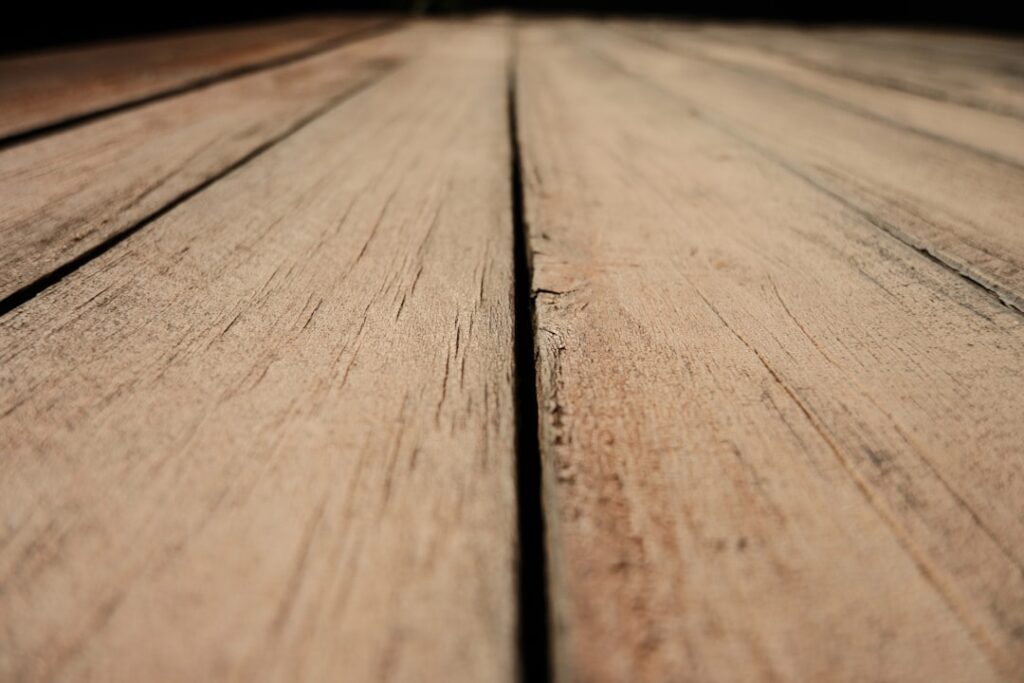
A thorough old deck restoration can take a graying, splintered structure and return it to near-new condition for 20 to 35 percent of what a tear-out and rebuild costs. The catch is honest evaluation, some decks are too far gone for restoration and any money put into them is money lost. A 12-foot by 16-foot deck restoration runs $1,400 to $3,800 in materials and labor when structurally sound. Replacement of the same deck in pressure-treated pine runs $4,800 to $8,400, in cedar $7,200 to $11,500, and in Trex Transcend $9,800 to $15,200. The restoration path makes sense for 70 percent of decks built since 1995. Older or weathered decks need a closer look.
Part of our Decks & Outdoor guide — explore the full guide →
Honest Structural Assessment Comes First
Before spending a dollar on stain, check the structure. Pull the screws or lag bolts at the ledger-to-house connection and inspect for rot, missing flashing, and signs of water intrusion. Half of all deck collapses, according to the NADRA (North American Deck and Railing Association), trace back to a failed ledger connection. The 2023 IRC R507 specifies lag bolts at 8-inch on-center maximum spacing and Z-flashing over the ledger to the house’s water-resistive barrier.
Check posts at grade level for rot. Push a screwdriver into the post 1 inch above the ground and 1 inch below the surface, soft, punky wood needs replacement. Pressure-treated 6×6 posts last 25 to 40 years in most climates; cedar 4×4 posts often fail at 15 to 20 years.
Inspect joists for rot, especially at the rim joist where deck boards have allowed water to settle for years. Replace any joist with more than 25 percent of its cross-section soft or punky. Solid joists with surface graying can stay.
Replace Bad Deck Boards Selectively
Most restoration projects need 5 to 25 percent of the deck boards replaced. Pull individual boards by removing screws (or punching nail heads through) and pry the board up. Inspect both faces and the edges, anything cracked over more than 30 percent of its length, badly cupped, or showing extensive rot at the ends needs replacement.
Source replacement boards from the same supplier where possible to match thickness and width. Pressure-treated southern yellow pine 5/4 x 6 decking runs $1.20 to $2.80 per linear foot. Cedar 5/4 x 6 runs $3.20 to $5.80. Composite Trex Enhance at 1 x 5.5 inch runs $3.40 to $4.60 per linear foot for the entry-grade product.
For pressure-treated replacements, choose ground-contact rated lumber (KDAT, kiln-dried after treatment) when available. The kiln-drying reduces moisture content to 15 to 19 percent, preventing the warping that plagues green pressure-treated boards installed wet.
Cleaning Before Refinishing
A proper old deck restoration starts with aggressive cleaning. Apply RAD (Restore-A-Deck) Cleaner at $34 per gallon or Defy Wood Cleaner at $42 per gallon, scrub with a stiff deck brush, and rinse with a pressure washer at 1,500 to 2,000 PSI maximum. Higher pressures damage the wood fibers and create a fuzzy texture that no stain can hide.
For decks with mildew staining, follow the cleaner with a brightener like RAD Brightener (oxalic acid based) at $32 per gallon. The brightener neutralizes the lye in the cleaner, opens the wood pores, and removes the gray-black tannin staining that builds up in old cedar and ipe.
Let the deck dry completely, typically 48 to 72 hours of dry weather, before sanding or staining. Stain applied to damp wood blisters, peels, and fails within 6 to 18 months.
Sanding for a Smooth Finish
For decks intended for stain, sand with 60 to 80-grit sandpaper using a Festool DTS 400 random-orbit sander ($385) or rent a drum-type floor sander from Home Depot ($55 per day). Sand with the grain, working in 10-foot sections. Vacuum thoroughly between grits.
Skip sanding entirely for opaque solid stains, the cleaner and brightener provide adequate prep for solid coatings that bond mechanically to the wood surface. For semi-transparent and clear penetrating stains, sanding is non-negotiable for adhesion.
Sand handrails, balusters, and stair components with 100-grit by hand, especially on the inside corners where pressure washers leave fuzzy fibers. A 200 sq ft deck takes 6 to 10 hours of sanding by hand or 3 to 5 hours with a rented drum sander.
Choosing the Right Stain System
Penetrating oil-based stains from TWP (TWP 100 Series), Penofin Marine Oil, and Restore-A-Deck Wood Stain at $42 to $68 per gallon penetrate the wood fibers and breathe with seasonal humidity changes. Expect 18 to 36 months between recoats in full-sun applications.
Solid stains from Behr Premium DeckPlus or Olympic Maximum at $36 to $58 per gallon cover heavy graying, fill minor cracks, and provide longest service life (4 to 7 years between recoats). They look like paint and lose the wood-grain appearance, an aesthetic trade-off.
Semi-transparent stains split the difference, offering 24 to 36 month service life with visible wood grain. Cabot Australian Timber Oil ($48 to $65 per gallon) is a homeowner favorite for cedar, redwood, and ipe restoration.
Application Technique That Lasts
Apply stain when air and surface temperatures are between 50°F and 90°F with no rain forecast for 48 hours. Avoid applying in direct mid-day sun, the stain flashes off before it can penetrate.
Use a 4-inch synthetic brush for handrails and a 9-inch foam pad or roller for decking surfaces. Maintain a wet edge by working in 3 to 5 board sections, never letting one section dry before the next begins. Two thin coats outperform one heavy coat every time, follow the manufacturer’s recoat window precisely.
For a 12×16-foot deck, plan on 2 to 3 gallons of stain at $90 to $200 total. Application labor runs $0.80 to $1.80 per sq ft if hired out, or 5 to 8 hours of DIY time for a careful homeowner.
Hardware and Railing Touches
Replace rusted lag bolts, deck screws, and joist hangers with hot-dipped galvanized or stainless steel hardware. The 2023 IRC requires Simpson Strong-Tie or USP hangers rated for the lumber treatment, ACQ pressure-treated wood corrodes standard zinc hangers within 5 to 10 years.
For railings, check the 4-inch sphere rule at balusters and the 36 to 42-inch height requirement at the top rail. Older decks often fail these codes and may need reinforcement or replacement before passing a real-estate disclosure.
When Restoration Stops Making Sense
Replace rather than restore when: more than 30 percent of deck boards need swapping, posts show structural rot, joists need wholesale replacement, or the ledger connection has caused water damage to the house framing. At that threshold, the labor to disassemble and reassemble exceeds the savings on new lumber, and you finish with a deck that still has aging structural members. A full restoration delivers 8 to 15 years of additional service when the bones are good. Past that breakpoint, build new.


