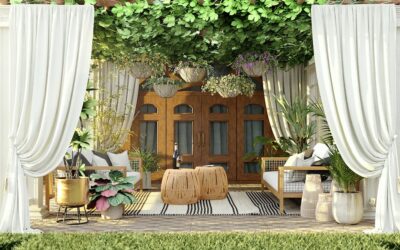
Walk into any RH gallery and you will see the same restrained palette repeated wall after wall — soft warm whites, layered grays, and moody charcoals that quietly read as expensive. Restoration Hardware paint colors have built a cult following because the brand stocks just enough variety to feel curated without overwhelming the buyer with 3,000 chip cards. The catch is that RH discontinued their branded paint line years ago, leaving designers and homeowners hunting for accurate matches at Sherwin-Williams, Benjamin Moore, and Farrow & Ball. This guide pulls together the most-requested RH-inspired colors, the closest matches available today, and how to use the palette without making your house feel like a furniture catalog.
Part of our Paint & Walls guide — explore the full guide →
- The RH Paint Story
- The Whites: Foundation of the RH Palette
- The Grays: The RH Signature
- The Browns and Taupes
- The Blues and Greens
- How to Choose the Right Match
- Building a Cohesive RH-Inspired Palette
- Finishes and Sheen
- Pricing the Project
- Lighting Makes or Breaks the Palette
- Frequently Asked Questions
The RH Paint Story
From roughly 2007 to 2017, Restoration Hardware sold 28 signature paint colors developed in collaboration with Fine Paints of Europe. The line was discontinued, but the colors became reference points across the industry. Designers cross-referenced them to widely available paint brands, and that database is now the standard way to source the palette.
The aesthetic is always restrained, weathered, and slightly cool, with an emphasis on monochromatic schemes that let furniture and lighting do the talking. If your home is full of saturated color, RH-inspired paint will feel washed out. If you lean toward minimalism and natural materials, this palette belongs in your home.
The Whites: Foundation of the RH Palette
Bone
The default RH wall white. Warm with a faint yellow undertone. Closest current match: Sherwin-Williams Alabaster (SW 7008). Looks soft and creamy in north-facing rooms, more golden in afternoon western light.
Heron Plume
A clean, slightly cooler white with mineral undertones. Match: Benjamin Moore Cloud White (OC-130) or SW Pure White (SW 7005).
Marble
Greige-leaning warm white. Use as a foundation in open-plan spaces. Match: SW Snowbound (SW 7004) is the closest workhorse equivalent.
The Grays: The RH Signature
Silver Sage
The most-requested RH color of the past decade. Soft gray with green-blue undertones that shift through the day. Match: SW Comfort Gray (SW 6205) or BM Quiet Moments (1563). Beautiful in bathrooms, master bedrooms, and dining rooms.
Slate
Mid-tone neutral gray with cool undertones. Match: BM Coventry Gray (HC-169) or SW Mindful Gray (SW 7016). Works as a kitchen island, accent wall, or whole-room application in rooms with strong natural light.
Graphite
Deep charcoal with blue undertones. Match: BM Wrought Iron (2124-10) or SW Iron Ore (SW 7069). Use for moody accent walls, libraries, or exterior trim.
Fog
Pale silvery gray with violet undertones — the kind of color that looks white at first and reads gray once you compare it to actual white trim. Match: SW Repose Gray (SW 7015) or BM Stonington Gray (HC-170).
The Browns and Taupes
Driftwood
Warm gray-brown with clear taupe undertones. Match: BM Revere Pewter (HC-172). The most-applied transitional color in American homes for the past decade.
Cocoa
Deep warm brown — the color of cooled chocolate. Match: SW Java (SW 6090) or BM Bittersweet Chocolate (2114-10). Best for libraries and powder rooms with brass accents.
Hemp
Tan-leaning beige with subtle warmth. Match: BM Manchester Tan (HC-81) or SW Kilim Beige (SW 6106). Reads as warm white in bright rooms.
The Blues and Greens
Atelier Blue
Smoky blue-gray that anchors RH dining rooms and libraries. Match: BM Hale Navy (HC-154) for the deeper version, or SW Riverway (SW 6222) for a slightly softer take.
Eucalyptus
Soft sage with gray undertones. Match: SW Sea Salt (SW 6204) or BM Camouflage (2143-40). A go-to for bathrooms and tranquil bedroom palettes.
Steel
Gray-blue with maritime depth. Match: BM Newburyport Blue (HC-155) or SW Naval (SW 6244). Good fit for kitchen cabinets and exterior shutters.
How to Choose the Right Match
Color cards lie. Always order paint samples and test in the actual room. Apply a 12×12 inch swatch on at least two walls — one near a window and one in a darker corner — and view at three points: morning, midday, and evening. RH-inspired palettes shift dramatically with daylight because most of the colors carry complex undertones.
Sample paints also let you compare against existing wood floors, countertops, and trim. A “perfect” Silver Sage on a chip can clash with warm-toned oak floors and look completely different over a charcoal stain.
Building a Cohesive RH-Inspired Palette
The classic RH approach uses three to five colors across the home, layered in tonal harmony rather than contrasting blocks.
- Foundation: A warm white (Bone or Heron Plume match) on most walls
- Trim: A cleaner white in semi-gloss (Pure White or Cloud White)
- Accent rooms: A soft gray or sage (Silver Sage or Driftwood match) for bedrooms or dining
- Drama room: A moody dark (Graphite or Atelier Blue match) for the powder room or library
- Exterior: Tie back with one of the same accent colors for cohesion
This palette discipline is what makes RH spaces feel intentional. Most struggling rooms have too many competing colors rather than the wrong individual choices.
Finishes and Sheen
RH interiors lean matte. Walls almost always finish in flat or matte (Sherwin-Williams Emerald in Matte is the workhorse), trim in satin or semi-gloss, and ceilings in flat. The matte finish is what gives RH walls their slightly chalky, expensive look — gloss reflects light and reads more commercial.
For high-traffic areas like hallways and kitchens, eggshell offers a balance of matte aesthetic and washability.
Pricing the Project
Premium paint matters when chasing a specific aesthetic. Sherwin-Williams Emerald and Benjamin Moore Aura run $80-$95 per gallon and cover better in fewer coats than entry-level lines. Farrow & Ball is the closest match for some moody RH colors but costs $115-$130 per gallon.
Plan for one gallon per 350 sq ft of wall. A 12×14 bedroom needs about 1.5 gallons for two coats. DIY-painted, an average bedroom runs $80-$120 in materials. Hiring a painter typically lands at $400-$800 per room depending on prep and trim.
Lighting Makes or Breaks the Palette
RH-inspired colors look best under warm-white LEDs at 2700K-3000K. Daylight bulbs (5000K+) wash out the warm undertones and make the palette feel cold and clinical. Replace bulbs before painting if you are unsure — the test will tell you immediately.
Layer light sources too. RH spaces use multiple lamps, sconces, and dimmers rather than overhead fixtures, which softens shadow and lets the paint colors shift gracefully through the day.
Frequently Asked Questions
Does Restoration Hardware still sell paint?
No. RH discontinued their branded paint line. The original colors are still referenced through cross-matched samples at Sherwin-Williams, Benjamin Moore, and Farrow & Ball.
What is the most popular RH paint color?
Silver Sage holds the top spot consistently, followed by Slate and Bone. The closest current matches are SW Comfort Gray, BM Coventry Gray, and SW Alabaster.
Are RH paint matches accurate?
Cross-matches are 90% accurate but not exact. Always test samples in your specific space before committing — undertones shift in different lighting.
Can I get RH colors custom-mixed at any paint store?
Many independent paint stores will custom-mix from RGB or LAB color codes. Bring a printed RH chip or use the published Sherwin-Williams equivalent for the closest match.
What sheen does Restoration Hardware use on walls?
RH galleries almost always use matte or flat finish on walls. Trim and doors are satin or semi-gloss in a slightly cooler white than the walls.