Farmhouse style endures because it feels like home: warm, unfussy, and lived-in without looking dated. Getting the look right starts on the walls, and choosing farmhouse paint colors for living room spaces means leaning into soft, natural tones that let shiplap, wood beams, and cozy textiles shine. The palette is deceptively simple, but small choices between a creamy white and a cool one, or a gray-green versus a true sage, change the whole mood. This guide walks through the colors that define the style and how to combine them.
Part of our Paint & Walls guide — explore the full guide →
What Defines a Farmhouse Palette
At its heart, farmhouse color is about warmth and restraint. The palette draws from nature and old farmhouses: creamy whites, soft grays, muted greens, warm beiges, and gentle earth tones. These colors create a calm, welcoming backdrop that never competes with the natural wood, woven baskets, and vintage accents the style loves.
The key is warmth. Modern farmhouse can lean slightly cooler, but classic farmhouse rooms feel cozy because the whites have a hint of cream and the neutrals carry warm undertones. Avoid stark, icy colors; they read too clinical for a style rooted in comfort. Think of a sun-washed kitchen or a well-loved family room, and you have the emotional target.
Warm Whites: The Farmhouse Foundation
No color is more central to farmhouse living rooms than a soft, warm white. These whites brighten a room and reflect light beautifully while keeping the space from feeling cold, thanks to subtle cream or greige undertones. They are the perfect canvas for wood tones and layered textures.
- Alabaster: a warm, creamy white that is a farmhouse staple, soft and inviting
- White Dove: a gentle white with a hint of warmth, popular for walls and trim alike
- Swiss Coffee: a creamy off-white with cozy depth
- Simply White: a slightly brighter clean white for airier, modern-farmhouse rooms
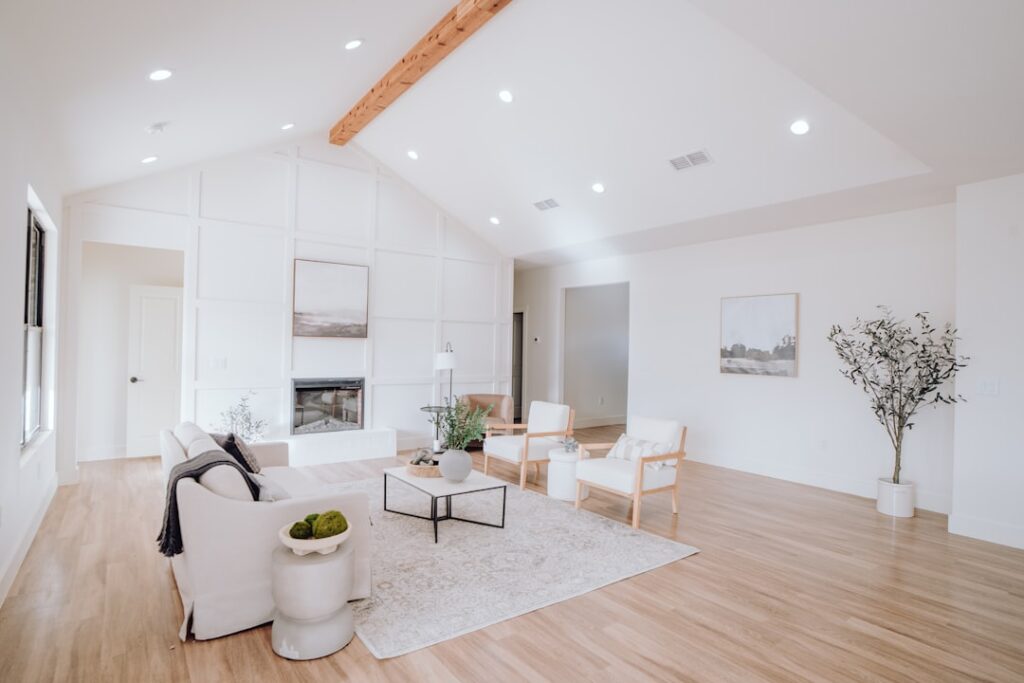
A warm white works especially well in living rooms with lots of natural light, where it glows through the day. Pair it with natural wood furniture, black accents on window frames or light fixtures, and layered neutral textiles for the quintessential farmhouse feel.
Soft Greens and Sages
Green has become the signature farmhouse accent color, and for good reason: it connects the room to nature and adds gentle character without overwhelming the space. Muted, grayed-down greens feel timeless rather than trendy, and they pair effortlessly with white trim and wood tones.
Sage and gray-green shades bring a soothing, organic quality that suits both walls and built-ins. A soft sage on the living room walls, balanced with plenty of warm white trim and natural textures, creates a restful room that feels grounded. For a bolder move, a deeper green like a muted forest tone works beautifully on a fireplace wall or built-in bookcases as an accent.
Popular Green Picks
Colors like Sage, Evergreen Fog, and October Mist have become farmhouse favorites because they read as soft, dusty greens rather than saturated hues. They shift subtly with the light, appearing more gray on cloudy days and greener in sunshine, which gives the room a natural, ever-changing quality that flat neutrals lack.
Greige and Warm Neutrals
When you want more depth than white but still a neutral backdrop, greige, the blend of gray and beige, is the answer. It offers a sophisticated middle ground that feels warmer than gray and more current than plain beige. Greige walls make wood furniture pop and provide a cozy envelope for a room full of soft textiles.
Warm taupes and mushroom tones fall in the same family and suit farmhouse living rooms that want a slightly moodier, more enveloping feel. These colors are especially effective in rooms with less natural light, where a pure white can feel flat but a warm greige adds welcome depth and coziness.
Moody Accent Colors
Modern farmhouse embraces contrast, and a deeper accent color adds drama to an otherwise light palette. Charcoal, navy, and deep green work beautifully on a single feature wall, a fireplace surround, or built-in shelving, grounding the room and highlighting architectural details.
Black is the classic farmhouse accent, showing up on window sashes, interior doors, light fixtures, and trim to create crisp definition against warm white walls. A little goes a long way; a black-framed window or a charcoal accent wall provides the contrast that makes the surrounding neutrals feel intentional and layered rather than washed out.
Combining Colors for a Cohesive Room
The most successful farmhouse living rooms follow a simple layering formula. Choose a warm white or greige for the main walls, use a crisp white for the trim and ceiling, and introduce one nature-inspired accent, usually a soft green, on a feature element. Then add black in small doses through hardware and fixtures for definition.
Keep the overall palette tonal and restrained, letting texture do the heavy lifting. Woven rugs, linen upholstery, wood beams, and vintage accents provide the visual interest, so the paint can stay quiet and warm. This balance of soft color and rich texture is what gives farmhouse rooms their unmistakable comfort.
Matching Paint to Your Farmhouse Elements
Farmhouse rooms rarely feature paint alone; the color has to work with the wood, textiles, and architectural details that define the style. Warm whites and greiges are the safest partners for the natural wood tones central to farmhouse decor, from reclaimed beams to butcher-block accents and vintage furniture. The paint should let that wood read as the star rather than compete with it.
If your living room has shiplap, painting it a warm white is the classic move, letting the plank texture provide subtle interest without loud color. Exposed wood beams pair beautifully with soft greens and warm neutrals that echo their organic quality. For rooms anchored by a brick or stone fireplace, a greige or warm white on the surrounding walls keeps the focus on the natural material while tying the palette together.
Think about your fixed elements first, then choose paint that flatters them. A farmhouse room with honey-toned wood floors leans naturally toward warm whites and sages, while cooler gray-washed floors can support a slightly cooler greige. Letting the permanent materials guide the paint choice, rather than the other way around, is what makes a farmhouse room feel effortlessly cohesive.
Room-by-Room Considerations for Open Layouts
Many farmhouse living rooms sit in open-concept spaces that flow into the kitchen and dining area, which changes how you approach color. In an open layout, the living room paint needs to harmonize with the adjacent spaces rather than stopping abruptly at an arbitrary line. Carrying one warm white or greige across the connected areas creates a seamless, airy feel that suits the style.
When you want to define the living room within an open plan, do it with a subtle accent rather than a jarring color change. A soft sage on a single feature wall, a deeper greige on built-ins, or black-framed windows can distinguish the space while keeping the overall palette unified. This restrained approach honors the open, communal spirit of farmhouse design while still giving the living area its own gentle identity, so the whole floor plan reads as one warm, welcoming whole.
Testing Colors in Your Space
Paint colors shift dramatically with lighting, so never commit based on a store chip alone. Warm whites can look yellow under incandescent bulbs and gray under north-facing daylight, while greens swing between sage and gray depending on the hour. Always test before you buy gallons.
Paint large sample patches on a couple of different walls, or use peel-and-stick samples, and observe them across morning, afternoon, and evening light. Watch how each color plays against your flooring and furniture.
Pay special attention to how your whites and greiges behave, since warm neutrals are the most likely to surprise you. A creamy white can look almost yellow under warm evening bulbs and noticeably cooler under gray north-facing daylight, while a soft sage may read greener in sun and grayer on overcast days. Living with the samples for a few days, rather than judging them in a single glance, reveals these shifts before you commit gallons. Spending that time ensures the farmhouse paint colors for living room walls you choose look as warm and inviting on your walls as they do in your imagination, giving you a cozy, timeless space you will love for years.