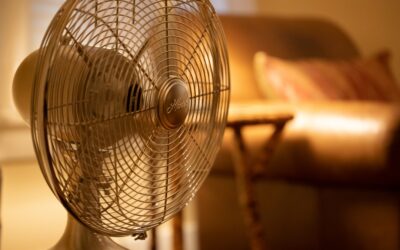
A small fan in the wrong spot can feel useless, while the same fan set at the right height and angle can make a stuffy bedroom comfortable. An oscillating table fan sits on a desk, nightstand or dresser and sweeps air back and forth across a zone, which is why it works so well for one or two people. Picking one comes down to three numbers: blade size, oscillation angle and noise level.
For most bedrooms and home offices, a 9 to 12 inch fan with a 60 to 90 degree sweep covers a desk or bed comfortably. Look for a low speed rated near 30 to 40 decibels if you plan to sleep with it running. Bladeless models are quieter in tone and safer around kids but move less air for the money. Knowing those numbers lets you match a fan to the room rather than guessing at the store.
- How an Oscillating Table Fan Differs From Floor and Pedestal Fans
- Sizes and Airflow
- Noise Levels: What the Decibel Numbers Mean
- Bladeless vs Bladed Table Fans
- Best Uses by Room
- Features Worth Paying For
- Setup, Cleaning and Troubleshooting
- Energy Use and Running Costs
- Cost and When to Replace
- Frequently Asked Questions
Table fans do not lower the room temperature. They create wind chill on your skin, so placement matters more than raw power.
How an Oscillating Table Fan Differs From Floor and Pedestal Fans
Floor and pedestal fans are built to move air across an entire room, often from 16 to 20 inch blades. A table model is a personal fan. It sits at seated or lying down height, typically 12 to 20 inches tall, and aims air directly at you from a few feet away. That shorter distance is why a small oscillating table fan can feel as strong as a larger fan across the room.
The oscillation motor rotates the head so the airflow sweeps instead of blasting one spot. That helps keep air moving around a desk, shares cooling between two people on a bed, and avoids the dry eyes some people get from a fixed stream. Many models also tilt up and down, which lets you bounce air off a wall or ceiling for softer circulation.
Sizes and Airflow
Blade diameter drives airflow, usually listed in cubic feet per minute (CFM). Larger blades can spin slower for the same air, which is often quieter.
| Blade size | Typical use | Coverage |
|---|---|---|
| 6 to 8 inches | Desk, nightstand, small shelf | One person, 2 to 4 feet away |
| 9 to 12 inches | Bedroom dresser, home office | One or two people, up to 8 feet |
| 13 to 16 inches | Living room table, kitchen counter | Small room up to about 150 sq ft |
Oscillation angle matters as much as size. A 60 degree sweep keeps air on a single desk or chair. A 90 degree sweep covers a queen bed from a nightstand on one side. Some fans offer 120 degrees or more, useful when the fan sits in a corner and needs to reach across a small room. Adjustable oscillation lets you narrow the sweep for one person and widen it for guests.
Noise Levels: What the Decibel Numbers Mean
Noise is the main complaint about cheap table fans, especially in bedrooms. Decibel ratings help, though they are measured differently by different makers, so treat them as rough guides.
- 25 to 35 dB: Whisper quiet, similar to a quiet library. Good for light sleepers.
- 35 to 45 dB: Soft hum. Fine for most bedrooms and offices on video calls.
- 45 to 55 dB: Noticeable, like a normal conversation. Acceptable for kitchens and workshops.
- Above 55 dB: Loud on high. Expect to turn it down for calls or sleep.
Beyond the number, listen for the type of sound. A steady low whoosh is easy to tune out and even helps some people sleep. A rattle, ticking oscillation gear or high pitched motor whine is far more distracting. DC motor fans tend to run quieter at low speeds and offer more speed steps than basic AC motor models, and they usually use less power.
Bladeless vs Bladed Table Fans
A bladeless table fan draws air through a base with a small impeller, then pushes it out through a slot in a ring or tower. You see no spinning blades, which makes them easy to wipe down and safer around curious children and pets. The airflow is smooth with less buffeting.
The tradeoffs are price and power. Bladeless fans typically cost more and move less air per dollar. Their sound has a higher pitched rush that some people dislike at top speed. Bladed fans are cheaper, often stronger and easy to repair, but the grilles collect dust and need regular cleaning.
For a nursery or a desk where kids do homework, a bladeless design is a sensible pick. For maximum cooling on a hot attic office, a bladed 12 inch fan with a DC motor usually wins.
Best Uses by Room
Bedroom
Choose a fan with a quiet low speed, a sleep timer and a dimmable or switch off display. Place it 3 to 6 feet from the bed at mattress height and set a 60 to 90 degree sweep. Aim it slightly above your body so you feel a breeze without a cold draft on your face all night.
Home office
A compact 6 to 9 inch fan on the desk corner keeps you comfortable during calls. Pick a model with a stable base that will not walk across the desk when oscillating. Keep it away from loose papers, or use a narrow oscillation setting.
Kitchen
Countertop fans help when cooking heats the room. Keep them away from the stove, sink and grease splatter, and choose a design with a removable grille for cleaning.
Living room and dorms
A 12 to 16 inch tabletop fan on a console table can circulate air across a small seating area. In dorm rooms, a fan with a remote and timer earns its keep.
Features Worth Paying For
- Multiple speeds (at least three, ideally more on DC models)
- Adjustable oscillation width and vertical tilt
- Sleep timer and auto shut off
- Removable grille or easy access for cleaning
- Remote control or app free physical buttons that are easy to find in the dark
- Weighted, non slip base
- Safety certification marks from a recognized testing lab on the cord or base
Setup, Cleaning and Troubleshooting
Plug the fan directly into a wall outlet rather than a crowded power strip, and route the cord where it will not be tripped over or pinched by furniture. Keep the fan on a stable, level surface, away from curtains and bedding that could get pulled into the grille.
- Unplug the fan before cleaning.
- Remove the front grille if the design allows; most clip or twist off.
- Wipe blades with a damp microfiber cloth and mild soap, then dry fully.
- Vacuum dust from motor vents with a brush attachment.
- Reassemble and run on low to check balance.
Common problems are easy to sort out. If oscillation stops, check that the oscillation knob or button is engaged, since many fans have a pull or push pin on top of the motor housing. If the fan wobbles, dust buildup or a loose blade nut is usually to blame. Grinding noise points to a dry or worn bearing. A fan that runs hot, smells of burning plastic or has a damaged cord should be unplugged and retired, not repaired with tape.
Energy Use and Running Costs
Table fans are among the cheapest ways to stay comfortable. A typical AC motor table fan draws about 25 to 50 watts on high, while DC motor models often use 5 to 25 watts. Running a 30 watt fan eight hours a night for a month uses roughly 7 kilowatt hours, which costs about a dollar at average residential rates. Compare that with a window air conditioner drawing 500 to 1,000 watts, and it is easy to see why many people pair a fan with a slightly higher thermostat setting.
Turn the fan off when you leave the room. Because a fan cools people rather than air, running it in an empty room wastes power without changing the temperature. In humid climates, combine the fan with a dehumidifier or air conditioning, since moving warm, sticky air only does so much.
Cost and When to Replace
Basic oscillating table fan models start around $20 to $40. Quieter DC motor fans with remotes and timers typically land in the $50 to $120 range. Bladeless table fans run from roughly $60 for budget designs to $300 or more for premium ones.
A decent fan lasts several years with cleaning. Replace it if the motor hums but blades will not spin, the oscillation gear strips, or the housing cracks near the motor. If you find yourself running several table fans in every room through the summer, a ceiling fan or ductless cooling may be a better long term investment, and those installs belong to a licensed electrician or HVAC contractor.
Frequently Asked Questions
What size oscillating table fan do I need for a bedroom?
A 9 to 12 inch fan with a 60 to 90 degree sweep covers a bed from a nightstand or dresser. Smaller 6 to 8 inch fans suit a single sleeper at close range.
Are bladeless table fans quieter?
They are often smoother in sound at low speed, but some produce a higher pitched rush on high. Bladed DC motor fans can be just as quiet while moving more air.
How many decibels is quiet for a table fan?
Around 30 to 40 dB on low is quiet enough for most sleepers. Anything above about 50 dB is noticeable in a bedroom.
Is it safe to leave a table fan on overnight?
Most modern fans are designed for long run times. Plug directly into the wall, keep bedding and curtains clear, and use a sleep timer if you prefer it to shut off.
Why did my fan stop oscillating?
The oscillation control may be disengaged, or the internal gear may be stripped. Check the knob or pin on the motor housing first before replacing the fan.