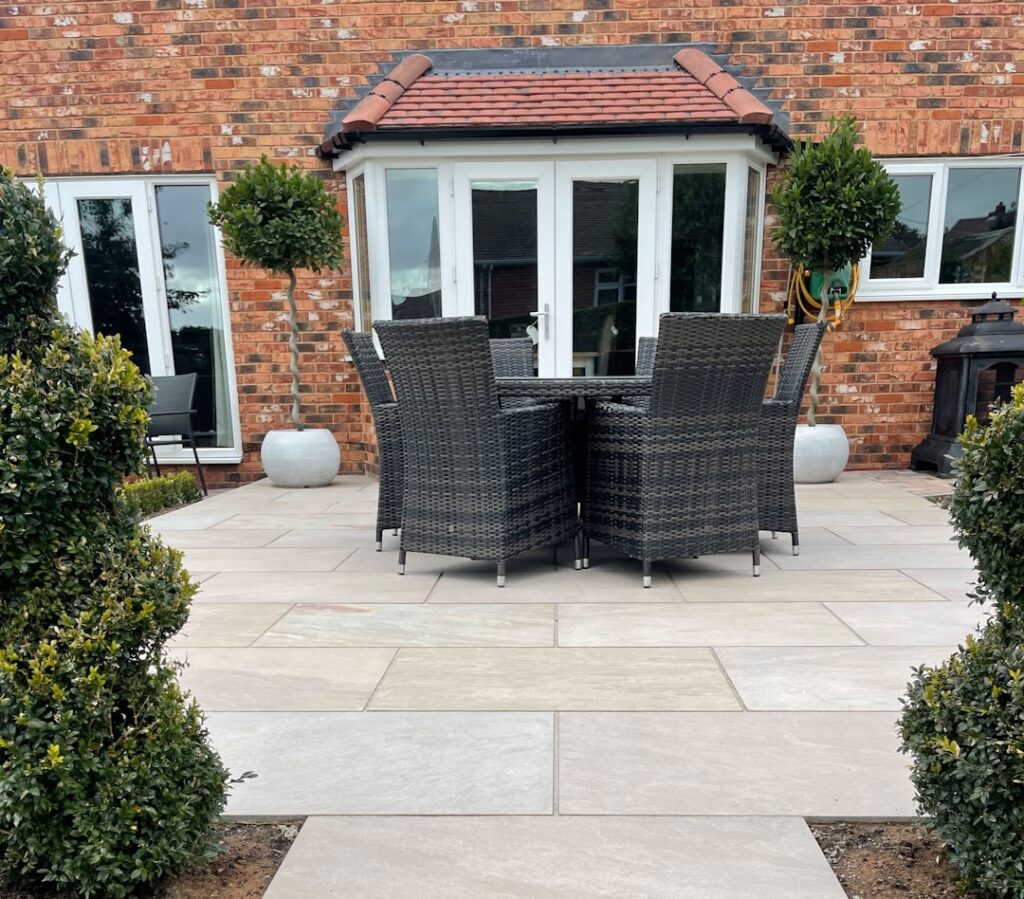
Nothing transforms a home’s first impression faster or more affordably than a new exterior color, but the stakes are high because a mistake stares back at you and the whole neighborhood for years. Choosing outdoor house paint colors means balancing personal taste against fixed elements you cannot change, your roof and stone, against your neighborhood’s character, and against the reality that exterior color behaves very differently in full sun than it does on a store chip. Get the system right and you add real value; get it wrong and you repaint. This guide gives you the framework the pros use.
Part of our Paint & Walls guide — explore the full guide →
- Start With What You Can't Change
- The Three-Color Formula
- Popular and Durable Color Directions
- Reading Undertones in Real Light
- Respect the Neighborhood and HOA
- Matching Color to Architectural Style
- Choosing a Durable Paint and Finish
- Don't Skip the Prep
- Budgeting the Project
- Timing Your Paint Job for Best Results
- Testing Your Color Choices Like a Pro
- The Bottom Line
Start With What You Can’t Change
Before you fall in love with any color, catalog the permanent elements of your home’s exterior: the roof shingles, any brick or stone, the driveway and walkways, and even mature landscaping. These fixed materials all carry undertones, warm or cool, and your paint has to harmonize with them. A roof with warm brown and tan tones clashes with a cool blue-gray body, while a charcoal roof supports grays, blacks, and cool whites. Pull a dominant undertone from your most visible fixed element and echo its temperature in your paint. This single discipline prevents the most common exterior color failure, a house that looks oddly mismatched no matter how nice the paint color is on its own.
The Three-Color Formula
Professional exterior schemes almost always use three coordinated colors, each with a defined role. Following this structure keeps the result balanced and intentional.
- Body color (the main event): Covers the largest area, siding and walls. Keep this in a range you can live with for a decade, typically a neutral, earth tone, or muted hue.
- Trim color (the frame): Window casings, corner boards, fascia, and soffits. Contrast with the body defines the architecture. Crisp white or cream trim is the classic, most versatile choice.
- Accent color (the personality): The front door and sometimes shutters. This is where you can be bold, since repainting a door is quick and low-commitment.
Popular and Durable Color Directions
Certain palettes have staying power because they flatter a wide range of architecture and hold up to changing trends. Warm whites and creams keep a home bright and timeless while pairing with almost any roof. Greige, the gray-beige blend, is the modern default for its flexibility. Soft, muted greens like sage connect a house to its landscape and photograph beautifully. Deep, moody colors, charcoal, near-black, and navy, make a confident modern statement, especially with crisp white trim. Warm earthy tones such as taupe, clay, and mushroom feel grounded and inviting. For most homes, choosing from these durable directions is safer than chasing a color that will look dated in a few years.
Reading Undertones in Real Light
The number one reason exterior paint disappoints is undertones that shift in outdoor light. A greige that looks neutral indoors can flash pink, green, or purple under direct sun, and sunlight is dramatically brighter than any store or home lighting. A color also looks two to three shades lighter on a large sunlit wall than it does on a small chip. To avoid a costly surprise, never choose from the chip alone.
- Buy sample quarts and paint large squares, at least two feet, on multiple sides of the house.
- Include a north-facing wall, which gets cool light, and a south-facing wall, which gets warm, intense light.
- Observe the samples in morning, midday, and evening light, since color temperature shifts through the day.
- Because sun lightens color, consider choosing a shade slightly deeper than you think you want.
Respect the Neighborhood and HOA
Your house does not exist in isolation, and a color that fights every other home on the block stands out for the wrong reasons. Walk the neighborhood and note the general palette, then choose something that fits in while still expressing your taste, distinct but not jarring. If you live under a homeowners association, check the approved color list before buying anything, because many HOAs require pre-approval and can force you to repaint an unauthorized color at your own expense. Historic districts often have even stricter, period-appropriate palettes. Confirming the rules first saves an expensive headache.
Matching Color to Architectural Style
The style of your home suggests palettes that will feel authentic. A Craftsman bungalow suits earthy greens, warm browns, and muted golds with contrasting trim. A Colonial looks right in classic white, soft gray, or muted blue with crisp shutters. A modern or contemporary home carries bold monochrome schemes, deep charcoals, and warm whites beautifully. A Victorian can handle a richer, multi-color palette that highlights its ornate detailing. A Mediterranean or Spanish-style home pairs naturally with warm creams, terracotta, and ochre. Choosing a color that honors your home’s architecture makes the result feel intentional rather than arbitrary.
Choosing a Durable Paint and Finish
Color choice means little if the paint fails early, so quality matters as much outside as the hue. Premium exterior lines like Sherwin-Williams Duration and Benjamin Moore Aura cost $70 to $90 a gallon but resist fading, cracking, and mildew far longer than budget paint, which is a bargain when you factor in the labor to repaint. For sheen, most siding uses a flat or low-lustre finish that hides imperfections, while trim and doors get satin or semi-gloss for durability and a crisp accent. Dark colors especially benefit from premium fade-resistant formulas, since deep tints on sun-exposed walls lose color fastest.
Don’t Skip the Prep
The most beautiful color will peel within a few years if the surface underneath was not prepared properly, and prep is where paint jobs succeed or fail. A quality exterior job includes pressure washing to remove dirt and chalking, scraping and sanding loose paint, priming bare wood and stains, and caulking gaps around trim and windows. This work is unglamorous and often more than half the labor cost, but it is what makes your color last eight to ten years instead of three. Whether you DIY or hire out, do not let anyone shortcut the prep to save time.
Budgeting the Project
A typical single-story home needs 6 to 10 gallons of body paint, while a two-story needs 12 to 15, plus a few gallons of trim. Paint alone runs $600 to $1,600 for quality product. A full professional exterior repaint ranges from $4,000 to $12,000 depending on size, height, prep needs, and region. Doing it yourself cuts labor but demands significant time, ladders, and safety care on a two-story home. Whichever route you choose, the color and prep decisions matter far more to the outcome than the small savings from a cheaper paint.
Timing Your Paint Job for Best Results
When you paint matters almost as much as what color you choose, because exterior paint needs the right conditions to cure properly and last. Aim for mild, dry weather with temperatures between roughly 50°F and 85°F and low humidity, which typically means late spring through early fall in most climates. Avoid painting in direct blazing sun, since paint that dries too fast can blister and fail to bond, so work on the shaded side of the house and follow the shade around as the day progresses. Give the surface time to dry fully after any pressure washing, usually at least a day, and never paint when rain is in the forecast within 24 hours of application. Planning around the weather protects the significant investment you are making and is a big part of why professional jobs outlast rushed ones. If your window for good weather is short, prioritize the prep so you can move quickly once conditions are right.
Testing Your Color Choices Like a Pro
The single habit that separates a satisfying repaint from an expensive regret is thorough sampling, and it costs only a few dollars and a couple of days. Buy sample quarts of your top two or three color candidates and paint large squares, at least two feet across, on more than one side of the house so you capture different light exposures. Peel-and-stick paint samples are a tidy alternative you can reposition around the exterior. Live with the samples for two or three days and study them at morning, midday, and evening, since a color’s undertone and depth shift dramatically as the light changes. Also view them next to your fixed elements, holding the sample against the roof, brick, or stone to confirm the temperatures harmonize. This small, patient step reveals the pink flash or the too-dark surprise before you commit fifteen gallons and a week of labor, and it is the closest thing to a guarantee you will love the result.
The Bottom Line
The best outdoor house paint colors are the ones that harmonize with your roof and stone, follow a disciplined body-trim-accent structure, and suit your home’s architecture and neighborhood. Lean toward durable, timeless directions like warm whites, greige, sage, and confident darks, and always test large samples in real daylight on multiple sides of the house before committing. Pair your color with a premium fade-resistant paint and thorough surface prep, and your home will look sharp and hold its finish for the better part of a decade.