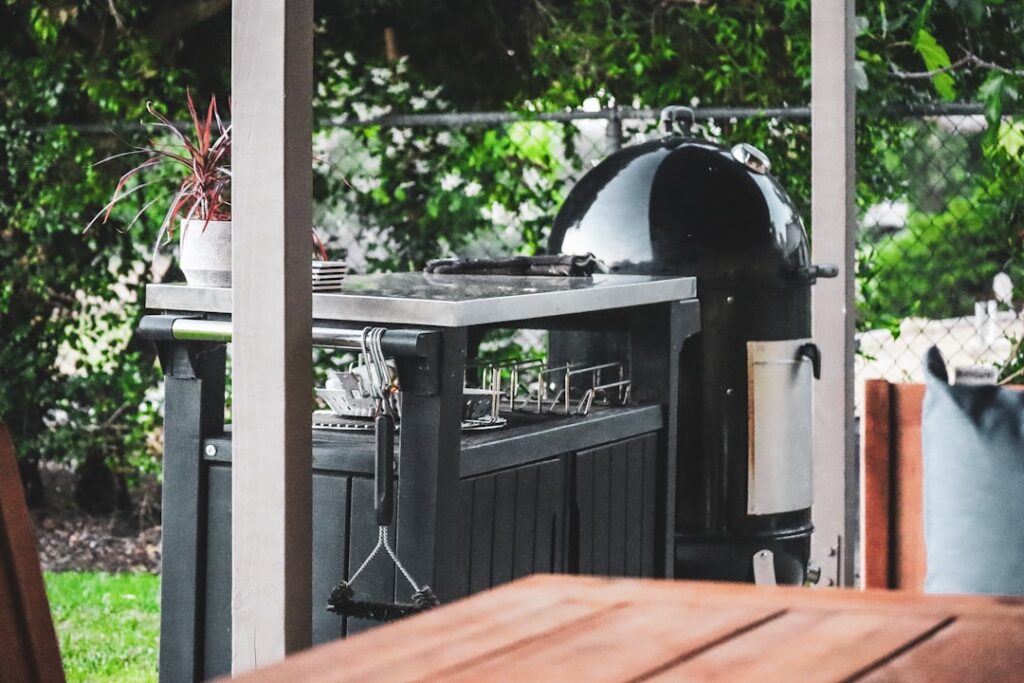
An outdoor kitchen cabinet is the backbone of any backyard cooking space, giving you weatherproof storage, a home for a grill or side burner, and a durable base for countertops. The catch is that outdoor cabinets face rain, humidity, salt air, UV, and temperature swings that would destroy ordinary kitchen boxes in a single season. Choosing the right material and construction is the single biggest factor in whether your investment survives a decade or warps and rusts within a year.
Part of our Kitchen Remodeling guide — explore the full guide →
- Why Indoor Cabinets Fail Outside
- The Main Outdoor Cabinet Materials
- Modular vs. Built-In Cabinets
- Planning Your Layout
- Ventilation and Gas Safety
- Countertops for Outdoor Cabinets
- What It Costs
- Installation Tips
- Maintenance for a Long Life
- Common Mistakes to Avoid
- Drawers, Doors, and Storage Configurations
- Weather Protection and Climate Considerations
- Choosing a White Outdoor Cabinet
Why Indoor Cabinets Fail Outside
Standard indoor cabinets are built from particleboard, MDF, or plywood with a laminate or painted finish. Those materials absorb moisture, swell, delaminate, and grow mold once exposed to weather. Even so-called moisture-resistant indoor boxes are not engineered for direct rain or freeze-thaw cycles. If you try to save money by putting interior cabinets outdoors under a roof, you will usually be replacing them within a couple of seasons. Purpose-built outdoor cabinets use materials chosen specifically to shrug off the elements.
The Main Outdoor Cabinet Materials
There are four dominant materials, each with trade-offs in cost, looks, and longevity:
- Stainless steel is the gold standard for durability. Marine-grade 304 stainless resists rust, cleans easily, and pairs naturally with stainless grills. It is the most expensive option and can get hot in direct sun, but it lasts decades.
- Marine-grade polymer (HDPE) is a dense plastic that never rots, rusts, or fades, comes in many colors, and shrugs off salt air. It is popular in coastal climates and mid-priced.
- Powder-coated aluminum is lightweight, rust-resistant, and less costly than stainless, though the coating can chip over time.
- Masonry or concrete-block bases faced with stone, stucco, or tile are extremely durable and integrate with built-in kitchens, but they are permanent and labor-intensive to build.
For most homeowners, the choice comes down to stainless or polymer for modular cabinets, or masonry if you want a fully built-in look.
Modular vs. Built-In Cabinets
Modular outdoor cabinets arrive as finished units you set in place and level, much like appliances. They are faster to install, movable, and easier to replace, and they let you reconfigure the kitchen later. Built-in masonry kitchens are constructed on site from block or steel framing, then clad in stone, tile, or stucco. They look the most permanent and high-end, tie directly into patios, and can be shaped to any layout, but they cost far more, take longer, and cannot be moved. Many homeowners split the difference with a steel or polymer frame kit clad in stone veneer.
Planning Your Layout
Good outdoor kitchen design borrows from indoor ergonomics. Keep a landing area of counter space on both sides of the grill, group the grill, prep, and storage into a workable triangle, and leave room for people to pass behind cooks. Standard base cabinets are about 24 inches deep and 36 inches tall to the countertop, matching typical grill heights. Plan cabinet openings around the exact dimensions of any built-in grill, side burner, or refrigerator, since those appliances require specific cutout sizes and ventilation clearances.
Ventilation and Gas Safety
This is where outdoor cabinets differ most from indoor ones. Any cabinet that houses a propane tank or a built-in gas grill must have proper ventilation cutouts so leaking gas, which is heavier than air, cannot pool inside the enclosure. Manufacturers specify vent panel placement, and skipping them creates a genuine explosion hazard. Never fully seal a gas appliance inside an airtight box. If you are running a natural gas line or a fixed propane supply, that connection should be done or inspected by a licensed pro and meet local code.
Countertops for Outdoor Cabinets
The cabinet base carries the countertop, so plan them together. Popular outdoor counter materials include granite, which handles heat and weather well; porcelain, which resists UV fading; concrete, which offers a custom look but needs sealing; and tile, which is budget-friendly but has grout lines to maintain. Avoid materials that fade or stain badly outdoors, and confirm your cabinet frame is rated to carry the weight of a stone slab.
What It Costs
Prices vary enormously by material and scope. A single modular polymer or aluminum base cabinet might run $300 to $800. Individual stainless cabinets often land between $600 and $1,500 each. A modest modular outdoor kitchen with several cabinets, a grill cutout, and counters can total $4,000 to $10,000. A full custom built-in masonry kitchen with premium appliances, stone counters, and a roof structure commonly runs $15,000 to $40,000 or more. Doing your own assembly on modular units and hiring out only the gas and electrical connections is the most common way homeowners control cost.
Installation Tips
- Start with a level, solid base. Cabinets and counters need a stable, level concrete pad or paver surface to sit on.
- Leave appliance clearances. Follow the grill and refrigerator cutout dimensions and heat-clearance specs exactly.
- Protect utility connections. Route gas, water, and electrical through knockouts, and use outdoor-rated, GFCI-protected outlets.
- Add access panels. Make sure you can reach shutoff valves and connections without demolishing anything.
- Seal and slope for drainage. Water should shed away from the cabinet interiors and off the counters.
Maintenance for a Long Life
Even durable materials last longer with care. Wipe stainless steel with a stainless cleaner and a soft cloth in the direction of the grain to avoid streaks and surface rust from grill grime. Rinse polymer and aluminum periodically to remove salt and pollen. Reseal concrete or natural-stone counters annually. Cover cabinets and appliances with fitted covers during long off-seasons, especially in freezing or coastal climates, and keep drawers and doors dry inside to prevent mildew.
Common Mistakes to Avoid
- Using indoor-rated cabinets outside to save money, then replacing them within a season.
- Sealing a gas appliance without required ventilation cutouts.
- Ignoring appliance cutout dimensions and ending up with a grill that will not fit.
- Setting cabinets on an uneven surface, which throws off doors, drawers, and counters.
- Choosing a countertop that fades or stains in your specific climate.
Drawers, Doors, and Storage Configurations
Outdoor cabinets come in the same functional configurations as indoor ones, and choosing the right mix makes the space genuinely usable. Base cabinets with doors house propane tanks, trash bins, and bulky items, while drawer stacks organize utensils, grill tools, and cookware. Dedicated storage inserts add real convenience: a paper-towel holder, a trash-and-recycling pull-out, a spice rack, and a sealed drawer for napkins and dry goods keep everything within arm’s reach of the grill. Look for stainless drawers with soft-close, weather-sealed slides, since ordinary drawer glides seize up outdoors from grit and corrosion.
Plan door swings and drawer clearances around foot traffic and appliance doors so nothing collides when open. A common configuration pairs a grill in the center with a doored cabinet on one side for the propane tank and a drawer stack on the other for tools, topped by continuous counter space for prep and serving. Leaving a knee-space or open shelf section can also make room for a beverage cooler or a compact outdoor refrigerator.
Weather Protection and Climate Considerations
Your local climate should steer both material choice and detailing. In coastal areas, salt air accelerates corrosion, making marine-grade polymer or 304 stainless the safest bets and powder-coated aluminum a riskier one. In freezing climates, water that collects in cabinet interiors or countertop seams can freeze and cause damage, so good drainage and sealed seams matter more. In hot, sunny regions, dark stainless and stone counters can become uncomfortably hot to touch, so consider lighter finishes or a shade structure. A roof, pergola, or retractable awning over the kitchen dramatically extends the life of cabinets and appliances by shielding them from direct rain and UV, and it makes the space usable in more weather.
The right outdoor kitchen cabinet turns a bare patio into a genuine cooking and gathering space that survives years of weather. Match the material to your climate and budget, plan the layout around real appliance dimensions, respect gas ventilation requirements, and set everything on a level base. Get those fundamentals right and your backyard kitchen will look great and function reliably for many summers to come.
Choosing a White Outdoor Cabinet
A white outdoor cabinet looks crisp and coastal, stays cooler in direct sun than stainless or dark finishes, and brightens a covered patio. The best white is color that runs all the way through the material, such as marine-grade polymer, because scratches and chips do not show a different color underneath. Plan for more frequent cleaning, especially near the grill.
How Each Material Handles White
| Material | How the white holds up | Watch for |
|---|---|---|
| Marine-grade polymer (HDPE) | Solid color through the board, resists fading and salt air | Surface scuffs that collect dirt; heat near grill vents |
| Powder-coated aluminum | Smooth, even white finish at a lower price | Chips that expose bare metal, especially on door edges |
| Powder-coated stainless | Tough base metal under a white coat | Same chipping risk; touch-up paint rarely matches exactly |
| Masonry with white stucco or paint | Custom built-in look | Hairline cracks, mildew and repainting every few years |
Keeping White Cabinets White
Smoke, grease and pollen show on white far sooner than on stainless or a mid-tone finish. Place drawer stacks and doors for the propane tank to the side of the grill rather than directly under the hood line where smoke rolls out, and keep the grill’s specified clearances so heat does not discolor nearby panels. A fitted cover during the off-season prevents most yellowing from pollen and leaf stains.
For routine cleaning, wash with warm water and mild dish soap, rinse, and dry the door edges. Avoid abrasive pads and scouring powders, which dull the surface and give dirt more to cling to. For mildew, use one cleaner at a time as the label directs, never mix bleach with ammonia or other cleaners, and work in open air.
Design Pairings That Work
- White cabinets with a gray or veined white stone countertop for a coastal look
- White boxes with a warm wood-look or concrete counter to keep the space from feeling sterile
- Stainless appliances and handles against white doors for contrast
- Black hardware for a modern farmhouse style
On a fully open, sun-baked patio, a bright white can glare at midday. An off-white or soft gray polymer gives a similar feel with less glare and hides dust better. Under a roof or pergola, pure white works well and makes a shaded kitchen feel larger.