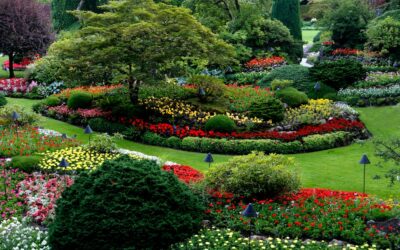
The first mistake most homeowners make is buying plants before they have a plan. Outdoor landscaping ideas work when you start with the bones — paths, beds, focal points — and add plants last. A $500 budget with a real plan beats $5,000 of impulse-bought shrubs scattered across the yard. This guide walks through layouts that hold up across seasons, plant combinations that survive without constant attention, and the hardscape investments that pay back at resale.
Part of our Windows & Doors guide — explore the full guide →
Whether you have a 25-foot front yard or a quarter-acre backyard, the same principles apply: layered heights, a few signature plants repeated rather than 30 different species, and circulation that lets you actually use the space.
Start with the Bones
Before any plants go in, sketch the hardscape. Where do paths go from the driveway to the front door, side gate to back patio, and across the lawn to the shed? Walk the routes you actually use. The straight concrete walk from driveway to porch is the path 80 percent of guests will use; the curving paver stones to the side garden is for you.
Standard widths: front walk 4 feet wide minimum, secondary garden paths 30 to 36 inches, stepping stone informal paths 18 to 24 inches. Anything narrower forces single-file walking and feels awkward in 3 years.
Front Yard Designs That Boost Curb Appeal
Symmetric Traditional
Two matched evergreen shrubs flanking the porch (boxwood, dwarf spruce, or yew), a single specimen tree off-center in the lawn, and bedding plants along the foundation. Total cost for a small lot: $400 to $900. Reads classic and easy to maintain.
Cottage Garden
Dense informal plantings of perennials in waves of color: catmint, salvia, daylilies, coneflowers, and rudbeckia. Skip the lawn entirely on small lots and use crushed granite paths between beds. Budget $800 to $2,500 depending on yard size. Higher maintenance but blooms April through October.
Modern Minimalist
A single specimen Japanese maple, ornamental grasses (Karl Foerster feather reed grass at $25 per 1-gallon pot), and crushed black basalt mulch. Small lawn or no lawn. Looks intentional and contemporary. Budget $1,500 to $4,000.
Backyard Zones for Any Size Lot
Design backyards as a series of zones rather than one big space. Common zone types:
- Patio dining — 12 by 14 feet minimum to fit a 6-person table with chairs pulled out
- Lounge or fire pit — 12 to 14 foot circle including chairs, away from the house for safety
- Lawn play area — 200 to 600 sq ft depending on family
- Garden beds and screening — perimeter plantings 4 to 8 feet deep
- Shed, compost, or utility — tucked behind sight lines
Connect zones with paths wide enough to walk side by side. A backyard that flows from patio to fire pit to garden feels twice as large as one with everything jumbled together.
Plants That Survive Without Constant Care
Pick plants suited to your USDA zone and your soil. The bargain shrubs at the box store are often plants forced out of season that struggle. Better picks for low-maintenance landscapes:
- Ornamental grasses — Karl Foerster feather reed (zones 4-9), Little Bluestem (zones 3-9), Japanese forest grass for shade. $20 to $30 each, expand quickly
- Catmint Walker’s Low — Three-season blue blooms, deer resistant, drought tolerant. $12 per 1-gallon
- Knock Out Roses — Disease-resistant rose that blooms from June through frost. $25 to $40 each
- Boxwood Green Mountain — Pyramidal evergreen for foundation plantings. $35 to $60 each. Watch for boxwood blight in southern climates
- Limelight Hydrangea — Six to eight foot panicle hydrangea, full sun, almost foolproof. $45 to $70 in #3 container
- Coneflowers (Echinacea) — Native perennial, drought-tolerant, attracts pollinators. $10 to $15 per quart
Hardscape Investments Worth the Money
Paver Patio
200 sq ft of natural-looking concrete paver (Belgard Cambridge Cobble or similar) installed runs $4,500 to $7,500. Holds up 30-plus years and adds resale value at near 1:1 cost recovery.
Fire Pit
A pre-cast concrete kit fire pit with gas line costs $1,800 to $4,500 installed. Wood-burning kits at Lowe’s run $300 to $800 DIY. Choose gas if you actually want to use it on weeknights — wood pits get used twice a year for most homeowners.
Pergola
A 12 by 14 foot cedar pergola runs $4,500 to $8,000 installed. Vinyl pergolas from Trex Pergola last longer at $7,000 to $12,000. Adds shade and a visual anchor to a flat backyard.
Outdoor Lighting
Path lights, uplighting on a specimen tree, and a single string-light setup over the patio. Volt and Kichler systems run $800 to $2,500 installed. Single biggest improvement for nighttime use of the yard.
Budget Tiers
- Starter ($500 to $1,500) — DIY mulch refresh, three to five focal shrubs, one ornamental tree, and basic perennial bed
- Mid-range ($3,000 to $8,000) — New paver walk, foundation planting overhaul, mid-size patio, basic lighting
- Premium ($15,000 to $40,000) — Full landscape redesign, large patio with fire feature, irrigation, lighting, mature trees
Resale value sweet spot is $5,000 to $12,000 of hardscape and curb appeal work — recovers 70 to 100 percent in most US markets according to Cost vs Value reports.
Mulch and Edge Choices
Triple-shredded hardwood mulch costs $3 to $5 per cubic foot bagged or $25 to $40 per cubic yard delivered. Reapply 2 inches deep every spring. Skip the dyed red mulch — it fades to orange and looks artificial.
For edging, steel or aluminum strip ($2 to $4 per linear foot) holds clean lines for 20 years and looks invisible. Plastic edging fails within 5. Cut natural soil edges with a half-moon edger if you want zero-cost boundaries.
Common Landscaping Mistakes
- Planting trees too close to the house — most need 15 to 25 feet of clearance at maturity
- Buying plants in bloom and assuming they always look that good
- Mixing too many varieties — pick three to five species and repeat them
- Volcano-mulching tree trunks, which causes rot
- Skipping irrigation and losing $1,500 of new plants in the first dry July
- Putting a fire pit too close to the house (10 foot minimum from any structure)
Maintenance Routine
An hour of weeding every two weeks beats four hours every two months. Edge beds twice a year — early spring and late summer. Refresh mulch annually. Prune summer-blooming shrubs in late winter, spring-blooming shrubs right after they finish. Most landscape problems trace back to skipped maintenance, not bad design.