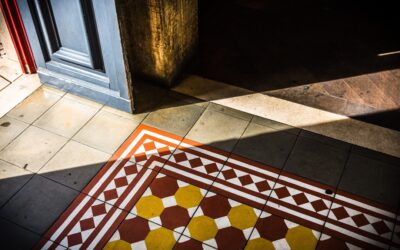
Walk into a 1920s brownstone or a European chateau and the floor almost always gives away the era: intricate geometric wood patterns laid in squares. That look comes from parquet wood flooring tiles, and they are having a serious comeback in modern homes. Unlike long planks, parquet arrives as pre-assembled squares of small wood pieces arranged in patterns like herringbone, chevron, basketweave, and the classic Versailles panel. This guide breaks down the wood types, thickness options, patterns, installation methods, and real costs so you can buy with confidence instead of guessing.
Part of our Tile & Grout guide — explore the full guide →
Parquet Wood Flooring Tiles: What Exactly Are Parquet Tiles?
A parquet tile is a factory-assembled block of short wood slats glued or splined together into a repeating geometric design. Common tile sizes run 9 by 9 inches, 12 by 12 inches, and 18 by 18 inches, though custom Versailles panels can reach 24 or even 36 inches square. Instead of running boards end to end, you set these squares side by side like ceramic tile, and the pattern reads across the whole room.
There are two broad construction types. Solid parquet uses tiles milled entirely from one species of hardwood, typically 5/16 inch to 3/4 inch thick. Engineered parquet bonds a thin hardwood wear layer, usually 0.6 mm to 4 mm, over a plywood or HDF core, giving you 3/8 inch to 5/8 inch total thickness with far better resistance to humidity swings. If your subfloor is concrete or you have radiant heat, engineered is almost always the smarter pick.
Popular Parquet Patterns
Pattern choice drives the entire personality of the floor, so it is worth understanding the classics before you shop.
- Herringbone: Rectangular blocks set at 90 degrees in a broken zigzag. The most requested pattern today and forgiving in mid-size rooms.
- Chevron: Blocks cut at an angle so the points meet in a continuous V. More formal and more expensive because of the angled cuts and waste.
- Basketweave: Pairs of slats alternating horizontal and vertical to mimic woven fabric. A period-correct choice for bungalows and Craftsman homes.
- Brick or block: Simple offset squares, the most budget-friendly and easiest to lay.
- Versailles: Elaborate diagonal lattice panels framed by borders, the show-stopper option and the priciest.
Wood Species and Grades
Red oak and white oak dominate the market because they take stain well and hide dents in a busy grain. White oak leans slightly harder at 1,360 on the Janka scale versus red oak’s 1,290, and its cooler undertone pairs better with gray and greige finishes. Beyond oak, you will find walnut for rich dark rooms, maple for a clean pale look, and exotic species like Brazilian cherry or teak in premium collections.
Grade affects both price and appearance. Select grade shows minimal knots and consistent color; common or rustic grade includes more character marks, mineral streaks, and color variation. For a busy geometric pattern, many designers actually prefer a rustic grade because the movement complements the strong lines rather than fighting them.
How Much Do Parquet Tiles Cost?
Budget is where parquet surprises people, both up and down. Material and labor both run higher than straight plank flooring because of the pattern complexity.
- Basic engineered parquet tiles: $4 to $8 per square foot for material.
- Mid-range solid oak parquet: $8 to $14 per square foot.
- Premium herringbone and chevron in white oak or walnut: $12 to $20 per square foot.
- Versailles panels and reclaimed antique parquet: $20 to $40 per square foot and up.
Installation labor typically adds $4 to $9 per square foot for simple block patterns and $8 to $15 per square foot for chevron and Versailles, which demand precise layout and more cutting. All in, a 200-square-foot dining room in engineered herringbone commonly lands between $3,500 and $6,000 including finishing. Order 10 to 15 percent extra material for pattern waste and cuts, more for chevron.
Installation Methods
Parquet goes down one of three ways, and the right method depends on your subfloor and the tile construction.
Glue-Down
The traditional and most common approach. You trowel a flexible urethane or modified silane adhesive onto a clean, flat, dry subfloor and press each tile in, working off carefully snapped chalk lines from the center of the room. Glue-down works over both plywood and concrete and gives the solid, quiet feel that parquet is known for. Flatness matters: aim for no more than 3/16 inch deviation over 10 feet.
Nail-Down
Used mostly for thicker solid parquet over a wood subfloor. It is labor-intensive because each small tile still needs fastening, and it is rarely chosen for thin engineered squares.
Floating Click Systems
Newer engineered parquet lines offer click-lock edges so the floor floats over an underlayment pad without glue or nails. This is the friendliest option for DIYers and for slabs where you would rather not glue, though it feels slightly less solid underfoot than a bonded install.
Finishing: Prefinished vs. Site-Finished
Prefinished parquet tiles arrive with a factory-cured aluminum-oxide urethane, often 7 or more layers, that is tougher and faster than anything applied on site. You walk on the floor the day it is installed. The trade-off is visible micro-bevels between tiles and no ability to erase pattern-to-pattern height differences with sanding.
Site-finished parquet is installed raw, then sanded flat and coated with oil-modified poly, water-based poly, or a penetrating hardwax oil. This yields a seamless, monolithic surface that shows off the geometry beautifully, but it adds days to the timeline and $2 to $5 per square foot in finishing labor. For high-end herringbone and Versailles, site finishing is usually worth it.
Where Parquet Works Best
Parquet shines in formal spaces: entries, dining rooms, studies, and primary bedrooms. Engineered versions handle kitchens and finished basements as long as you manage moisture and use rugs at sinks. Avoid solid parquet in full bathrooms and any space with standing water. If you have in-floor radiant heat, confirm the specific product is rated for it and keep surface temperatures under 82 degrees Fahrenheit to prevent gapping.
Maintenance and Longevity
Care mirrors any hardwood floor. Sweep or dust-mop regularly, wipe spills quickly, and clean with a pH-neutral wood cleaner rather than water and vinegar, which dulls the finish over time. Felt pads under furniture and walk-off mats at doors do most of the heavy lifting against scratches and grit.
Solid parquet at least 3/8 inch thick can be sanded and refinished two or three times, giving it a realistic 40- to 80-year life. Engineered parquet with a 2 mm or thicker wear layer can usually be refinished once, maybe twice with a light screen-and-recoat, and lasts 25 to 40 years. Thin 0.6 mm veneers cannot be sanded, so treat them as a wear-and-replace surface.
Frequently Asked Questions
Are parquet wood flooring tiles outdated?
Not anymore. The stodgy 1970s peel-and-stick parquet gave the category a bad name, but modern engineered herringbone and chevron in white oak are among the most requested looks in high-end renovations right now.
Can I install parquet tiles myself?
Floating click-lock parquet is genuinely DIY-friendly for a confident homeowner. Glue-down and especially chevron layouts are best left to a pro, since a small error in the first few rows multiplies across the room.
How thick should parquet tiles be?
For most homes, look for engineered tiles 1/2 inch thick with a 2 mm or greater wear layer, or solid tiles at least 5/16 inch thick. Thicker wear layers mean more refinishing life.
Do parquet floors scratch easily?
They scratch about the same as any oak floor of similar hardness. A quality aluminum-oxide factory finish resists everyday wear well; the busy grain and pattern also disguise minor marks better than a plain plank floor.
What is the cheapest parquet option?
Basic engineered brick-pattern oak tiles run about $4 to $6 per square foot in materials, and their simple layout keeps labor low. It is the most affordable way to get a real-wood geometric floor.
Parquet wood flooring tiles deliver a level of craftsmanship and character that straight planks simply cannot match. Match the pattern to your room’s formality, pick engineered construction for concrete or radiant heat, buy 10 to 15 percent extra for waste, and you will end up with a floor that looks intentional for decades.
Prefer to explore on your own?
See how new flooring looks in your actual room in seconds — free, no signup.
Try the free Floor Studio →