
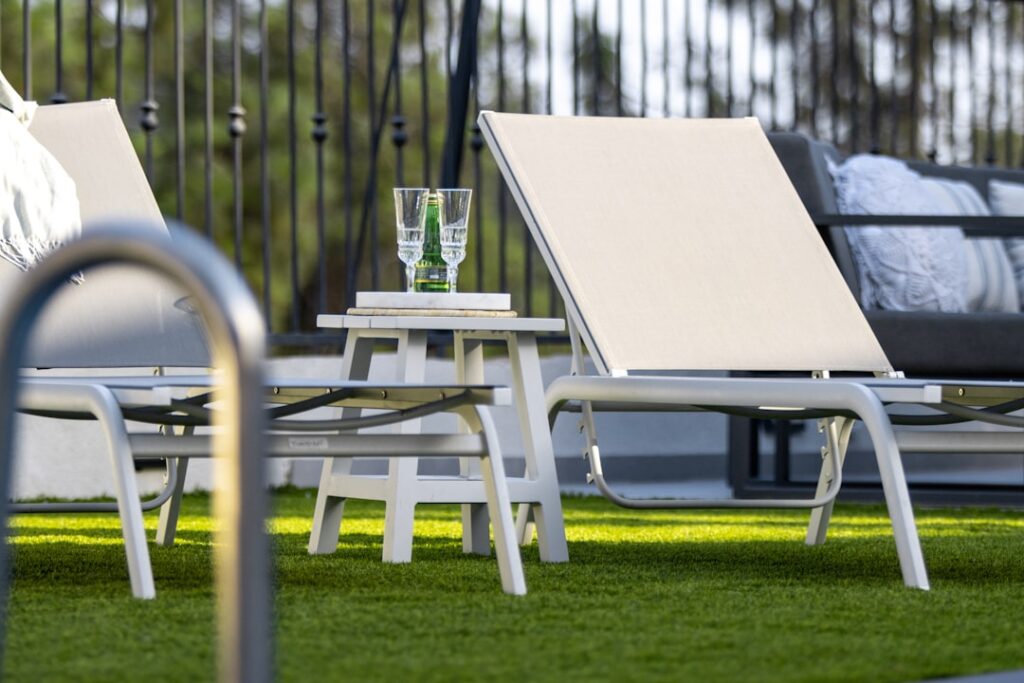
A seating area without a surface within arm’s reach gets abandoned fast — nobody wants to hold a sweating glass of iced tea for an hour. Patio end tables are the cheapest fix in outdoor furnishing, running anywhere from $30 for a molded resin cube to $400 for a teak or powder-coated aluminum piece, yet they do more work than almost anything else on the patio. The right table survives UV exposure, rain, and 40-degree temperature swings without rusting, fading, or blowing into the neighbor’s yard. The wrong one looks chalky and wobbly by the end of its first summer. Material choice decides which outcome you get, so that is where this guide starts.
Part of our Decks & Outdoor guide — explore the full guide →
- Sizing: The 2-Inch Rule and Other Numbers That Matter
- Aluminum: The Low-Maintenance Workhorse
- Teak and Eucalyptus: Wood That Earns Its Price
- Wicker, Steel, and Concrete Compared
- Weather Ratings and What "All-Weather" Really Means
- Features Worth Paying Extra For
- Matching Tables to Your Existing Set
- Care Schedule That Doubles Lifespan
Sizing: The 2-Inch Rule and Other Numbers That Matter
An end table should sit within 2 inches of the arm height of the chair or sofa beside it. Most outdoor lounge chairs have arms 22 to 25 inches off the ground, so a 20-to-24-inch-tall table is the sweet spot. Deep-seated conversation sets sit lower — pair those with an 18-to-20-inch table. Anything shorter forces guests to bend awkwardly; anything taller risks elbow knocks and spilled drinks.
For the top, 16 to 20 inches across handles two drinks, a phone, and a small plate. Go 22 to 24 inches if the table serves two chairs at once. Leave at least 4 inches of clearance between table edge and chair so cushions and armrests do not scrape the finish every time someone sits down. Weight matters outdoors in a way it never does inside: tables under about 8 pounds become projectiles in a 30 mph gust, so in windy regions choose concrete, steel, or a design with a weighted base.
Aluminum: The Low-Maintenance Workhorse
Powder-coated aluminum is the best all-around material for most climates. It cannot rust, weighs little enough to reposition with one hand, and modern powder coats carry 3-to-5-year fade warranties. Expect to pay $60 to $180 for a quality cast or extruded aluminum side table. Cast aluminum — the ornate, heavier style — runs 12 to 20 pounds and stays put in wind; tube-frame aluminum can drop under 7 pounds and may need to live against a wall.
Check the coating quality before buying. A good powder coat feels slightly textured and shows no thin spots at weld joints. Cheap imports skip the pre-treatment phosphate bath, and the coating peels within two seasons, especially in coastal salt air. Brands like Hanover and Christopher Knight hold up well in the mid-price tier.
Teak and Eucalyptus: Wood That Earns Its Price
Grade-A teak is the gold standard, and its price shows it — $200 to $400 for a simple 20-inch side table. Natural oils make teak essentially rot-proof; left untreated it weathers from honey-brown to a silver-gray patina in about 9 to 12 months. If you prefer the original color, apply a teak sealer such as Semco each spring. Eucalyptus delivers about 70 percent of teak’s durability for half the money, typically $90 to $160, but it must be oiled annually or it will check and crack, particularly in dry climates.
Avoid acacia for fully exposed locations. It is common at the $50-to-$80 price point and looks great on the shelf, but repeated wet-dry cycles split the glue joints unless the table lives under a covered porch.
Wicker, Steel, and Concrete Compared
Resin wicker over an aluminum frame is a solid choice at $70 to $150 — just confirm the weave is HDPE (high-density polyethylene), not PVC. HDPE resin carries UV inhibitors through the material and lasts 8 to 10 years; PVC wicker turns brittle and flakes in 2 to 3. Many wicker end tables include a hidden storage compartment for cushions or a glass top that doubles as a serving tray.
Steel tables cost the least, often $30 to $70, and rust is the obvious enemy. Look for the phrase “e-coated” or “galvanized before powder coating” in the specs; a scratch on bare-steel furniture blooms into rust within weeks in humid regions. Touch up chips immediately with an appliance enamel pen.
Concrete and fiber-cement tables have surged in popularity for modern patios. Genuine fiber-reinforced concrete pieces weigh 30 to 60 pounds, ignore wind entirely, and cost $120 to $300. Lightweight “concrete-look” MgO or fiberglass versions mimic the aesthetic at 10 to 15 pounds but can chip at corners. Seal genuine concrete once a year with a penetrating siloxane sealer to prevent freeze-thaw spalling in northern states.
Weather Ratings and What “All-Weather” Really Means
Marketing language outdoors is loose, so read past the headline. “Weather-resistant” usually means the material tolerates occasional rain but should be covered or stored in winter. “All-weather” implies the piece can stay out year-round, though even all-weather furniture lasts longer under a cover. Two specs are worth checking on any listing: UV resistance (look for a stated UV-8 rating or a fade warranty in years, not vague promises) and drainage — a tabletop with a slight crown or drain gaps sheds water, while a flat-lipped top ponds water and accelerates finish failure.
In freeze-thaw climates, hollow resin and ceramic tables are the risk category. Water that seeps into a seam and freezes will crack the piece from the inside. Either store these indoors from November through March or tip them so no water can collect.
Features Worth Paying Extra For
- Adjustable feet: Patios are rarely level. Threaded nylon levelers eliminate the folded-napkin fix and cost makers almost nothing, yet only mid-tier tables include them.
- Storage compartments: A lift-top wicker table that swallows two throw pillows saves a trip to the deck box every time rain threatens.
- Umbrella-hole models: A few end tables include a 1.5-inch center hole and a locking base for a 6-foot market umbrella — useful between two chaises where a full dining umbrella will not fit.
- Nesting pairs: Two tables that tuck together give flexible serving space for parties and compact storage after, usually $20 to $40 more than a single.
- Cooler tables: Insulated bins built into the tabletop hold a dozen cans on ice. Expect $150 to $250, and confirm the drain plug is threaded, not friction-fit.
Matching Tables to Your Existing Set
You do not need to buy the matching end table from your conversation set’s collection, and often you should not — manufacturers price matched accessory tables at a 30 to 50 percent premium over comparable standalone pieces. What matters visually is repeating one element: the frame color, the weave tone, or the top material. A black cast-aluminum table sits comfortably beside gray HDPE wicker seating if the seating has black frame legs. Mixing materials deliberately also works. Designers routinely drop a concrete cube next to teak loungers or a white ceramic garden stool beside dark wicker precisely because the contrast reads as intentional.
Ceramic garden stools deserve a mention here. At $60 to $130, an 18-inch glazed stool works as an end table, extra seat, and plant stand in one, and its glazed surface wipes clean of sunscreen and citronella oil that stain wood and resin. Just remember the freeze-thaw warning above — ceramics winter indoors in cold states.
Care Schedule That Doubles Lifespan
Ten minutes of maintenance per season is the difference between a 4-year table and a 10-year table. In spring, wash every material with mild dish soap and water — never pressure-wash wicker or wood, which drives water into joints. Oil eucalyptus and seal teak if you want color retention. Mid-summer, check and snug any exposed bolts, since thermal cycling backs them out. In fall, either move tables under cover or fit breathable covers; vinyl covers trap condensation and grow mildew underneath, so spend the extra $10 on a polyester cover with vents. Store cushionless steel and aluminum upside down so water cannot sit in frame tubes, and pull the drain plugs on any cooler table before the first freeze. Do that, and even a $60 table will still look presentable when the patio set around it comes due for replacement.


