Finding the right patio furniture for small spaces is less about squeezing in as much as possible and more about choosing pieces that earn their footprint. A tiny balcony, a narrow city patio, or a compact apartment terrace can feel like a genuine outdoor room when it’s furnished thoughtfully, or it can feel cramped and unusable when it’s overstuffed. After helping plenty of homeowners and renters outfit small outdoor areas, I’ve learned that restraint, multifunction, and vertical thinking are the keys.
Part of our Decks & Outdoor guide — explore the full guide →
This guide covers how to measure and plan, which furniture types work best in tight quarters, the materials that hold up outdoors, and clever tricks to make a small space feel open and inviting rather than crowded.
- Measure and Plan Before You Buy
- Choose Multifunctional and Foldable Pieces
- Scale and Proportion Matter Most
- Think Vertically to Save Floor Space
- Best Materials for Small Outdoor Spaces
- Layout Tricks to Maximize the Space
- Color, Light, and the Illusion of Space
- Common Small-Patio Mistakes to Avoid
- Add Personality Without the Clutter
Measure and Plan Before You Buy
The most common mistake with small patios is buying furniture that looks fine in a big-box showroom and swallows the whole space at home. Start by measuring your area precisely and sketching it on paper or a phone app. Note doorways, the direction they swing, railing heights, and any fixed obstacles like an AC unit or a downspout.
Leave clear walking paths of at least 24 to 30 inches so the space remains functional. A good rule is to furnish no more than roughly two-thirds of the floor area, leaving breathing room. Decide how you’ll actually use the space, whether it’s morning coffee for two, evening lounging, or occasional dining, because that intended use should drive every purchase that follows.
Choose Multifunctional and Foldable Pieces
In a small footprint, furniture that does double duty is worth its weight in gold. Look for storage benches that hold cushions inside, ottomans that serve as footrests, extra seats, and side tables, and nesting tables that tuck together when not in use. A bistro set with folding chairs can be stowed against a wall to reclaim floor space when you want room to stand.
Folding and stackable furniture is a small-space hero. Wall-mounted drop-leaf tables fold flat when unused and open for dining or working. Bar-height folding tables clip onto a balcony railing to create a dining ledge without any floor footprint at all. Every piece that collapses, nests, or stores something is a piece that punches above its size.
Scale and Proportion Matter Most
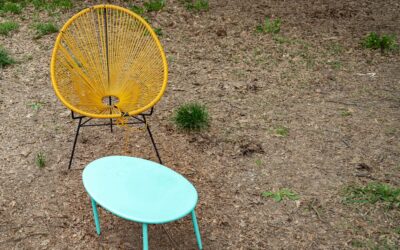
Scale is everything in a small space. Choose furniture with a slim profile, open frames, and raised legs rather than bulky, ground-hugging pieces. Chairs and sofas that show some floor beneath them read as lighter and make the patio feel more spacious, while heavy solid bases visually eat up the room.
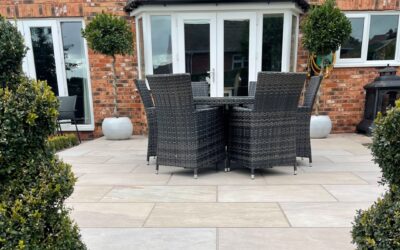
Armless chairs take up less width and can be pushed closer together, and a round table often fits a tight corner better than a rectangular one because it has no sharp edges to navigate around. Prioritize pieces designed specifically for apartments and balconies, as manufacturers now make compact lines with reduced depth and width precisely for these conditions.
Think Vertically to Save Floor Space
When floor space is limited, build upward. Vertical planters, wall-mounted shelves, and railing planters add greenery and personality without consuming precious square footage. A tall, narrow shelving unit or a ladder-style plant stand draws the eye up and creates the impression of a taller, larger space.
Hanging elements like a wall-mounted lantern, string lights strung overhead, or a suspended egg chair (where the structure allows) add function and atmosphere at eye level and above. Hooks on a wall or fence can hold folded chairs, tools, or décor. Using your vertical planes keeps the floor open for movement, which is what makes a small patio feel usable rather than claustrophobic.
Best Materials for Small Outdoor Spaces
Because small-space furniture often gets moved, folded, and stored, weight and weather resistance both matter. Powder-coated aluminum is a standout choice: it’s lightweight enough to reposition easily, rustproof, and durable. Resin wicker over an aluminum frame delivers a soft look with low maintenance. Teak and other weather-resistant woods are beautiful and sturdy but heavier and pricier.
Avoid untreated iron on a balcony where you’ll want to move things, since it’s heavy and prone to rust. Whatever you choose, quick-dry foam cushions with fade- and water-resistant fabric will survive the elements far better than standard indoor cushions. Fabrics rated for outdoor use resist mildew and hold their color through a full season of sun and rain.
Layout Tricks to Maximize the Space
Smart arrangement can make a small patio feel twice its size. Push seating toward the perimeter to keep the center open, and float a compact table in the middle only if there’s genuine room. Corner arrangements often work better than lining furniture along a single wall, because an L-shaped seating tuck uses an otherwise dead corner efficiently.
Use a single outdoor rug to define the seating zone; a rug that’s slightly larger than the furniture grouping actually makes the area feel bigger and more intentional. Keep the color palette light and cohesive, since too many competing colors and patterns make a small space feel busy and cramped. Consistent tones create a calm, expansive feeling.
Color, Light, and the Illusion of Space
Beyond the furniture itself, a few visual tricks make a small patio feel considerably larger. Light, cool colors recede and open up a space, so pale cushions, light-toned furniture, and a bright rug will make a cramped balcony feel airier than dark, heavy pieces that seem to close in. Keeping the palette limited to two or three coordinated colors prevents the busy, cluttered feeling that shrinks a small area visually.
Reflective and transparent elements help too. A small outdoor mirror mounted on a wall or fence bounces light around and creates the illusion of depth, much as it does indoors. Glass-topped or acrylic tables let the eye travel through them rather than stopping at a solid mass, so they occupy space without visually filling it. These low-cost touches trick the eye into perceiving more room than the tape measure says you have.
Common Small-Patio Mistakes to Avoid
A few predictable errors sabotage small outdoor spaces. The biggest is overcrowding, cramming in a full-size dining set, a lounge chair, and a grill until there’s no room to move; restraint always beats abundance in a tight space. Another is choosing furniture that’s too large or too deep, which swallows the floor and forces you to squeeze past it. Measuring first and respecting the two-thirds rule prevents both.
People also tend to ignore the vertical plane, leaving walls and railings bare while the floor overflows, and they often buy indoor-grade cushions that mildew and fade within a season. Finally, skipping a defined seating zone, no rug, no intentional arrangement, leaves the space feeling like a hallway rather than a room. Avoid these traps and even the smallest terrace becomes a genuinely usable, inviting retreat.
Add Personality Without the Clutter
Finishing touches make a small patio feel like a room rather than a leftover corner, but the temptation to over-accessorize is real. Choose a few intentional accents: a couple of throw pillows, one statement planter, a lantern or two, and maybe a small side table for a drink. Edit ruthlessly, because in a tight space, clutter reads as chaos.
Lighting punches above its weight in a small area. Solar string lights, a couple of flameless candles, or a compact lantern transform the mood at night without taking up floor space. With careful measuring, multifunctional pieces, vertical storage, and a restrained hand, the right patio furniture for small spaces turns even a tiny balcony into a favorite spot to unwind.